
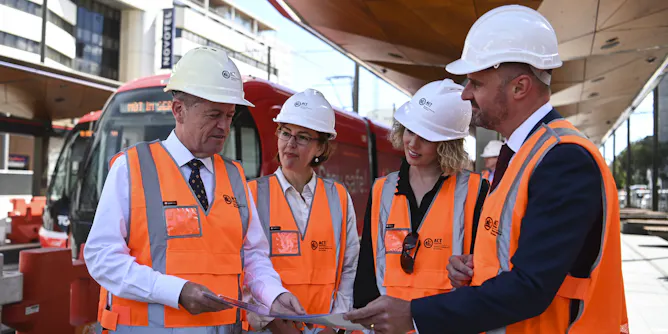
The major parties are promising tens of billions of dollars in transport spending, but only a handful of projects are on Infrastructure Australia’s national priority list with approved business cases.
Articles on Transport policy
Displaying 61 - 80 of 134 articles
A newly released ten-year plan for Melbourne aims for fewer cars, safer streets and more shared spaces. A significant amount of parking and road space would be reallocated to walking and cycling.
In Sydney, 44 of 178 train stations have a single side entrance. It adds up to 12 minutes of daily travel time for people walking the long way to their platform. It’s enough to make some drive instead.
The Coalition’s infrastructure budgets over this term of government have been around the midpoint of government investment over the past decade. But how projects are chosen leaves a lot to be desired.

The Commuter Car Park Fund announced in the budget sounds big, but is likely to create only around 30,000 extra spaces – a marginal benefit for Australia’s 1.2 million daily public transport users.
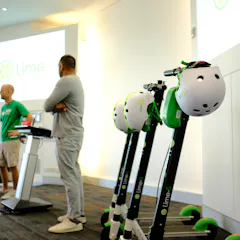
Every day, e-scooters and helmets are put out together, but some people ride without helmets and at the end of each day helmets are missing. So what can be done to ensure safe riding behaviour?
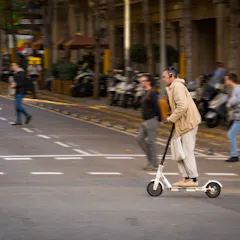
The exploding popularity of e-scooters has the potential to reshape transport in our cities. Regulators need to adapt their approaches to handle the new mobility service rather than ban it altogether.

In England, one in fifty children cycle to school. But if English children cycled at the same rates as Dutch children, this could rise to two in five.
The major parties are promising projects costing tens of billions of dollars, with a surprisingly large overlap between them. Yet only two have been endorsed by infrastructure authorities.
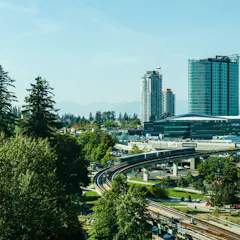
Instead of spending ever more on roads, we can learn from Vancouver’s use of congestion as a ‘friend’ in managing the development of transport networks and of the city itself.
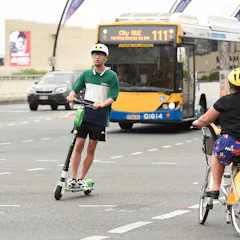
Researchers looking at Australia’s first trial of e-scooter sharing find the Brisbane public has embraced this mode of transport. They make five recommendations to deal with issues that have emerged.
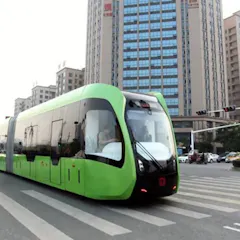
The autonomous rail rapid transit (ART) system developed in China might make buses sexy, but the technology alone won’t resolve the issues of road space and right of way in Australia.
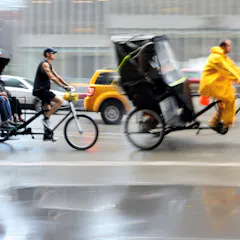
To cut emissions within the 12 years or so we have left to avoid disastrous global warming, we will need to change our old transport habits, using a combination of strategies to achieve this.
Whichever party wins, Victoria’s new government will have promised the biggest transport infrastructure project in Australian history. So what are the promises and are they backed by proper assessment?
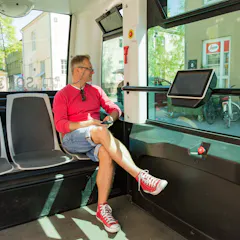
Apps that seamlessly combine all our travel options could be the most significant transport innovation since the automobile, but early trials show government policy support is vital to make MaaS work.
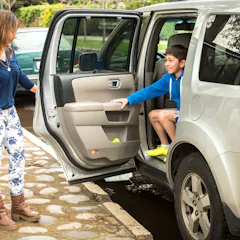
The private car is the default transport option for many families. This reduces physical activity and increases greenhouse gas emissions, with unhealthy results for their children and the environment.
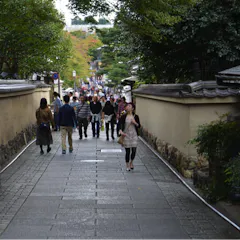
The city where the Kyoto Protocol was signed resolved some years ago to move away from cars and towards low-emission alternatives for getting around. And it’s making real progress towards that goal.

Blind belief that new technology and disruptive innovation will fix congestion in our cities overlooks the need for strong leadership that supports progressive policy innovation.
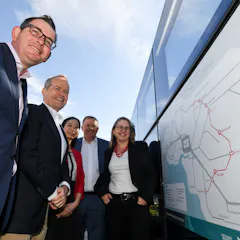
In the election bidding wars, parties commit billions to transport projects, often before all the work needed to justify these has been done. More cost-effective alternatives hardly get a look-in.

For 40 years the author has argued that trains and trams are better than buses. New ‘trackless trams’, which take innovations from high speed rail and put them in a bus, have changed his mind.
Top contributors
-

Transport and Cities Program Director, Grattan Institute
-
Honorary Professor of Planning, The University of Queensland
-
Associate Professor in Urban Planning, The University of Queensland
-
Associate Professor of Urban Planning, The University of Melbourne
-
Senior Lecturer in Urbanism, University of Sydney
-
Professor of Human Geography, The University of Queensland
-
Professor and Director, Institute of Transport and Logistics Studies, University of Sydney
-
Professor of Transport Technology and Sustainability, Swinburne University of Technology
-
Professor of Sustainability, Curtin University
-
Professor of Urban Policy and Director, Urban Futures Enabling Impact Platform, RMIT University
-
Associate, Grattan Institute
-
Honorary Principal Fellow, University of Wollongong
-
Adjunct Professor, School of Engineering and Built Environment, Griffith University
-
Senior Research Fellow, School of Global, Urban and Social Studies, RMIT University
-
Postdoctoral Research Associate, Faculty of Architecture, Building and Planning, University of Sydney