
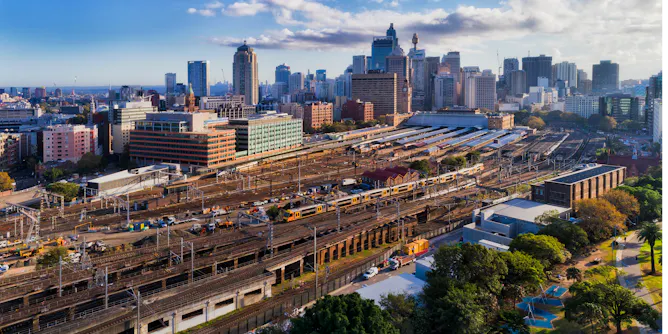
Coronavirus has changed population projections and behaviours across society. With fewer commuters we need to shift transport planning based on a hub-and-spoke network to focus on more local travel.
Articles on Transport policy
Displaying 41 - 60 of 134 articles
Investing more in cycling and walking would boost both physical and economic health, with a typical return of $5 for every $1 spent on cycling infrastructure.
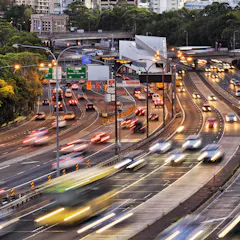
Car use and cycling have soared to above pre-pandemic levels in our biggest cities (Melbourne is an obvious exception). Walking is not far behind, but public transport is being shunned.
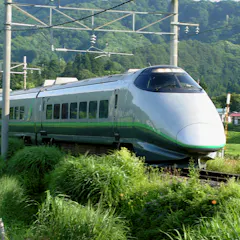
A high-speed rail network in Australia would create many benefits by reshaping cities and regional communities along its route.

Once again, the state looks intent on pressing ahead with a huge road project without releasing a business case. Among the many concerns is the failure to look at lower-emission alternatives.
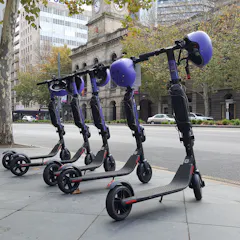
Are debates about e-scooters too narrow? Perhaps it is time to focus more on revitalising urban spaces and retrofitting road infrastructure.
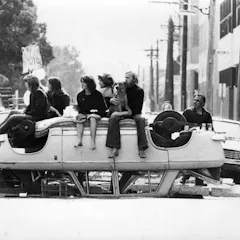
Public protests eventually forced the scrapping of some proposed freeways in 1973. Today, we have another round of projects and people are protesting again, with good reason. Government should listen.
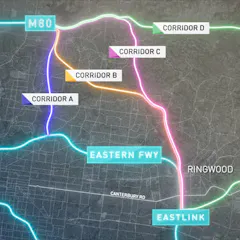
Transport modelling has been tarnished by its use to justify the predetermined projects politicians favour. But, if used more transparently, it’s a valuable tool for planning our future cities.
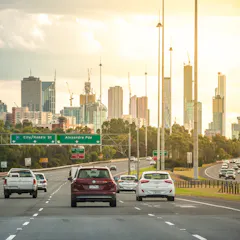
While called a transportation plan,
it was heavily skewed towards roads. We need the type of city-shaping thinking that underpinned the plan, but today’s plans must match 21st-century priorities.
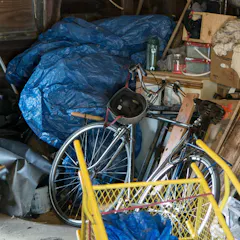
Where bikes are kept is a strong pointer to the place of cycling in the owner’s life. Effective active transport policy starts with understanding what stops people using their bikes instead of cars.

Faced with the eye-watering costs of building infrastructure, it makes sense to turn to much more cost-effective smart technology to get traffic flowing.

Trials of the program found about 5% of offending drivers used their mobile phone with both hands, while the vehicle was moving.
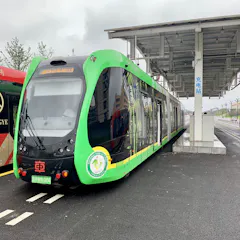
Installing light rail is costly, as Sydney has found, but it’s the gold standard for public transport along road corridors. What trackless trams can do is rapidly expand such services at low cost.

A breakdown in the road or rail systems often causes commuter chaos in Australia. Some overseas cities are more resilient because they have other options – and our bicycle network could give us that.
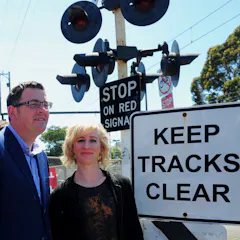
Value capture depends on infrastructure increasing the value of affected areas in the first place. Victoria’s level crossing removal project shows the impact on property values can be significant.
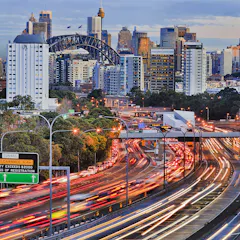
Commuters who drive to and from the CBD typically earn much more than most. Concerns about the fairness of charging drivers who use these busy roads at peak times are overblown.

Two-thirds of surveyed workers work from home one day a week on average, but could do at least half their work out of the workplace. If they commuted less often, congestion could be greatly reduced.
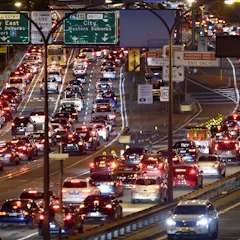
Average commuting times for Australians have increased by 23% in 15 years. And those with long commutes are less satisfied with their work, working hours, work-life balance and even pay.
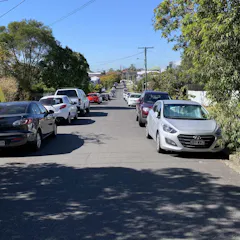
The global trend is to free up valuable city space by reducing parking and promoting other forms of transport that don’t clog roads and pollute the air. Australian cities are still putting cars first.
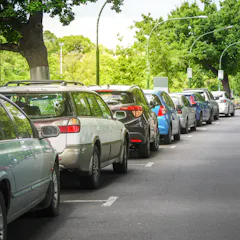
Australian cities have a glut of parking, even as politicians move to protect parking spaces or promise even more. There are better ways to keep congestion manageable and our cities liveable.
Top contributors
-

Transport and Cities Program Director, Grattan Institute
-
Honorary Professor of Planning, The University of Queensland
-
Associate Professor in Urban Planning, The University of Queensland
-
Associate Professor of Urban Planning, The University of Melbourne
-
Senior Lecturer in Urbanism, University of Sydney
-
Professor of Human Geography, The University of Queensland
-
Professor and Director, Institute of Transport and Logistics Studies, University of Sydney
-
Professor of Transport Technology and Sustainability, Swinburne University of Technology
-
Professor of Sustainability, Curtin University
-
Professor of Urban Policy and Director, Urban Futures Enabling Impact Platform, RMIT University
-
Associate, Grattan Institute
-
Honorary Principal Fellow, University of Wollongong
-
Adjunct Professor, School of Engineering and Built Environment, Griffith University
-
Senior Research Fellow, School of Global, Urban and Social Studies, RMIT University
-
Postdoctoral Research Associate, Faculty of Architecture, Building and Planning, University of Sydney