

Fans of redistribution may find something good in the latest AI-powered development in pricing.
Articles on Surveillance
Displaying 41 - 60 of 411 articles

U.S. President Donald Trump signed an executive order approving a deal that allows U.S. businesspeople to acquire ownership of TikTok.

In Saudi Arabia, smartphones offer women new avenues of empowerment, even as they remain tools of surveillance in a society where gender inequality persists.

Before you scan your face, you might want to think twice about the risks.

Donald Trump has a partisan ally running the FBI. He’s urged retribution against his perceived enemies. Will today’s FBI repeat the vast, unconstitutional persecutions of the J. Edgar Hoover era?

The Privacy Commissioner found Kmart should have tried other options before facial recognition systems – and told customers what it was doing.
We are living in a world where our unease, vigilance, and even our guilt is being used for corporate profit.

Two decades after the last attempt collapsed, Keir Starmer has revived plans for a national ID card.

Government agencies are contracting with Palantir to correlate disparate pieces of data, promising efficiency but raising civil liberties concerns.

While our culture is very different from Shakespeare’s London, his plays — and those by others — still carry the potential to bring people together and help us think deeply about our shared experience.

The online reaction to the extra-marital affair that was caught on the Jumbotron at a Coldplay concert raises the question: why does infidelity, especially among the powerful, provoke such public outrage?

Environmental activism, corruption and technological invasion are all threaded through the story, representing fears about identity, society and the human condition.

Your social media is no longer a personal space. It may be used by governments to determine whether you fit with their values.
Listen to disability surveillance expert Amy Gaeta on The Conversation Weekly podcast.

Social licence and consent are central to trust in state data systems. Changes to the way census information is gathered make this especially important for Māori.

AI has the potential to help prevent and detect abuse, but only if it avoids bias and is sensitive toward traumatized people’s needs.

As wearable technologies become more popular, it’s important to consider how they actually work and what their data actually tells us.

Surveillance of speech by algorithm raises urgent questions about data privacy and the future of a neutral, expert public service.
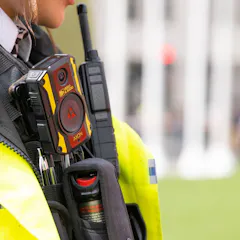
The notion that the cameras reduce violence and complaints about police behaviour are not necessarily borne out in practice.

Google recently ended its longstanding ban on developing AI weapons.
Top contributors
-

Associate Professor in Telecommunications Engineering, Swinburne University of Technology
-
Research Director of the Security and Surveillance Research group; Professor, The University of Queensland
-
Professorial Fellow, University of Canberra
-
Professor of Digital Society, University of Glasgow
-
Affiliated Faculty Member, Institute for Computational and Data Sciences, Penn State
-
Associate Professor, School of Law, University of Canberra
-
Senior Lecturer in Technology, The Open University
-
Research engineer, Advanced Surveillance Project, CSIRO
-
Senior Researcher and Project Manager, Advanced Surveillance Project, CSIRO
-
Lecturer in Technology and Crime, Griffith University
-
Professor and Director, Centre for Research into Information, Surveillance and Privacy, University of Stirling
-
Emeritus Professor in Law and Criminal Justice, Adelaide University
-
Professor of Global Legal Studies, Birmingham Law School, University of Birmingham
-
Head, The Cyber Academy, Edinburgh Napier University
-
Professor of Cyber Security Practice, Edith Cowan University