
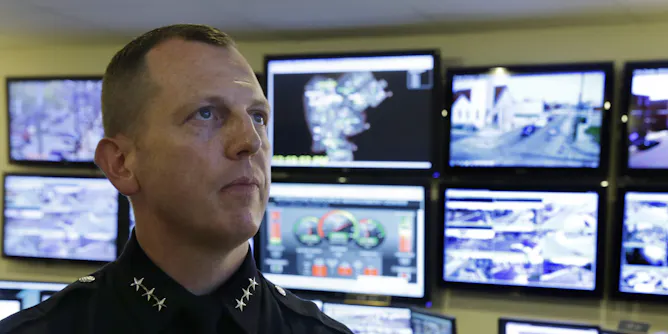
It’s increasingly difficult to move about – both in the physical world and online – without being tracked.
Articles on Surveillance
Displaying 121 - 140 of 411 articles

Digital twins could be used in the future to predict and influence our behaviour, but this raises concerns about who owns our data and how we can access and control it.

Performance crime is the act of filming while engaging in criminal activity. During the Jan. 6 capitol riots, insurrectionists uploaded performance crime videos and photos, incriminating themselves.

Cookie notifications remind people that they are being tracked, which affects how people behave online.

Australia’s consumer advocacy group Choice identified three Australian retailers who use facial recognition to identify consumers. What are the privacy concerns?

The COVID-19 pandemic has seen an increase in wastewater testing to monitor the spread of the virus. But historical cases show that targeted surveillance can further marginalize vulnerable populations.

Data privacy is an abstract issue for most people, even though virtually everyone is at risk. Now that abortion may become illegal in some states, digital surveillance could take an even darker turn.

By linking different issues together, organisations show the importance of approaching information disorder as a complex problem requiring various responses.
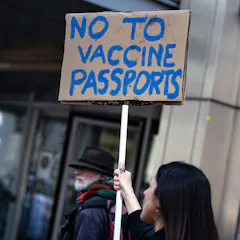
Vaccine passports can and have been used to increase surveillance by governments. Transparency and accountability are crucial for protecting the privacy of civilians.

Abusers are exploiting all manner of smart tech and software to extend their capacity for coercive control.
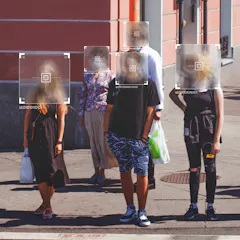
In order to track the pandemic, the Public Health Agency of Canada has been using location data without explicit and informed consent. Transparency is key to building and maintaining trust.

Tabloids traditionally have gone after the rich and famous. On TikTok, anyone can be a target.

Smart devices and sensors can now gauge mood and attention, effectively engaging in mind-reading. This intimate data collection raises questions about who has access and control of it.

Facebook’s rebranding as Meta is an attempt to reposition the company as poised to move into virtual reality networks.

Critics of new terrorism laws argue they do not necessarily eradicate hate-fuelled violence — and they could make structural and institutional violence seem more palatable.

Monitoring of student behavior often extends beyond schoolwork and normal school hours. A privacy expert explains the harmful effects.

In recent years, Indigenous land defenders have lived under increasing police and state surveillance while far-right, conspiratorial movements have not.

Mass data collection and surveillance have become ubiquitous. For marginalized communities, the stakes of having their privacy violated are high.
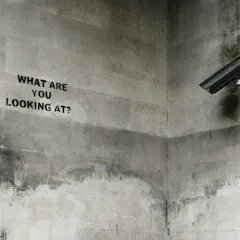
Once analysts gain access to our private data, they can use that information to influence and alter our behaviour and choices. If you’re marginalized in some way, the consequences are worse.

While it may be difficult to enact a global set of regulations on surveillance technologies, individual countries can take the lead with enhanced monitoring and stronger laws.
Top contributors
-

Associate Professor in Telecommunications Engineering, Swinburne University of Technology
-
Research Director of the Security and Surveillance Research group; Professor, The University of Queensland
-
Professorial Fellow, University of Canberra
-
Professor of Digital Society, University of Glasgow
-
Affiliated Faculty Member, Institute for Computational and Data Sciences, Penn State
-
Associate Professor, School of Law, University of Canberra
-
Senior Lecturer in Technology, The Open University
-
Research engineer, Advanced Surveillance Project, CSIRO
-
Senior Researcher and Project Manager, Advanced Surveillance Project, CSIRO
-
Lecturer in Technology and Crime, Griffith University
-
Professor and Director, Centre for Research into Information, Surveillance and Privacy, University of Stirling
-
Emeritus Professor in Law and Criminal Justice, Adelaide University
-
Professor of Global Legal Studies, Birmingham Law School, University of Birmingham
-
Head, The Cyber Academy, Edinburgh Napier University
-
Professor of Cyber Security Practice, Edith Cowan University