
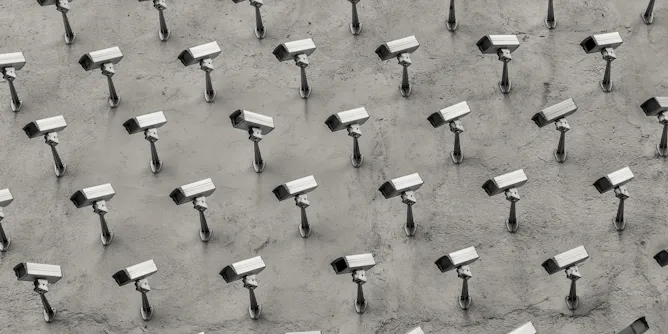
Create a moral panic. Blame it on certain people. Commence monitoring. Deploy droves of security agents. Detain or remove the targets. Sound familiar?
Articles on Surveillance
Displaying 61 - 80 of 411 articles

One of the most influential philosophical works of the 20th century, Discipline and Punish is unsettlingly prescient in our age of digital surveillance.

The Philadelphia Police Department plans to expand its use of drones, including as first responders.
A new study shows that simply knowing we are being watched can unconsciously heighten our awareness of other people’s gaze.
Neurotechnology raises many high-stakes ethical questions. Setting ground rules could help protect workers and ensure that tasks are adapted to the person, rather than the other way around.
There are dangers to having government surveillance carried out without proper oversight and accountability.

Despite the ruling against Bunnings, Australian businesses can continue to collect your biometric information without your explicit consent by simply putting up signs.

There’s been a gradual erosion of democratic rights and liberties in the island of Mauritius.

Smartphones may be indispensable to modern life, but they’re also perfect tools for spying on their owners. Anyone looking to avoid being tracked – like, say, militant groups – tends to ditch them.

Two new laws with major implications for how AI is used in society are being considered in Canada. Both lack protections for the public from the harms of AI, including racial profiling by police.
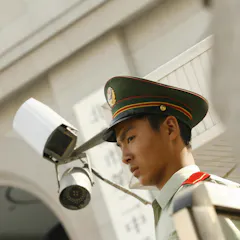
In the AI game, China has bet on strategic use over innovation, tightening its grip domestically and extending its reach internationally.

Advances in technology mean employers can keep tabs on workers long after the workday has finished. New Zealand needs to follow global examples and strengthen workers rights beyond the workplace.
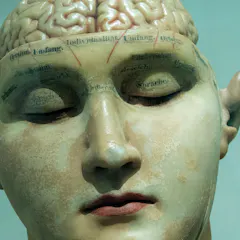
As the federal government prepares to reform Australia’s privacy laws, it needs to better protect brain data.
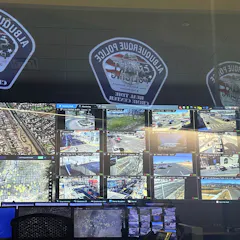
As police departments across the US and the world adopt real-time crime centers, there’s a need for better public understanding of how these centers work.
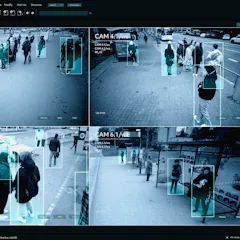
Automated facial recognition is becoming widespread in Australia. The technology has already been used by retail outlets, sport stadiums and casinos around the country. And in November, the Australian…
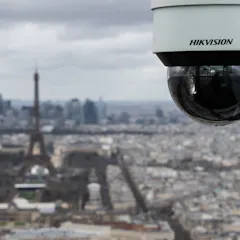
France is using experimental AI-enabled surveillance and data collection tools before, during and after the 2024 Summer Olympics. Here’s what that means for the trade-off between security and privacy.

Biometrics can help companies to be more efficient and to improve their products but there’s a growing need for transparency.

Artificial intelligence technologies are changing how users experience intimate romantic and sexual connections. These technologies bring many positive benefits, but there is a dark side.
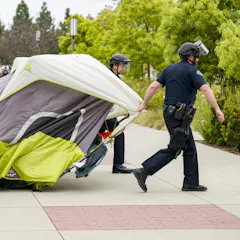
Framing dissent and poverty as a menace to public order can threaten fundamental rights, particularly when it’s used to justify the deployment of predictive technology.

Police can reconstruct someone’s movements for days or weeks at a time, without any court oversight.
Top contributors
-

Associate Professor in Telecommunications Engineering, Swinburne University of Technology
-
Research Director of the Security and Surveillance Research group; Professor, The University of Queensland
-
Professorial Fellow, University of Canberra
-
Professor of Digital Society, University of Glasgow
-
Affiliated Faculty Member, Institute for Computational and Data Sciences, Penn State
-
Associate Professor, School of Law, University of Canberra
-
Senior Lecturer in Technology, The Open University
-
Research engineer, Advanced Surveillance Project, CSIRO
-
Senior Researcher and Project Manager, Advanced Surveillance Project, CSIRO
-
Lecturer in Technology and Crime, Griffith University
-
Professor and Director, Centre for Research into Information, Surveillance and Privacy, University of Stirling
-
Emeritus Professor in Law and Criminal Justice, Adelaide University
-
Professor of Global Legal Studies, Birmingham Law School, University of Birmingham
-
Head, The Cyber Academy, Edinburgh Napier University
-
Professor of Cyber Security Practice, Edith Cowan University