
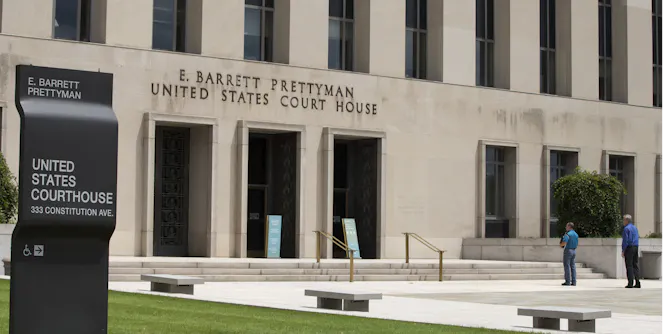
Privacy advocates lost out when Congress reauthorized Section 702 of the Foreign Intelligence Surveillance Act without major reforms. But the renewal fight returns in 2 years.
Articles on Surveillance
Displaying 81 - 100 of 411 articles

Attempts to postpone Senegal’s election indefinitely reflect deeper governance problems within Macky Sall’s administration, and the shortcomings of his chosen heir, Amadou Ba.

State surveillance of citizens is growing all over the world, but it is a fact of daily life in China. People are developing mental tactics to distance themselves from it.

End-to-end encryption provides strong protection for keeping your communications private, but not every messaging app uses it, and even some of the ones that do don’t have it turned on by default.

Police use of surveillance technologies — like security cameras and artificial intelligence — is becoming more widespread. Measures are needed to protect people’s privacy and avoid misidentification.

Coles plans to ‘optimise its workforce’ with big data and AI tools from a controversial tech company.
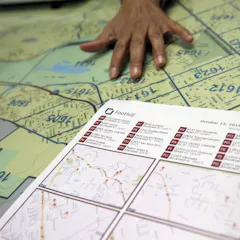
Predictive policing has been a bust. The Department of Justice nurtured the technology from researchers’ minds to corporate production lines and into the hands of police departments.

The fact that the presidency is attempting to get away with minimal regulation of bulk interception raises doubt about its commitment to ending intelligence abuse.

Face recognition technology follows earlier biometric surveillance techniques, including fingerprints, passport photos and iris scans. It’s the first that can be done without the subject’s knowledge.

The bill seeks greater intelligence powers but neglects oversight.

Cuba gets less attention as an espionage threat than Russia or China, but is a potent player in the spy world. Its intelligence service has already penetrated the US government at least once.

Recent media coverage mostly confirms the role of faulty threat assessments, Hamas’ improved operational security, and confirmation bias.

At a time of increasing unease about the checks and balances for the use of AI, some African countries are spending more on harmful surveillance of their citizens.

The electronic monitoring and surveillance of employees is on the rise as growing numbers of people switch to hybrid and at-home work.

Mobile phones have extended the reach and control of abusive partners.
The revised law is targeting not only Westerners working in China, but also Chinese nationals who work for foreign companies or organisations or interact with foreigners in any way.

You probably won’t be targeted by spyware, but if you are, odds are you won’t know about it. The latest spyware slips in unseen through online ads as you go about your digital life.

This new show at the Powerhouse Museum reflects the chaos of the digital world and the ubiquity of digital tracking.

Nadia Comăneci was the most famous gymnast in the world when she defected from Romania in 1989. A new book includes 25,000 pages worth of secret police surveillance material.

Canada must reflect on the profound consequences of over-surveillance on the freedoms of religion, expression and association — particularly for Muslim Canadians — and their impact on equality.
Top contributors
-

Associate Professor in Telecommunications Engineering, Swinburne University of Technology
-
Research Director of the Security and Surveillance Research group; Professor, The University of Queensland
-
Professorial Fellow, University of Canberra
-
Professor of Digital Society, University of Glasgow
-
Affiliated Faculty Member, Institute for Computational and Data Sciences, Penn State
-
Associate Professor, School of Law, University of Canberra
-
Senior Lecturer in Technology, The Open University
-
Research engineer, Advanced Surveillance Project, CSIRO
-
Senior Researcher and Project Manager, Advanced Surveillance Project, CSIRO
-
Lecturer in Technology and Crime, Griffith University
-
Professor and Director, Centre for Research into Information, Surveillance and Privacy, University of Stirling
-
Emeritus Professor in Law and Criminal Justice, Adelaide University
-
Professor of Global Legal Studies, Birmingham Law School, University of Birmingham
-
Head, The Cyber Academy, Edinburgh Napier University
-
Professor of Cyber Security Practice, Edith Cowan University