
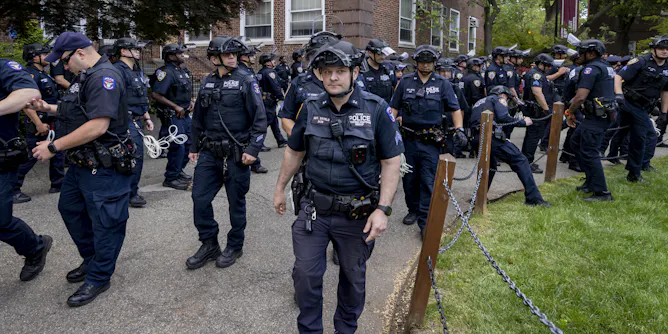
A persistent government strategy to sow fear through punitive measures has corroded freedom and democracy.
Articles on Surveillance
Displaying 21 - 40 of 411 articles
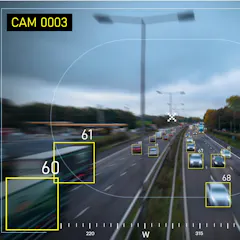
Many people welcome technology that will improve road safety or reduce congestion. But the rollout has proved unsettling.

When a big defence tech chief starts sounding off about civilisation, he’s not just expressing an opinion.
To augment information about you that it collects directly, the US Government is buying less-regulated information harvested by cameras, cellphones and apps and sold on the commercial data market.

Expanding surveillance in supermarkets may deter theft, but it does little to address the structural causes of food insecurity and rising grocery prices.
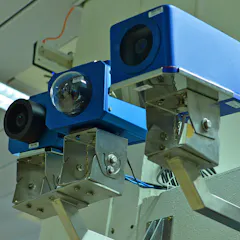
New biometric and AI border systems in west Africa promise better security but may also undermine privacy, increase discrimination and limit free movement.

The current COVID-19 vaccine does not match the strain that’s now becoming dominant in the US, which could lead to a rise in COVID-19 cases.
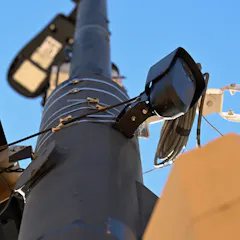
What began as a tool to identify threats to national security is becoming a surveillance infrastructure that can be used to track everyone.

Your workplace wellbeing app may be doing more than tracking your mood. It could be analysing your voice, your words and your behaviour – and you may never have been told.
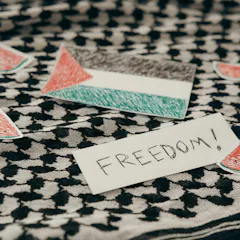
Interviews with people studying to become teachers in Ontario point to the need for systemic changes in schools to better reflect cultural and religious diversity.

Canada urgently needs stronger privacy laws, ones that deal explicitly with facial recognition.

Anthropic’s refusal to allow the U.S. Department of War unrestricted access to Claude raises questions for many nations.
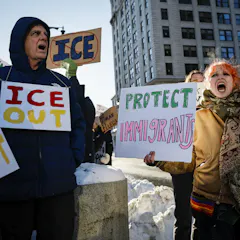
It’s difficult to measure what is lost when an opinion is never voiced and impossible to catalogue the arguments that never form because a speaker calculates the risk and decides silence is safer.
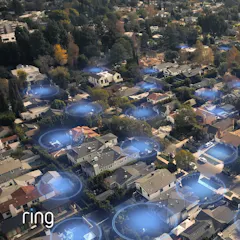
Private companies selling ‘intelligence as a service’ are changing the face of intelligence and how private and personal data is used.

NZ appears to be widening its defence and surveillance capabilities across the region, raising questions about strategic alignment, transparency and independence.

It’s a common misconception that facial recognition technology captures and stores an image of your face.

As ‘aliens’, postwar Greek immigrants attracted the attention of ASIO, irrespective of their political affiliation.
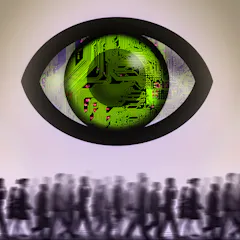
ICE’s dragnet is expanding across social media, putting everyone’s digital lives into the realm of border and immigration enforcement.

How people talk about data privacy can overcome – or reinforce – their skepticism that things can change.

Local conflict and development needs drive the demand for digital authoritarianism technologies.
Top contributors
-

Associate Professor in Telecommunications Engineering, Swinburne University of Technology
-
Research Director of the Security and Surveillance Research group; Professor, The University of Queensland
-
Professorial Fellow, University of Canberra
-
Professor of Digital Society, University of Glasgow
-
Affiliated Faculty Member, Institute for Computational and Data Sciences, Penn State
-
Associate Professor, School of Law, University of Canberra
-
Senior Lecturer in Technology, The Open University
-
Research engineer, Advanced Surveillance Project, CSIRO
-
Senior Researcher and Project Manager, Advanced Surveillance Project, CSIRO
-
Lecturer in Technology and Crime, Griffith University
-
Professor and Director, Centre for Research into Information, Surveillance and Privacy, University of Stirling
-
Emeritus Professor in Law and Criminal Justice, Adelaide University
-
Professor of Global Legal Studies, Birmingham Law School, University of Birmingham
-
Head, The Cyber Academy, Edinburgh Napier University
-
Professor of Cyber Security Practice, Edith Cowan University