

While hospital CEO salaries and health insurance premiums have increased, health care quality has not.
Articles on STEEHM new research
Displaying 61 - 80 of 176 articles

Naloxone can reverse an overdose in minutes, but exactly how it does this at the molecular level has previously been unclear.

Is an organism a sum of its parts, or should they be considered as a whole? New research on ferns shows how the way scientists understand evolution affects how they study life.

Today’s wolves and dogs share a common ancestor. But a deeper look at their genes reveals that interbreeding since dogs were domesticated 20,000 years ago hasn’t been as rare as scientists assumed.

Down syndrome results in changes to the structure and function of neural circuits in the brain. Delivering a specific protein to neurons could reverse these changes.
Moving tiny particles through materials quickly can improve the efficiency of a variety of technologies.

When states prohibit parents from opting their kids out of vaccines for religious, philosophical or other nonmedical reasons, communities stay better protected against infectious diseases.
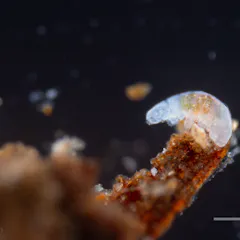
Tardigrades make a unique damage suppressor protein that researchers are working to harness for medicine, space, agriculture, data storage and more.

3D woven baskets are geometrically sophisticated, with some incredible properties that engineers can use to design materials and technology.

A clay layer one-hundredth of an inch thick preserves the fleshy details of dinosaurs buried suddenly in east-central Wyoming.

The researchers found that mRNA-based COVID-19 vaccines could potentially help patients whose tumors don’t respond well to traditional immunotherapy.

Conversations around misinformation that assume everyone cares about literal truth may be missing the point.

Super short X-ray pulses help scientists study materials at the atomic level. Researchers found that certain lasing effects can make these pulses even shorter.
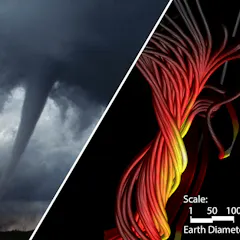
Unprecedented simulations show the formation of space tornadoes capable of causing strong geomagnetic storms around Earth, calling for earlier and more accurate warnings.

Your DNA contains millions of genetic variants that interact with each other in ways that affect whether diseases such as schizophrenia and heart disease develop, and with what severity.
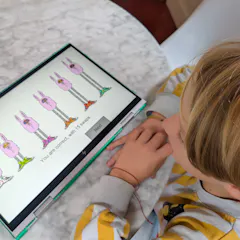
By cranking up the difficulty on the test task, researchers found that children are capable of finding systematic solutions to complex problems far earlier than psychologists had believed.

An environmental engineer explains how his research team is developing a system containing bacteria, biochar and gel to break down pollutants in waterways.
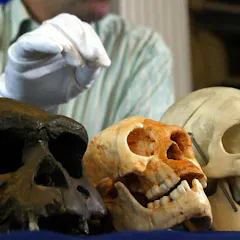
New research on the size relationship between brains and wisdom teeth suggests that bigger brains aren’t necessarily the driving force in human evolution.
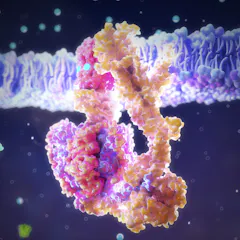
A protein historian and evolutionary biochemist found that a protein sequence present across all known life didn’t form as researchers previously thought it did.
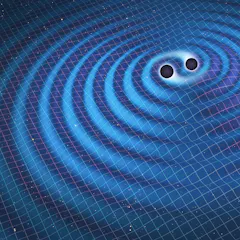
A decade after the first discovery, scientists have used these waves to find a unique merger, a massive binary system and a crystal-clear gravitational wave signal.
Top contributors
-

Assistant Professor of Microbiology, University of Tennessee
-
Associate Professor of Human Dimensions of Natural Resources, University of Montana
-
Curator of Archaeobotany and Archaeogenomics, National Museum of Natural History, Smithsonian Institution
-
Assistant Professor of Ecology & Evolutionary Biology, University of Tennessee; Smithsonian Institution
-
Research Associate in Animal Behavior, The University of Texas at Austin; McGill University
-
Professor of Paleontology, University of Chicago
-
Associate Professor of Systems and Computational Biology, Microbiology and Immunology, Albert Einstein College of Medicine
-
Professor of Mathematics, University of Wisconsin-Madison
-
Professor and Chair of Health Economics, Rice University
-
Ph.D. Candidate in Bioengineering, University of Washington
-
Associate Professor of Biology, Penn State
-
Associate Professor of Bioengineering, University of Washington
-
Assistant Professor of Neurosurgery, University of Florida
-
Assistant Professor of Electrical and Computer Engineering, Georgia Institute of Technology
-
Lecturer, Northwestern University
