
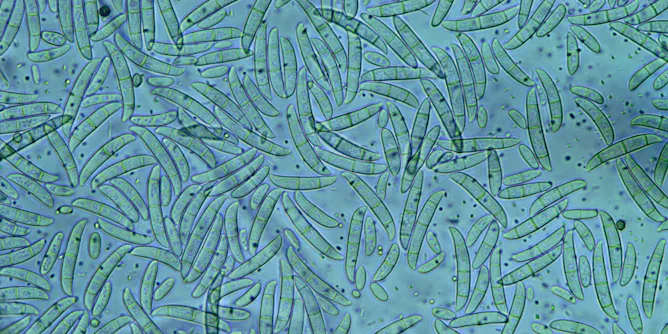
Fusarium oxysporum can infect over 120 plant species. Whether it destroys Cavendish bananas as it did their predecessor depends on the agricultural industry and consumers.
Articles on STEEHM new research
Displaying 141 - 160 of 176 articles
Women typically suffer from more headaches than men, and some people experience migraines only during menstruation.
Brains encode language by matching words to patterns of activity. Large language models can do the same thing.

Older adults are at risk for contracting STDs – not only because of stigma and infrequent condom use, but also because of physical changes due to aging.

The eruptions that began in 2021 in Iceland could last for centuries, which is bad news for Icelanders but good news for scientists seeking to understand how the inner Earth works.

Spacecraft exteriors that automatically heal from radiation damage would change the game − one material shows promise.

Green algae carry drug-loaded nanoparticles directly to the lungs, reducing side effects in other organs and increasing treatment efficiency.

Humans aren’t the only animals that have names for each other − and studying animals that use names can teach researchers more about how human names evolved.

Drinking alcohol is normalized in American society. But the ubiquity of alcohol consumption hides its serious health risks, including cancer.

Scientists are discovering viral genetic sequences in the wild faster than they can analyze them. A kind of ChatGPT for proteins can help make sense of all that data.

Asthma attacks can result from immune cells overreacting to a harmless allergen. Tamping down iron levels in certain immune cells can help control their activity.
Want to bring extra life to a glass of champagne or soda water? Physicists will tell you to drop in a small object, such as a berry or raisin.
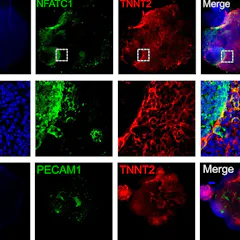
Human heart organoids allow researchers to study the developing heart while avoiding the ethical issues of using human embryos and the imperfections of animal models.
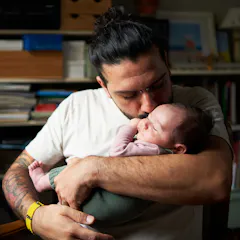
One of the first longitudinal studies of male brain changes across the transition to first-time parenthood finds that becoming a dad affects the brain – without the direct experience of pregnancy.

When resources are tight, mothers bear the costs of playing with their offspring even as they avoid socializing with others.
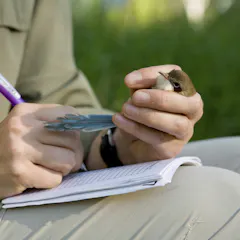
Like all people, the way scientists see the world is shaped by biases and expectations, which can affect how they record and report. Rigorous research methods can minimize this effect.
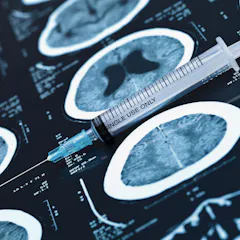
Cancer vaccines have gained much interest among scientists but face a number of hurdles. A new mRNA vaccine for glioma offers a step forward in training the immune system to fight cancer.
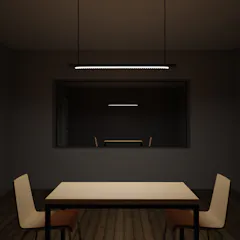
Legal psychology researchers are investigating how police treat drunken suspects, how impaired people behave when questioned, and how juries consider their statements.
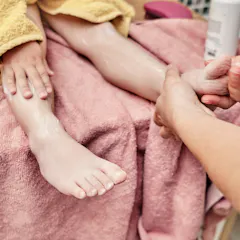
From synthetic fabrics to car exhaust to wildfires, exposure to environmental pollutants push the skin microbiome to adapt in ways that reduce its ability to protect the skin.
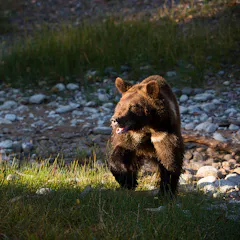
Whether people are hunters can have a big effect.
Top contributors
-

Assistant Professor of Microbiology, University of Tennessee
-
Associate Professor of Human Dimensions of Natural Resources, University of Montana
-
Curator of Archaeobotany and Archaeogenomics, National Museum of Natural History, Smithsonian Institution
-
Assistant Professor of Ecology & Evolutionary Biology, University of Tennessee; Smithsonian Institution
-
Research Associate in Animal Behavior, The University of Texas at Austin; McGill University
-
Professor of Paleontology, University of Chicago
-
Associate Professor of Systems and Computational Biology, Microbiology and Immunology, Albert Einstein College of Medicine
-
Professor of Mathematics, University of Wisconsin-Madison
-
Professor and Chair of Health Economics, Rice University
-
Ph.D. Candidate in Bioengineering, University of Washington
-
Associate Professor of Biology, Penn State
-
Associate Professor of Bioengineering, University of Washington
-
Assistant Professor of Neurosurgery, University of Florida
-
Assistant Professor of Electrical and Computer Engineering, Georgia Institute of Technology
-
Lecturer, Northwestern University
