

Future missions may be able to take only a small, damaged sample from space back to Earth. A simple analysis tool could help determine whether its contents suggest the presence of life.
Articles on STEEHM new research
Displaying 21 - 40 of 176 articles

Astronomers want to understand how spiral galaxies form and get their massive spiral arms.

When you’re upset, finding a new way to think about a negative situation can help you feel better. But researchers find the process takes some effort to really work.
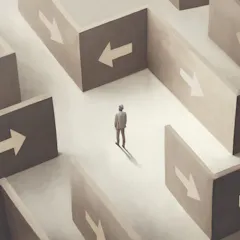
Habit helps take the mental load off figuring out how to get somewhere. But relying on the familiar can make it harder to adapt to changes to your route and to find better ones.

Some industry-funded clinical trials show signs of being designed to market drugs rather than to test them for their safety and effectiveness. Detecting these studies remains difficult.
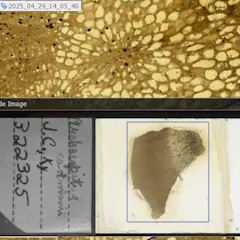
Pollen, algae, insects, radiolarians – each unique microfossil holds clues to how Earth has changed over millions of years. Combining AI with digital scanners helps researchers piece it all together.
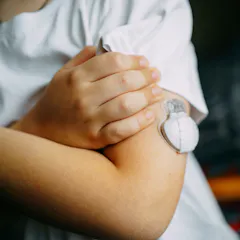
Genetics may only partially determine a newborn’s risk of developing Type 1 diabetes. Screening umbilical cord blood could lead to earlier treatments to prevent or reduce disease.
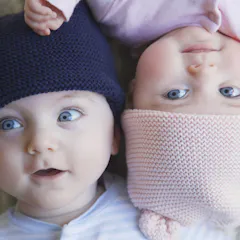
Pulling together the results of 40 experiments done by different teams over decades, researchers found that infant boys and girls equally tune in to human faces and voices.
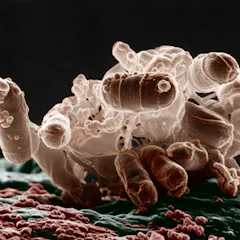
Bacteria don’t quietly die when exposed to antibiotics – they actively respond in ways that in turn change how your body responds to infection.

Atomic clocks undergird modern timekeeping. A nuclear clock could be even more precise.
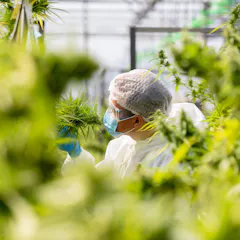
Legal recreational cannabis use comes with an increase in innovation – but tends to focus on what marketers and businesses are interested in, rather than health benefits and risks.
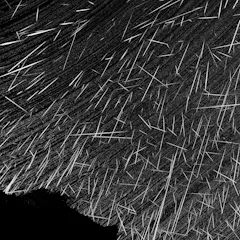
A newly identified meteor shower reveals that intense heat is fragmenting a previously unknown asteroid as it passes too close to the Sun.
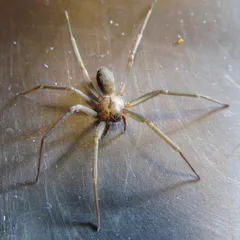
Not all spider venoms are created equal. Some are harmless to people, while others can be quite dangerous.

A chemical signature in a lunar rock offers new insights into what early oxygen conditions were like on the Moon.

Once-lethal insecticides now require concerningly high concentrations to effectively kill mosquitoes. Some mosquitoes are already immune to all classes of insecticides used to control malaria.
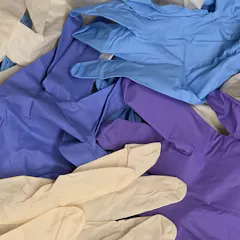
Tiny particles from certain lab gloves look like microplastics, and they can contaminate samples, new study finds.

Many aspects of animals that people find beautiful evolved to be attractive to the animals themselves. A new study hints at a common aspect of perception that dates back hundreds of millions of years.

Children learn what it means to be a woman or a man early on. How they respond to threats to how well they conform to gender stereotypes changes with age.
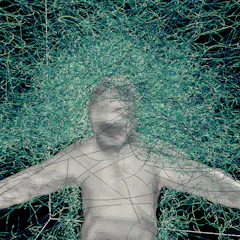
Analyzing 20 million recorded mosquito flight paths revealed the mathematical rules behind how these tiny predators move and zero in on their human targets.
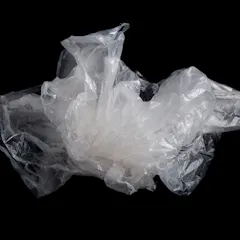
From beetles to sustainable packaging – one failure in the lab led to a new line of promising research.
Top contributors
-

Assistant Professor of Microbiology, University of Tennessee
-
Associate Professor of Human Dimensions of Natural Resources, University of Montana
-
Curator of Archaeobotany and Archaeogenomics, National Museum of Natural History, Smithsonian Institution
-
Assistant Professor of Ecology & Evolutionary Biology, University of Tennessee; Smithsonian Institution
-
Research Associate in Animal Behavior, The University of Texas at Austin; McGill University
-
Professor of Paleontology, University of Chicago
-
Associate Professor of Systems and Computational Biology, Microbiology and Immunology, Albert Einstein College of Medicine
-
Professor of Mathematics, University of Wisconsin-Madison
-
Professor and Chair of Health Economics, Rice University
-
Ph.D. Candidate in Bioengineering, University of Washington
-
Associate Professor of Biology, Penn State
-
Associate Professor of Bioengineering, University of Washington
-
Assistant Professor of Neurosurgery, University of Florida
-
Assistant Professor of Electrical and Computer Engineering, Georgia Institute of Technology
-
Lecturer, Northwestern University
