

It’s fairly common for managers to intervene to help sales staff, but they have to balance competing duties.
Articles on Research Brief
Displaying 1 - 20 of 636 articles

A strong immune response doesn’t necessarily mean better protection from infection. The type and timing of immune attacks matter, too.

Rather than simply forgetting a memory, your brain has likely misplaced it. Aging can make memory confusion worse.

Making broadband affordable and training people how to best use it are also key to saving time.

Alcohol abstinence alters brain activity in ways that may drive someone with alcohol use disorder to relapse.

New research shows that YouTube is used not just as an occasional supplement, but as a staple of classroom instruction.

Study suggests long-practiced strategy of taking out the heads of drug cartels may be missing underlying predictors of crime.

People who interact with expressive robots that make mistakes react with suspicion rather than seeing the bots as malfunctioning machines.

Researchers are finding ways to target the toxic proteins involved in neurodegenerative diseases such as Parkinson’s and Alzheimer’s that were once considered ‘undruggable.’

Researchers found that while authorities have depended on nonprofits to deal with the refugee crisis, many nonprofit leaders had little say in planning and coordination.

Generative AI’s overemphasis on Western moral concerns could reinforce global disparities in sensitive applications such as public health messaging and global communication.

Animal experiments and analysis of patient records suggest that taking glucosamine is safe for a healthy brain but is associated with further decline in diseased brains.

Large language models can uphold falsehoods they or human users state, despite being presented with evidence to the contrary.

New research shows that for every 10 boys identified with autism, only about two girls in a comparable situation were identified.

A large review of existing literature shines a light on the little-known condition and points to the need for a better understanding of who is at risk and how to prevent and treat it.

Repeating harmful ideas online, or regularly making fresh accusations, keeps hate groups alive.

A study found that South Koreans who received donated US vaccines during the COVID-19 pandemic were more in favor of their government giving to other nations.

Do people have a natural aversion to putting in the effort or wasting effort?

In two online surveys, researchers found that Americans’ concern for future generations is often underestimated.
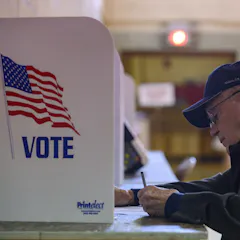
Since voters live longer, casting a ballot may be seen as another healthy habit, like going for a run or eating lots of vegetables.
Top contributors
-

Assistant Professor of Psychology, Arizona State University
-
Director, Institute for Social and Health Equity, University at Albany, State University of New York
-
Distinguished Professor of Pharmacy Practice, University of Connecticut
-
Associate Professor of Nonprofit Studies, George Mason University
-
Assistant Professor of Social Psychology, University of Utah
-
Professor of Economics and Education Policy, New York University
-
Associate professor, Bowling Green State University
-
Associate Professor of Education, University of Southern California
-
Associate Professor of Mechanical, Aerospace and Biomedical Engineering, University of Tennessee
-
Ben L. Fryrear Chair in Marketing and Associate Professor of Business Administration, University of Pittsburgh
-
Professor of Communication, The Ohio State University
-
Associate Professor of International Business, University of South Carolina
-
Associate Professor of Communication, Michigan State University
-
Associate Professor of Quantitative Marketing and Analytics, Binghamton University, State University of New York; Indiana University
-
Senior Research Fellow and Lecturer of Gerontology, UMass Boston