
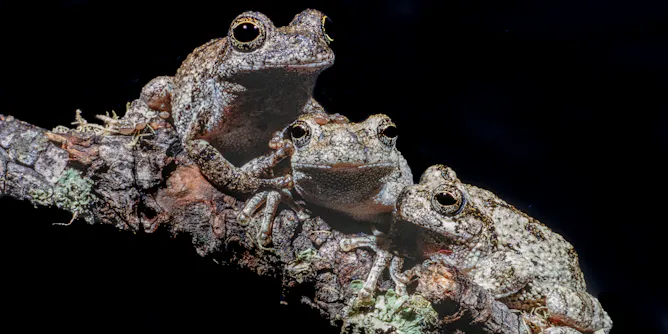
Many animal species – frogs and humans alike – struggle to make choices in a complex, overwhelming world.
Articles on STEEHM new research
Displaying 1 - 20 of 174 articles
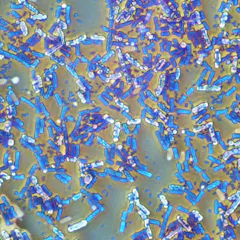
Bacteria make a survival gamble when they devote all their energy to forming spores. Evolution is quick to get rid of this function, and researchers did the accounting to understand why.

A strong immune response doesn’t necessarily mean better protection from infection. The type and timing of immune attacks matter, too.

Rather than simply forgetting a memory, your brain has likely misplaced it. Aging can make memory confusion worse.

Scientists recreated cosmic rays in a massive underground particle collider.
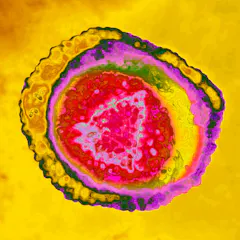
The pain of post-herpetic neuralgia can drive people to the point of suicide. Researchers are getting closer to pinpointing its cause – which may extend to other forms of neuropathy.

Bacteria use strategies similar to artificial neural networks to use the past to adapt to the future.
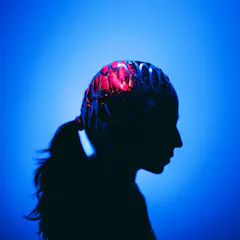
Alcohol abstinence alters brain activity in ways that may drive someone with alcohol use disorder to relapse.

Friendships are integral to human health and well being, yet researchers know very little about how people make friends. A new study investigated what people prioritize for new friendships.
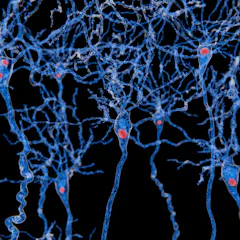
Researchers are finding ways to target the toxic proteins involved in neurodegenerative diseases such as Parkinson’s and Alzheimer’s that were once considered ‘undruggable.’

Researchers were surprised to find how widespread this magnetic property was, not only across families of bees but also beetles, wasps and flies.

Environmental DNA contained in a small sample of water, sand or even air can reveal the presence of people, wildlife and pathogens, helping researchers track where they’ve migrated.

Sensors cannot replace bridge inspectors. They can help engineers see corrosion, cracks, scour and weak magnetic signals that eyes alone can miss.

Cancer deaths in the US have dropped steeply since 1991. But the medical and public health advances leading to these declines have been concentrated among high-income areas.

CAR-T therapy engineers a patient’s own immune cells to fight cancer. Making these cels more resilient can make treatments more effective.

Animal experiments and analysis of patient records suggest that taking glucosamine is safe for a healthy brain but is associated with further decline in diseased brains.

Scientists study small galaxies to look for hints of dark matter in the universe.
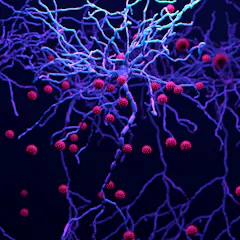
Immune cells can carry HIV into the brain, leading to problems with memory and cognition. Blocking other immune cells from the brain can make matters worse.

Future missions may be able to take only a small, damaged sample from space back to Earth. A simple analysis tool could help determine whether its contents suggest the presence of life.
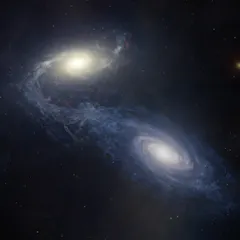
Astronomers want to understand how spiral galaxies form and get their massive spiral arms.
Top contributors
-

Assistant Professor of Microbiology, University of Tennessee
-
Associate Professor of Human Dimensions of Natural Resources, University of Montana
-
Curator of Archaeobotany and Archaeogenomics, National Museum of Natural History, Smithsonian Institution
-
Assistant Professor of Ecology & Evolutionary Biology, University of Tennessee; Smithsonian Institution
-
Research Associate in Animal Behavior, The University of Texas at Austin; McGill University
-
Professor of Paleontology, University of Chicago
-
Associate Professor of Systems and Computational Biology, Microbiology and Immunology, Albert Einstein College of Medicine
-
Professor of Mathematics, University of Wisconsin-Madison
-
Professor and Chair of Health Economics, Rice University
-
Ph.D. Candidate in Bioengineering, University of Washington
-
Associate Professor of Biology, Penn State
-
Associate Professor of Bioengineering, University of Washington
-
Assistant Professor of Neurosurgery, University of Florida
-
Assistant Professor of Electrical and Computer Engineering, Georgia Institute of Technology
-
Lecturer, Northwestern University
