

There are many ways to kill microbes that cause dangerous infections. Combining genetic screening with machine learning can help researchers identify new antimicrobials.
Articles on STEEHM new research
Displaying 161 - 176 of 176 articles
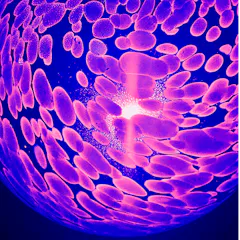
Functional precision medicine works to take the guesswork out of deciding which drug to try next for patients with cancers that don’t respond to standard treatments.

No treatments are currently available to cure Parkinson’s disease. Better understanding the genetic foundation of this condition can help researchers find ways to slow or halt its progression.

Most infection prevention guidelines center on the hospital environment rather than the patient. But the source of antibiotic-resistant microbes is often from the patient’s own body.
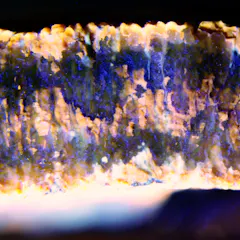
Calcite, the material making up fossilized eggshells, may preserve amino acids better than bone.
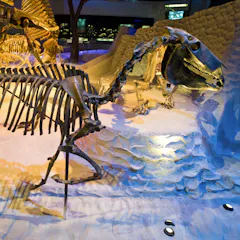
Horse fossils are abundant and widespread across North America. Scientists often use their long history to illustrate how species evolve in response to a changing environment.

Activities such as deep breathing, muscle relaxation, yoga and meditation help people manage their anger, according to a meta-analysis of studies involving more than 10,000 participants.
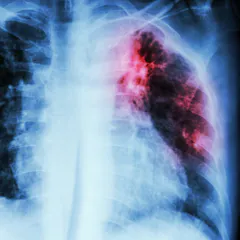
People have been battling tuberculosis for thousands of years, and drug-resistant strains are on the rise. Analyzing large datasets with AI can help humanity gain a crucial edge over the disease.
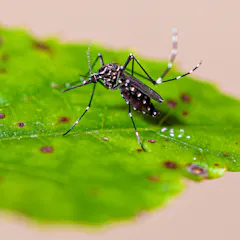
Female mosquitoes don’t want to lay their eggs alone, but they don’t want sites that are too crowded either. Understanding what guides their choice could inform new control strategies.

Researchers designed an ultrathin pacemaker that can be implanted via minimally invasive techniques, potentially improving recovery time and reducing the risk of complications.
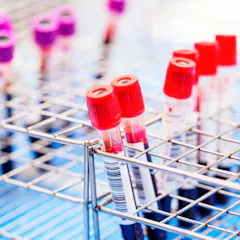
Identifying proteins that are only present in bodily fluids when a patient has breast cancer could provide a way to screen healthy people for the disease.
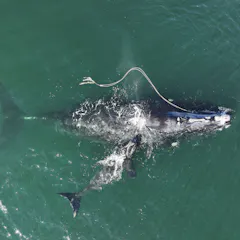
Even when female North Atlantic right whales survive entanglement in fishing gear, it may affect their future ability to breed, increasing the pressure on this critically endangered species.

Vaccine skepticism, and the broader medical mistrust and far-reaching anxieties it reflects, is not just a fringe position in the 21st century.
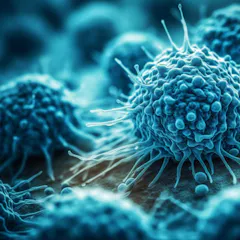
When faced with a threat, T cells have the decision-making flexibility to both clear out the pathogen now and ready themselves for a future encounter.

The toll on wildlife from illegal fishing, bycatch and entanglement in fishing gear is likely underestimated, because it doesn’t account for ‘dark’ fishing vessels, a new study finds.

A new study shows how thawing permafrost and intensifying storms will change how water moves into and through Arctic rivers.
Top contributors
-

Assistant Professor of Microbiology, University of Tennessee
-
Associate Professor of Human Dimensions of Natural Resources, University of Montana
-
Curator of Archaeobotany and Archaeogenomics, National Museum of Natural History, Smithsonian Institution
-
Assistant Professor of Ecology & Evolutionary Biology, University of Tennessee; Smithsonian Institution
-
Research Associate in Animal Behavior, The University of Texas at Austin; McGill University
-
Professor of Paleontology, University of Chicago
-
Associate Professor of Systems and Computational Biology, Microbiology and Immunology, Albert Einstein College of Medicine
-
Professor of Mathematics, University of Wisconsin-Madison
-
Professor and Chair of Health Economics, Rice University
-
Ph.D. Candidate in Bioengineering, University of Washington
-
Associate Professor of Biology, Penn State
-
Associate Professor of Bioengineering, University of Washington
-
Assistant Professor of Neurosurgery, University of Florida
-
Assistant Professor of Electrical and Computer Engineering, Georgia Institute of Technology
-
Lecturer, Northwestern University
