

The typical advice is to take a break and come back to the problem tomorrow with a fresh start.
Articles on Sleep
Displaying 121 - 140 of 567 articles

Canadian 24-hour movement guidelines for healthy development recommend naps for infants and children under two years, and nap options for ages three to four.

Your partner can affect how deeply you sleep.

We have trillions of body clocks – a central one in the brain and others in each cell of our body. Here’s how they work with light to control our health.

With the clocks going back an hour this weekend most of us are looking forward to an extra hour in bed. But will we actually get more sleep?

Being a night or morning person isn’t a personality trait - it’s in your biology.

It’s normal to wake up several times during the night, even if you don’t remember it. But feeling sleepy during the day could be a sign there’s something else going on.

Physical activity, screen time and sleep levels for preschoolers in Canada and globally don’t meet recommendations, risking global health challenges. It’s time to get little ones a little more active.

Light pollution was more strongly correlated with Alzheimer’s disease than some other well-known risk factors.

Some social media users are trying to stay awake for as long as possible – here’s why it’s a terrible idea

Exploding head syndrome is a scary but poorly understood sleep disorder.
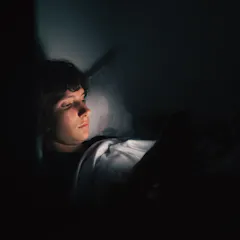
Parents are regularly told to limit their children’s screen time during the evening. But new research suggests it is using digital devices while in bed that is the bigger problem.

Most planets that have the potential to host life have one side always facing their sun.

Researchers are developing theories about the purpose of dreams and learning why some people seem to be better at remembering them.

The message that blue light from screens stops you from falling asleep is essentially a myth, albeit a very convincing one. Here’s what’s really going on.

A new study reveals strengths and weaknesses of the gadgets we use to monitor our lives.

The number of people living to 100 is rising. Diet, medication use, sleep and where you live could all contribute.

If you’re a parent, you’ll be well-acquainted with the hotly debated parenting topic of screen time. But how exactly does screen time impact a child’s physical health?

Many sports fans will suffer sleep deprivation as they stay up to watch the Olympics but there are ways to minimise it and bounce back after the closing ceremony.

New research shows three minute exercise sessions while relaxing at night can increase sleep times by as much as 30 minutes – challenging common advice about avoiding activity before bed.
Top contributors
-

Emeritus Professor of Psychology, Adelaide Institute for Sleep Health, Flinders University
-
Sleep Researcher, Appleton Institute, HealthWise Research Group, CQUniversity Australia
-
Conjoint Senior Lecturer, School of Medicine and Public Health, University of Newcastle
-
Professor of Sleep Health, University of the Sunshine Coast
-
Associate Professor of Neurology, University of Pittsburgh
-
Research Professor and Director of the Behaviour-Brain-Body Research Centre, Adelaide University
-
Professor and Head of Paediatric Sleep Research, CQUniversity Australia
-
Associate Professor at Turner Institute for Brain and Mental Health, School of Psychological Sciences, Monash University
-
Sleep & Circadian Scientist, CQUniversity Australia
-
Professor of Sleep and Physiology and Director of Surrey Sleep Research Centre, University of Surrey
-
Senior Lecturer in Psychology, CQUniversity Australia
-
Professor Emeritus of Nursing, University of British Columbia
-
Lecturer in Psychology, University of York
-
Lecturer, University of Cambridge; Anglia Ruskin University
-
Royal Holloway, University of London