

There’s a reason you sometimes wake up in the middle of the night.
Articles on Sleep
Displaying 61 - 80 of 567 articles

One night of Halloween treats won’t harm your kids’ health long term. But the sugar and excitement can disrupt their sleep – and yours.

Is it equally detrimental to us all – or do some groups of people suffer more than others?

The military sleep method might work for soldiers, and even you. But shift the goalposts away from the two-minute target.

Folklore suggests that a full moon has a strong effect on sleep. But the reality is more complex, and lifestyle habits like screen use before bedtime are likely to have a larger effect.

For leaders, sleep isn’t just a health issue, it’s a performance issue. Sleep-deprived leaders are less inspiring and they can lose moral clarity.
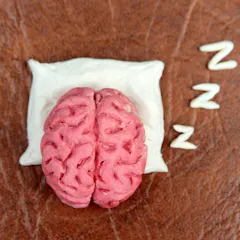
When sleep is disrupted, the brain feels the consequences – sometimes in subtle ways that accumulate over years.

Insomnia damages the brain in two ways that fuel cognitive decline.

The autonomous sensory meridian response may be linked to certain personality types and traits such as introversion.

Why scientists still can’t agree what dreams are for.

The SHIELD (Sleep, Head Injury prevention, Exercise, Learning, and Diet) mnemonic offers a clear and effective strategy for lowering dementia risk.

As we transition from wakefulness to sleep, the nervous system winds down and muscles relax. Sometimes, the brain misinterprets what’s happening.

Your sleep habits are reflected in your skin’s health and appearance.
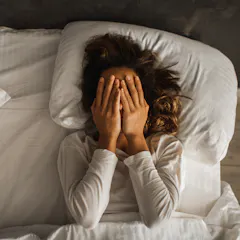
Lying awake at night doesn’t necessarily mean you have insomnia. Here’s what it could be instead.

There’s not a lot of research on whether cutting down on caffeine makes our dreams more vivid. But that doesn’t mean we’re completely in the dark.
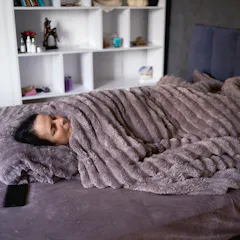
The weighted blanket craze explained by someone who read the research.

Melatonin gummies are not natural or safe, according to a child sleep expert.

Western theories of consciousness tend to assume consciousness is about information.
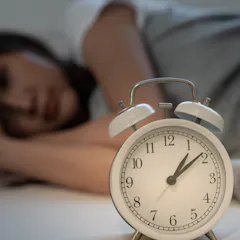
Sleep hygiene is useful if you’re a good sleeper already. If you have insomnia, some of these habits could be making it worse.

While people have long believed that food and dreams are connected, scientific research into this notion has been limited.
Top contributors
-

Emeritus Professor of Psychology, Adelaide Institute for Sleep Health, Flinders University
-
Sleep Researcher, Appleton Institute, HealthWise Research Group, CQUniversity Australia
-
Conjoint Senior Lecturer, School of Medicine and Public Health, University of Newcastle
-
Professor of Sleep Health, University of the Sunshine Coast
-
Associate Professor of Neurology, University of Pittsburgh
-
Research Professor and Director of the Behaviour-Brain-Body Research Centre, Adelaide University
-
Professor and Head of Paediatric Sleep Research, CQUniversity Australia
-
Associate Professor at Turner Institute for Brain and Mental Health, School of Psychological Sciences, Monash University
-
Sleep & Circadian Scientist, CQUniversity Australia
-
Professor of Sleep and Physiology and Director of Surrey Sleep Research Centre, University of Surrey
-
Senior Lecturer in Psychology, CQUniversity Australia
-
Professor Emeritus of Nursing, University of British Columbia
-
Lecturer in Psychology, University of York
-
Lecturer, University of Cambridge; Anglia Ruskin University
-
Royal Holloway, University of London