

Earlier this year the American journalist David Plotz wrote in Slate that: America needs a lot more good engineers and scientists, more competent scientists, even more mediocre scientists. I agree that…
Articles on Science communication
Displaying 281 - 300 of 336 articles
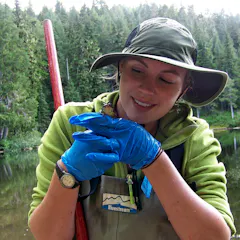
Academic discussions of citizen science are all the rage right now (see here, and here, and here). While most describe the successes of individual projects, none (to my knowledge) have taken the long view…

Is science being taught badly? In the broadest sense, yes. Most Australian school science curriculum documents I see today seem to be about teaching students how different science is from the rest of society…

Want to help fix the science/ society divide? We’re making a documentary looking at how we might do this, and we’re looking for your help. Why? Well … You don’t need to be a rocket sociologist to know…
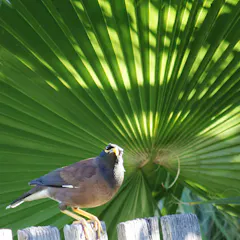
In Australia we are all too familiar with devastating environmental impacts of introduced species such as foxes, rabbits and cane toads. But did you know that some introduced species may have a relatively…

Litanies about how poorly science and the science “brand” are doing have become a little too common for my liking. The most recent notable example came courtesy of the EU’s Science, it’s a girl thing campaign…
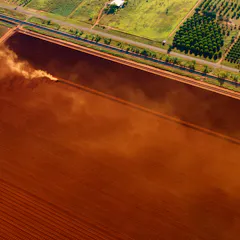
Opinions on anthropogenic climate change vary greatly across society, and it appears that Australia’s farmers remain largely sceptical about the causes of climate change. Recent surveys show that only…

You’ve really got to wonder when even Hollywoodgossip.com is questioning whether the latest European Union campaign to attract girls towards a science career is a spoof. The video being referred to was…

Earlier this week, Senator Chris Evans announced A$5 million worth of science communication grants for 63 projects as part of the Unlocking Australia’s Potential program. We were successful in getting…

The Excellence in Research for Australia Initiative (ERA) is the federal government’s latest attempt to quantify the “excellence” (or otherwise) of Australian researchers. And just a few short weeks ago…
Worldwide, and especially in Australia, much valuable science is being wasted or stalled through what is known as technology rejection – the public’s hostile reception of new technologies or scientific…

The Book of the Dead describes the ancient Egyptian “weighing of the heart” ceremony as the placing of a heart on one side of a set of scales and a feather on the other. Goddess Ma'at’s feather represents…

Last week’s Health of Australian Science report, by the Chief Scientist of Australia Ian Chubb, has again highlighted the issue of declining student engagement in science in primary and secondary schools…

The Office of the Chief Scientist today releases the Health of Australian Science report and it’s an intriguing read. The report was compiled to help the office and the public understand the current state…
Australia is preparing to join a worldwide push to map the wider social returns on investments in science. This week Professor Julia Lane, who developed and led the US National Science Foundations’s Science…

Calling something a “scientific truth” is a double-edged sword. On the one hand it carries a kind of epistemic (how we know) credibility, a quality assurance that a truth has been arrived at in an understandable…
AUSTRALIA IN THE ASIAN CENTURY – A series examining Australia’s role in the rapidly transforming Asian region. Delivered in partnership with the Australian government. Today, Dr Sally Gras considers the…

As scientists, one of our responsibilities should be to promote clarity. A lot of problems are caused by an incorrect or incomplete understanding of terms we regularly, and even lovingly, use. When I use…
“Our lack of ability to position our argument in the public means science has not influenced public debate as it should.” So said Australian National University’s Vice-Chancellor Professor Ian Young at…

Given the importance of science and technology to modern life, particularly in developed nations, why don’t we see more scientists in leading governmental positions? This dearth is particularly stark in…
Top contributors
-

Associate Professor (hon) at the Centre for Public Awareness of Science, Australian National University
-
Senior Lecturer, Australian National Centre for the Public Awareness of Science, Australian National University
-
Science Communication Researcher, Stellenbosch University
-
Senior Research Fellow, Melbourne School of Psychological Sciences, The University of Melbourne
-
Professor of Public Relations, Michigan State University
-
Senior Lecturer in Philosophy and Education; Curriculum Director, UQ Critical Thinking Project, The University of Queensland
-
Science communicator and communication consultant to Questacon, and alumni, CSIRO
-
Professor, Australian National University
-
Chair, The Conversation Media Group
-
Professor and UNESCO Chair-holder, Australian National University
-
Associate Professor of Health Law, Policy and Management, Boston University
-
Laureate Professor of Mathematics, University of Newcastle
-
Campus Visitor / Director of Econnect Communication, Australian National University
-
Associate Professor, Interim Pro Vice Chancellor Learning and Teaching, Australian National University
-
PhD; Lawrence Berkeley Laboratory (retired) and Research Fellow, University of California, Davis