
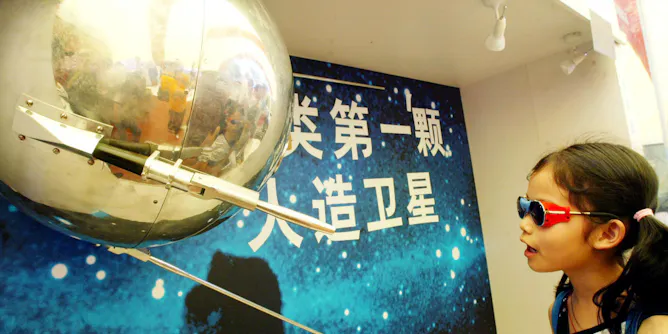
Our fascination with space shows no signs of slowing down, 60 years after the Soviet Union launched the world’s first satellite, Sputnik.
Articles on Satellites
Displaying 241 - 260 of 301 articles
Telecom operators increasingly struggle to find “parking spots” for their satellites in outer space.
Australia’s space sector responded positively to today’s federal government commitment to a space agency. Our experts explain what must come next.
Protecting culturally significant spacecraft enables people on Earth to feel connected to space as the common heritage of humanity.
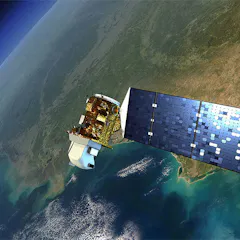
Weather forecasting, bushfire management, power and water supply: Australia relies on earth observations to the tune of A$5 billion a year. But we have very little control over the data we get.
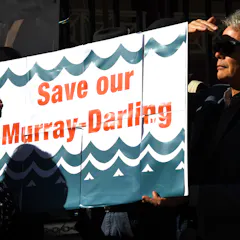
There are local, practical implications linked to failed advancement of infrastructure projects that rely on expertise in space. Protecting Australia’s water is just one example.
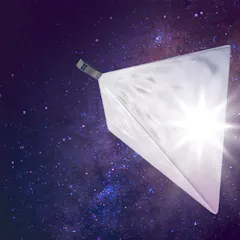
It promises to be one of the brightest objects in the night sky once the Mayak satellite unfolds a giant pyramid reflector. But what is it going to do?
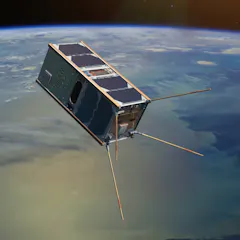
We don’t need another review of Australia’s space industry, we just need a space agency.
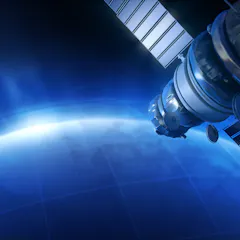
The ‘entangled’ light particles spookily interact with each other at huge distances.
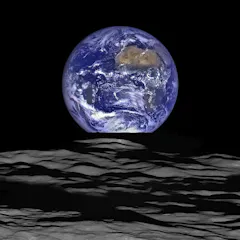
Driverless cars and drones will require pinpoint location accuracy, which means our methods for measuring the Earth’s centre need an overhaul.
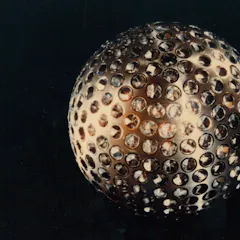
We know much about the true shape of our planet is thanks to two satellites that act as targets for lasers fired from Earth.

Customers on land and in the sky are placing increasing demands on Skymuster satellites for broadband Wi-Fi delivery - can NBC Co deliver?
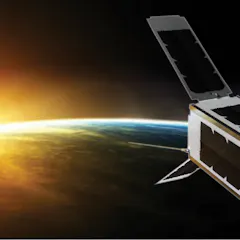
Australia’s hoping to take a share of the billion-dollar space industry with the launch of its first totally Australian-built satellites in 15 years.
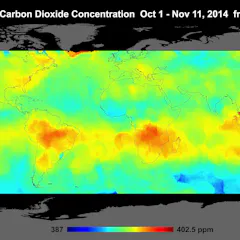
Why use satellites to study Earth’s climate? Researchers leading a new mission explain how images from space will help them analyze which parts of the Americas soak up the most carbon.
The Earth’s magnetic field acts like a giant instrument playing magnetic music.
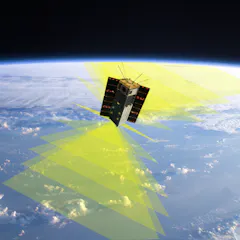
As technology advances, tiny satellites no bigger than a loaf of bread have advanced from just proving they work to being big contributors in answering science questions.
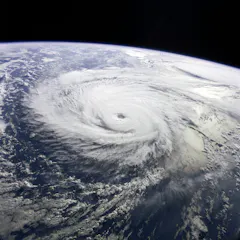
Far from being “politicised science”, as a Trump advisor has claimed, NASA’s satellite monitoring has been a crucial help in understanding the planet we live on.
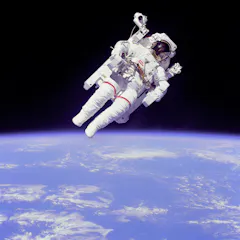
Listen to some weird space sounds and help identify crunches, whistles and other odd effects. It could help save our satellites.
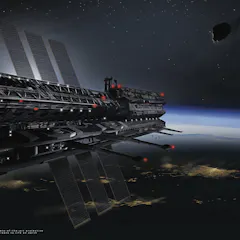
Asgardia is calling for unrestricted research but history has given us many examples where this has resulted in unacceptable consequences.
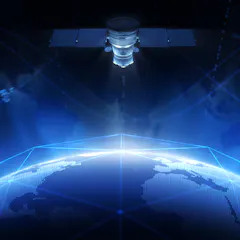
The Micius satellite will encrypt data using fundamental laws of physics rather than crackable codes.
Top contributors
-

Associate Professor, Astronomy, University of Regina
-
Professor, Physics and Astronomy, University of British Columbia
-
Andrew Dempster is a Friend of The Conversation.
Director, Australian Centre for Space Engineering Research; Professor, School of Electrical Engineering and Telecommunications, UNSW
-
Associate Professor in Archaeology and Space Studies, Flinders University
-
Associate Professor in Astronomy, Monash University
-
Associate Professor of International Affairs, Georgia Institute of Technology
-
Lecturer in space and military law and strategy, UNSW
-
Chief Executive Officer, Australasian Centre for Space Governance; Associate Expert, National Security College, Australian National University
-
Emeritus Professor of International Law, Western Sydney University
-
Adjunct Senior Research Fellow in Environmental Law, University College Dublin
-
Associate Professor, RMIT University
-
Space Plasma Physicist, Imperial College London
-
University Distinguished Professor of Astronomy, University of Arizona
-
Scientific Officer, Obafemi Awolowo University
-
Director, Bushfire Research Centre of Excellence, Australian National University