
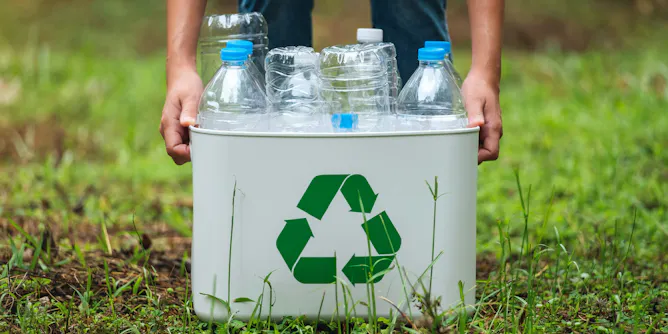
Offering people the chance to win a prize instead of only receiving their deposit back could incentivize more people to recycle more often.
Articles on Recycling
Displaying 41 - 60 of 411 articles

Research shows most Australians believe they are good recyclers – but they’re often wrong. Here’s how to avoid common recycling mistakes.

Varying approaches to waste definition and management have made it a challenge to track what happens to the waste we recycle.

The EU is vulnerable to shortages of materials that are required for clean technologies.

Local efforts to transform discarded garments and textile waste into valuable products are evidence that fashion and degrowth are compatible.
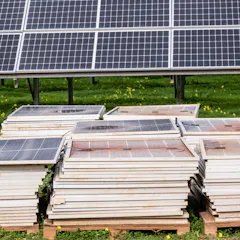
Older rooftop solar systems are being scrapped – often well before the end of their useful life. Establishing a product stewardship scheme is part of the solution.
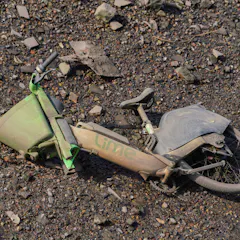
Electric bike batteries can be particularly dangerous and tricky to dispose of.
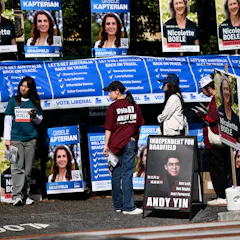
From corflutes and how-to-vote cards to 250,000 pencils, 240,000 volunteer vests and 80,000 ballot boxes, here’s what happens to election materials after polling day.
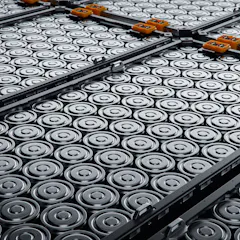
Old EV batteries have huge potential. But it’s not going to be easy to realise this.

How misleading marketing leads to greenwashed consumer behaviour and ineffective recycling of waste streams.

Not all plastic is the same. Old yogurt cups and milk jugs, for example, don’t play well together when being turned into new materials. However, there are solutions.

So many cities with densely populated communities living in flats without gardens struggle to find sustainable solutions to food waste.
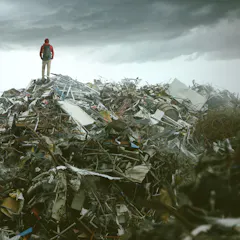
Waste, as a thing, an idea, a problem, has always been wholly determined from a human standpoint.
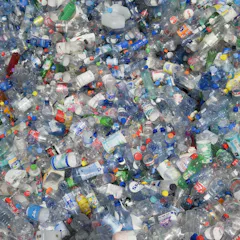
Pyrolysis breaks down plastic and generates potentially useful oil − but it’s not a silver bullet for the planet.

A new Productivity Commission report finds regulations and costs are slowing Australia’s progress in becoming a circular economy.
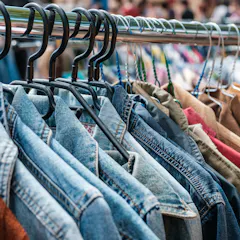
As rich countries move towards more sustainable practices, it’s vital to include communities whose livelihoods could be damaged.
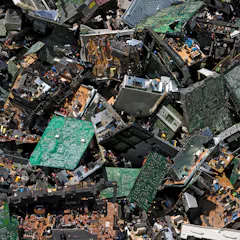
Less than 25% of all e-waste globally gets recycled. That’s because there are many challenges involved – but there is a way forward, too.

The PFAS in lithium-ion batteries is a major obstacle to recycling or disposing of these batteries safely. But we have a way to fix this problem.
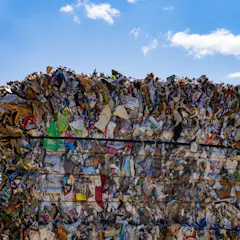
We don’t recycle enough! Cities, as the main sources of consumption and waste production, are strategically positioned to reverse this trend.

Plastic waste expert Mark Miodowonik explains the history of plastic and why he believes manufacturers must be responsible for making sure plastic is recycled.
Top contributors
-

Senior Research Fellow, BehaviourWorks Australia, Monash University
-
Lecturer, School of Life and Environmental Sciences, Deakin University
-
Associate Professor and Research Director, Institute for Sustainable Futures, University of Technology Sydney
-
Professor of Global Environmental Politics, University of California, Berkeley
-
Professor of Applied Environmental Science, University of Southampton
-
Research Principal, Institute for Sustainable Futures, University of Technology Sydney
-
Chair professor - Circular Economy, The University of Melbourne
-
Research Chair, Indigenous Approaches to Environmental Management, Keele University
-
Senior Lecturer, School of Property, Construction and Project Management, RMIT University
-
Associate Dean and Head of Project Management, RMIT University
-
Professor of Sustainable Development, Keele University
-
Research Director, Institute for Sustainable Futures, University of Technology Sydney
-
Research associate, Loughborough University
-
PhD Candidate in Environmental Science, Policy, and Management, University of California, Berkeley
-
Birkbeck, University of London