
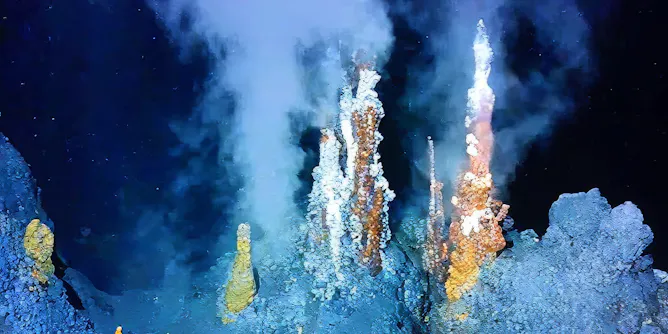
Deep oceans contain microbes with yet-to-be-discovered properties that could drive future innovations in biotechnology.
Articles on Plastic pollution
Displaying 1 - 20 of 205 articles

Many hedgehogs have become reliant on human-provided food.
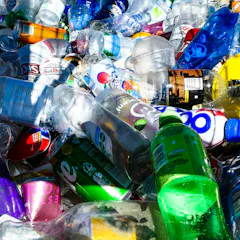
We may need to give the human digestive tract more credit for its ability to act as a barrier to microplastics.

Certain birds ingest more plastic waste, which causes them harm while transporting it to different locations.
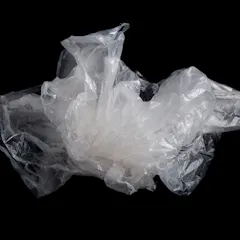
From beetles to sustainable packaging – one failure in the lab led to a new line of promising research.
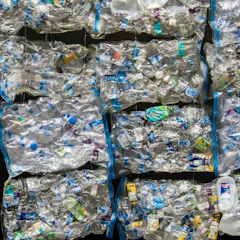
Instead of treating plastic purely as waste, new research shows that it can be transformed into something useful — acetic acid, a key component of vinegar and an important industrial chemical.
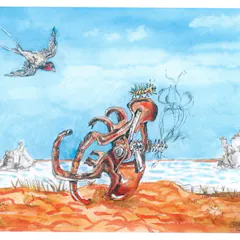
Art projects can help unlock more enthusiasm from citizens for deposit return schemes, reuse pilots or new recycling sorting rules.
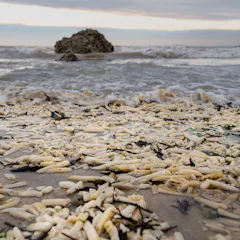
When cargo falls into the sea, it becomes an accidental ocean currents experiment.

The material of your coffee cup matters more than you might think.

Small plastic pellets, used in wastewater treatment facilities since the 1990s, are more than just plastic pollution – they carriy potentially dangerous bacteria.

To date, every family of marine mammal and seabird and all seven species of sea turtles have been documented to ingest plastics.
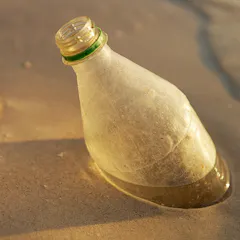
Like the bronze and iron ages, plastic is defining an archaeological era.
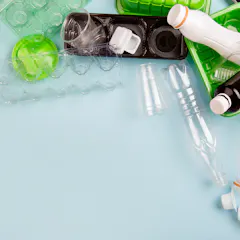
Plastic pollution is often hidden in plain sight – behind positive “eco” or “recyclable” labels, within supply chains and under the convenience of online shopping.
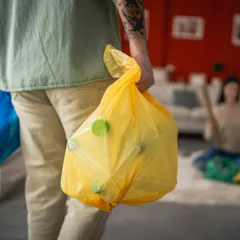
Damaging as it is, food waste has an end point: it decomposes, breaks down, and returns to the soil. Plastic packaging persists indefinitely.

Some plastic pollution lingers at the ocean’s surface for more than a century.

In the 1980s, beach cleanups were envisaged as citizen science, aimed squarely at industrial pollution.
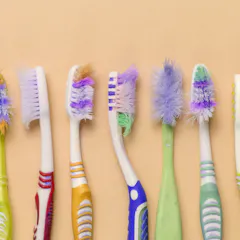
Why clean teeth may come at a dirty cost.

Nanoplastics can cross the blood-brain barrier – and being able to better detect them is the first step in addressing their potential impact.

Cigarette filters are one of the biggest sources of plastic pollution and they serve no purpose.
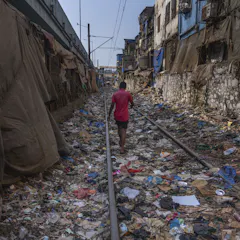
Cleanup is needed to mitigate ecological, economic and social impacts of plastic pollution now and in the future.
Top contributors
-

Professor of Ocean Policy and Economy, University of Portsmouth
-
Assistant Professor of Ecology and Evolutionary Biology, University of Toronto
-
Director - Global Plastics Policy Centre, University of Portsmouth
-
Senior Principal Research Scientist, Environment, CSIRO
-
Lecturer in Resource Efficiency Systems, School of Civil Engineering, University of Leeds; Imperial College London
-
Associate Professor in Arts and Sustainability, University of Portsmouth
-
Professor, School for Resource and Environmental Studies, Dalhousie University
-
Associate professor, University of Portsmouth
-
Research Chair, Indigenous Approaches to Environmental Management, Keele University
-
Banting Postdoctoral Fellow, Ocean Sciences, Memorial University of Newfoundland
-
Research Associate, Department of Civil and Environmental Engineering, Imperial College London
-
Postdoctoral research fellow, University of the Ryukyus, Okinawa Japan, Madonna University, Nigeria
-
Professor of Geography and Environmental Science, Memorial University of Newfoundland
-
Professor of Sustainable Development, Keele University
-
Professor of Law and Associate Dean for International Affairs, Wake Forest University