
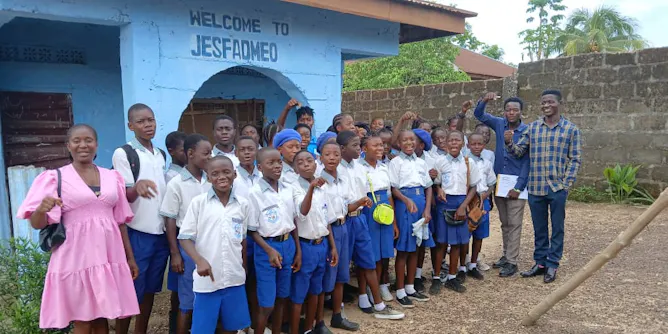
Young people in Bo City, Sierra Leone became youth climate leaders after turning a low-cost Climate Science Hub into a space for science-informed action.
Articles on RandD
Displaying 101 - 120 of 3809 articles
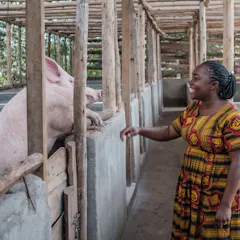
It’s possible to work with and change social norms about suitable work for women.
The IMF is not a neutral arbiter on any discussions relating to preferred creditor status. It is itself a direct beneficiary of the creditor hierarchy.

Middle East tensions and the economic disruptions they have caused will nudge China closer to Africa.
As ocean uses expand, it will be necessary to reduce disputes because they disrupt the environmental sustainability and equity central to a blue economy.
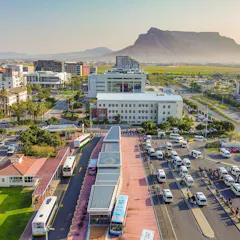
Electric taxis are a long-term climate solution whose immediate value lies in cleaner air, lower operating costs, lower noise and better urban health.
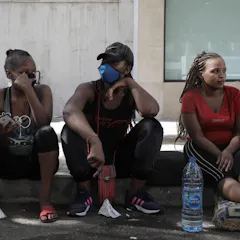
The Kenyan government must look for ways to combine emigration with labour protections.
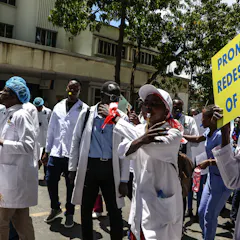
Health workers consistently move from poorer countries to richer ones, a pattern that tracks closely along lines drawn by colonial history.

A new study explores the genetics of chronic kidney disease across diverse African populations.

External assessors don’t always have a full view of a country’s creditworthiness.

The flaws in Standard & Poor’s Global’s report could influence investor perceptions and reinforce existing biases against Africa.

Nigeria’s reliance on imported medicines is the outcome of a policy vacuum that has entrenched interests in commercially attractive, low-risk imports.

Kenya’s devolution has led to tangible improvements in everyday life in places that had long been left behind.

Suspense-packed yet intellectually sharp, Cape Fever is far more than a chamber drama.
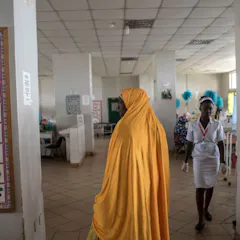
There are four practical policy shifts that the Nigerian government could take to improve the use of maternity services.

The Infrastructure Fund’s architecture undermines the expectation of full autonomy from political and executive meddling.
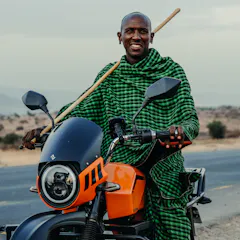
Research suggests a shift to electric mobility is technically and economically feasible.

Chinese-funded infrastructure projects in African cities are driven by the national elites and therefore do not necessarily lead to community-level improvements.
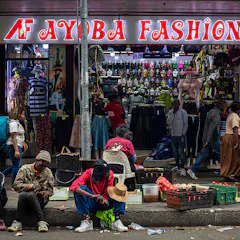
Traders in the informal economy need a supportive ecosystem so they can move beyond survival and contribute to local growth and development.
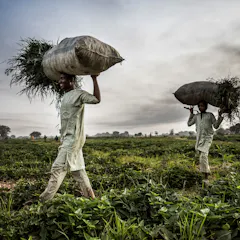
When conflict leads to abandoned fields, lost livestock, or altered investment decisions, it undermines food security and development.
Top contributors
-

Senior Fellow, Department of Agricultural Economics, Stellenbosch University
-
Dean Faculty of Health Sciences and Professor of Vaccinology at University of the Witwatersrand; and Director of the SAMRC Vaccines and Infectious Diseases Analytics Research Unit, University of the Witwatersrand
-
Research Scientist, African Population and Health Research Center
-
Fellow, Nigerian Academy of Science
-
Principal Medical Scientist and Head of Laboratory for Antimalarial Resistance Monitoring and Malaria Operational Research, National Institute for Communicable Diseases
-
Medical scientist, National Institute for Communicable Diseases
-
Research Fellow, Tegemeo Institute, Egerton University
-
Pro Vice-Chancellor, Climate, Sustainability and Inequality and Director, Southern Centre for Inequality Studies, University of the Witwatersrand
-
Professor of medicine and deputy director of the Desmond Tutu HIV Centre at the Institute of Infectious Disease and Molecular Medicine, University of Cape Town
-
Professor of Sociology (Criminology, Victimology and Security Studies), University of Ibadan
-
Professor and Programme Director, SA MRC Centre for Health Economics and Decision Science - PRICELESS SA (Priority Cost Effective Lessons in Systems Strengthening South Africa), University of the Witwatersrand
-
Extraordinary Professor, Global Health, Stellenbosch University; South African Medical Research Council
-
Research associate at African Centre for Cities, University of Cape Town
-
Senior Research Associate, University of Johannesburg
-
Professor of Political Science and Chair of the South African Research Initiative in Gender Politics, Stellenbosch University