
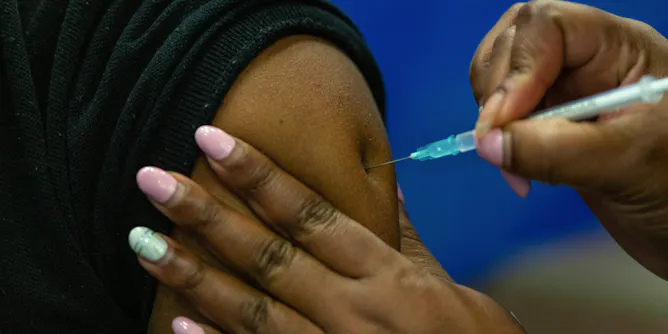
Different social realities lead to different forms of vaccine hesitancy.
Articles on RandD
Displaying 41 - 60 of 3809 articles
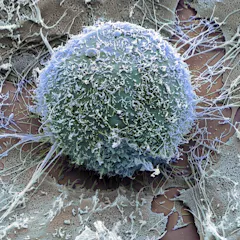
The goal is to develop treatments that can strip away the sugar shield cancer uses to hide from the immune system.
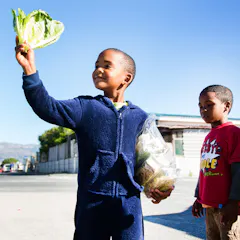
As food and living costs rise, rooftop solar and rainwater harvesting could help low income South African households save money and buy more food.
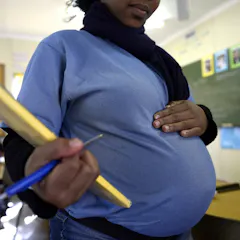
Programmes to address transactional sex need to be customised. The drivers change from country to country.

The only interventions capable of disrupting xenophobia are those that lower, or ideally eliminate, its political, economic and social benefits.
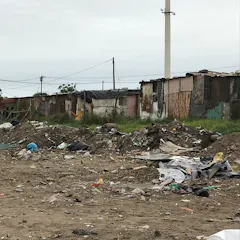
For many isiXhosa-speaking residents, disaster warnings arrive too late, or in language that is difficult to understand.
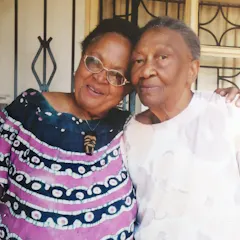
She was a trusted mentor to young militants whose 1976 uprising shaped the country forever.

The song was written hot, as the news of the massacre reached the world. Its creators spanned the continent.

Instead of following European models, countries should take a more considered and contextualised approach to address AI risks.

South Africa shouldn’t settle for a future in which millions who are willing and able to work go hungry while the country waits for the formal sector to grow.

Climate change is threatening sheep farming in South Africa’s Drakensberg. Farmers are adapting but need mountain infrastructure, better climate warnings and vets.

Vaccine development can be really expensive, and there’s limited commercial return.

Access to the internet in South Africa’s economic powerhouse, Gauteng, is marked by inequalities.

Africa needs to navigate the tension between interdependence, economic security, and economic diversification.

Mauritius is securing climate funding, but weak oversight and poor coordination risk leaving vital adaptation money mismanaged.
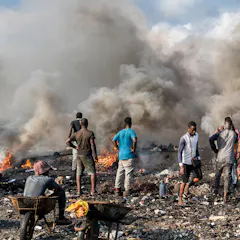
In Agbogbloshie, Ghana, thousands of young women and men burn electronic waste to extract minerals at a cost to their health. They need more protection.
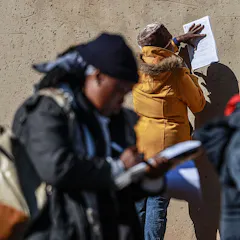
Data labs in Zambia, South Africa and Uganda are deepening how governments understand the economies they are responsible for, and the people within them.

AI tools for farming can play a role. But they need to be properly tailored for African and developing nations’ context.
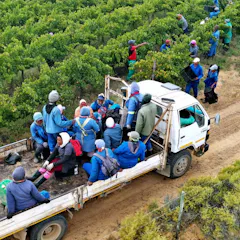
Global supply chains lead to companies capturing most of the value, while suppliers – and especially workers – get a much smaller share.

Ethiopian communities are cheaply filling destructive gullies with soil, stones and branches and replanting them to stop erosion and restore farmland.
Top contributors
-

Senior Fellow, Department of Agricultural Economics, Stellenbosch University
-
Dean Faculty of Health Sciences and Professor of Vaccinology at University of the Witwatersrand; and Director of the SAMRC Vaccines and Infectious Diseases Analytics Research Unit, University of the Witwatersrand
-
Research Scientist, African Population and Health Research Center
-
Fellow, Nigerian Academy of Science
-
Principal Medical Scientist and Head of Laboratory for Antimalarial Resistance Monitoring and Malaria Operational Research, National Institute for Communicable Diseases
-
Medical scientist, National Institute for Communicable Diseases
-
Research Fellow, Tegemeo Institute, Egerton University
-
Pro Vice-Chancellor, Climate, Sustainability and Inequality and Director, Southern Centre for Inequality Studies, University of the Witwatersrand
-
Professor of medicine and deputy director of the Desmond Tutu HIV Centre at the Institute of Infectious Disease and Molecular Medicine, University of Cape Town
-
Professor of Sociology (Criminology, Victimology and Security Studies), University of Ibadan
-
Professor and Programme Director, SA MRC Centre for Health Economics and Decision Science - PRICELESS SA (Priority Cost Effective Lessons in Systems Strengthening South Africa), University of the Witwatersrand
-
Extraordinary Professor, Global Health, Stellenbosch University; South African Medical Research Council
-
Research associate at African Centre for Cities, University of Cape Town
-
Senior Research Associate, University of Johannesburg
-
Professor of Political Science and Chair of the South African Research Initiative in Gender Politics, Stellenbosch University