
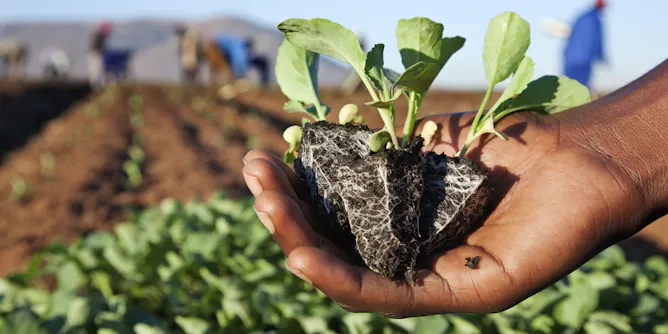
Women farmers in KwaZulu-Natal have had to abandon their fields because the government has failed to maintain irrigation systems built in the apartheid era.
Articles on RandD
Displaying 161 - 180 of 3809 articles
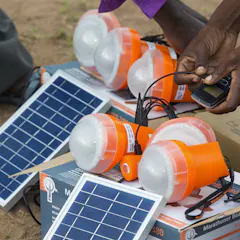
Some women in Zimbabwe are being left behind in the move to green energy because they can’t afford solar systems that can power electric stoves.

Research showed that older women used safer methods of abortion. Fully safe methods did not dominate in any region of Ghana.
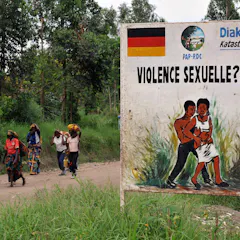
Men and women who took part in an interfaith programme experienced a remarkably lower incidence of violence, even years later.
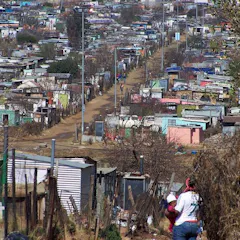
Housing policy should take note of what a home really means to people.

Financial literacy gives women the knowledge, confidence and skills to engage in financial decision-making.

Obesity remains a problem in Africa.

If growth is the metric that counts, this is not yet the turning point that will deliver rising living standards and jobs for all.
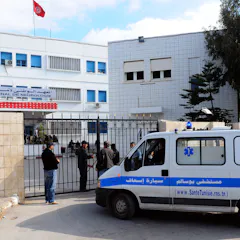
Health inequality is not only about who reaches a health facility. It is also about what happens once patients are inside the consultation room.
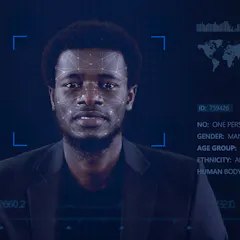
Digital identification is supposed to provide identity to all people. But sometimes it blocks access to essential services.
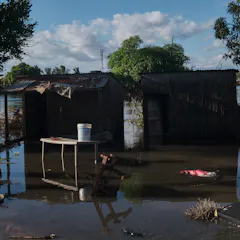
Flooding alters the environment in ways that favour malaria transmission.

Agoa’s effectiveness was limited even before US tariffs started changing unpredictably.

The discovery points to a long evolutionary history in north Africa, much earlier than modern Homo sapiens.
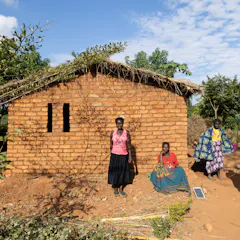
Even small solar devices that can power phone chargers and lights have made a difference in rural Malawi. Now, bigger and better solar systems are needed.
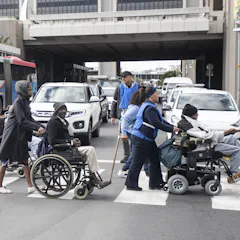
Structural barriers such as inaccessible infrastructure and lack of transport options affect South Africa’s reputation as a disability-friendly country.

Polluting companies in South Africa have had to pay a tax on their carbon emissions since 2019. This gives them a good incentive to reduce emissions.
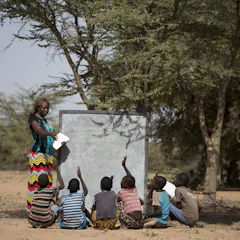
Public finance is the means through which societies either raise living standards or entrench dependence.
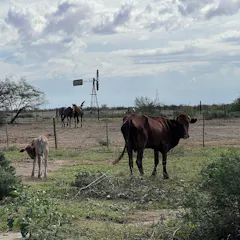
Mesquite tells a story about unintended consequences; but it also shows how careful, collaborative responses can lead to solutions for people and the environment.

The electron is the tiniest particle. Then there are neutrinos, which are as small but may weigh more.
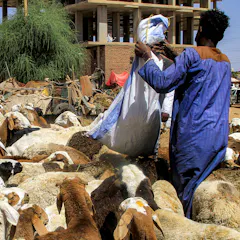
Armed actors in fragile contexts typically engage in sectors where they can quickly extract profits.
Top contributors
-

Senior Fellow, Department of Agricultural Economics, Stellenbosch University
-
Dean Faculty of Health Sciences and Professor of Vaccinology at University of the Witwatersrand; and Director of the SAMRC Vaccines and Infectious Diseases Analytics Research Unit, University of the Witwatersrand
-
Research Scientist, African Population and Health Research Center
-
Fellow, Nigerian Academy of Science
-
Principal Medical Scientist and Head of Laboratory for Antimalarial Resistance Monitoring and Malaria Operational Research, National Institute for Communicable Diseases
-
Medical scientist, National Institute for Communicable Diseases
-
Research Fellow, Tegemeo Institute, Egerton University
-
Pro Vice-Chancellor, Climate, Sustainability and Inequality and Director, Southern Centre for Inequality Studies, University of the Witwatersrand
-
Professor of medicine and deputy director of the Desmond Tutu HIV Centre at the Institute of Infectious Disease and Molecular Medicine, University of Cape Town
-
Professor of Sociology (Criminology, Victimology and Security Studies), University of Ibadan
-
Professor and Programme Director, SA MRC Centre for Health Economics and Decision Science - PRICELESS SA (Priority Cost Effective Lessons in Systems Strengthening South Africa), University of the Witwatersrand
-
Extraordinary Professor, Global Health, Stellenbosch University; South African Medical Research Council
-
Research associate at African Centre for Cities, University of Cape Town
-
Senior Research Associate, University of Johannesburg
-
Professor of Political Science and Chair of the South African Research Initiative in Gender Politics, Stellenbosch University