Antonio Tarquinio, The Conversation and Sunanda Creagh, The Conversation
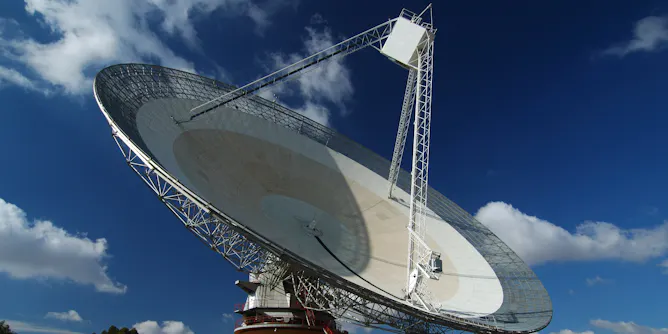
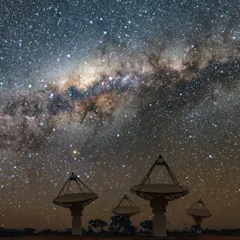
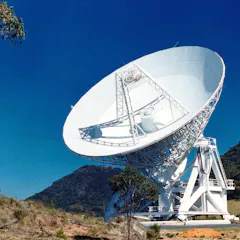
The Dish in Parkes is scanning the southern Milky Way, searching for alien signals
The Conversation50.7 MB(download)
Today we hear about the Parkes radio telescope's role in the search for alien life. Our guide is the irrepressible John Sarkissian, the scientist who's had his eye on The Dish since childhood.
Today we hear about some of the fascinating space research underway at Siding Spring Observatory – and how, despite gruelling hours and endless paperwork, astronomers retain their sense of wonder for the night sky.
Shutterstock
Cameron Furlong, The Conversation and Sunanda Creagh, The Conversation
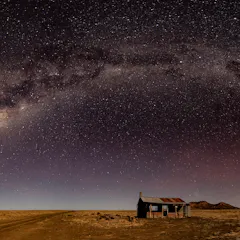
‘The size, the grandeur, the peacefulness of being in the dark’: what it’s like to study space at Siding Spring Observatory
The Conversation, CC BY54.3 MB(download)
Three hours north-east of Parkes lies a remote astronomical research facility, unpolluted by city lights, where researchers are trying to unlock some of the biggest questions about our Universe.
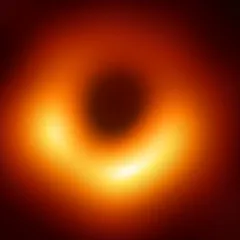
The first direct visual evidence of the supermassive black hole in the centre of galaxy Messier 87 and its shadow.
EHT Collaboration
Astronomers say they have “seen what we thought was unseeable” in releasing the first image of a supermassive black hole. So how did we get to this historic observation?
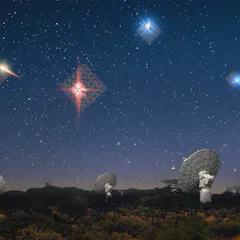
An artist’s impression of fast radio bursts in the sky above the Australian SKA precursor, ASKAP.
OzGrav, Swinburne University of Technology
A precursor to the Square Kilometre Array- the MeerKAT telescope - is being built right now and remarkable progress has been made in the last 12 months.
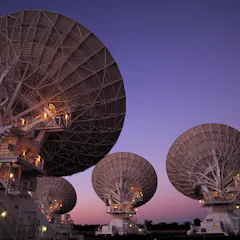
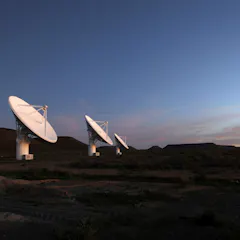
The Australia Telescope Compact Array in Narrabri, NSW.
David Smyth/CSIRO
Astronomy on the continent has been given a much needed boost with Ghana’s converted radio telescope between it and South Africa, to conduct scientific observations.
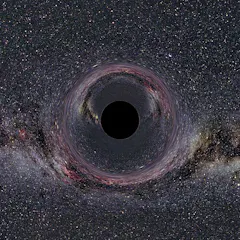
We don’t know what the black hole at the centre of the Milky Way will look like.
Ute Kraus/wikipedia
Very few African universities offer postgraduate degrees in astronomy. This gap in knowledge and training can be addressed through international partnerships and collaboration.
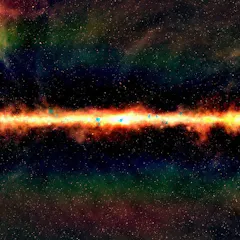
The GLEAM view of the centre of the Milky Way, in radio colour. Red indicates the lowest frequencies, green indicates the middle frequencies and blue the highest frequencies. Each dot is a galaxy, with around 300,000 radio galaxies observed as part of the GLEAM survey.
Natasha Hurley-Walker (Curtin / ICRAR) and the GLEAM Team
To the naked eye the universe we can see on a clear night is dotted with thousands of stars. See through radio eyes, then things look very different.
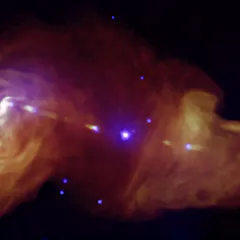
Jets generated by supermassive black holes at the centers of galaxies can transport huge amounts of energy across great distances.
REUTERS/X-ray: NASA/CXC/Tokyo Institute of Technology/J.Kataoka et al
It’s difficult to get jets - powerful, lightning fast particles - to give up their secrets. The new Square Kilometre Array radio telescope could hold the key to solving jets’ mysteries.
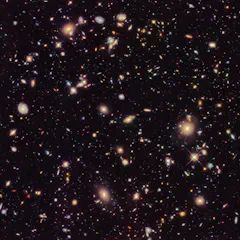
Light from the universe’s first galaxies destroyed the hydrogen atoms that formed during the Big Bang.
NASA, ESA, R. Ellis (Caltech), and the UDF 2012 Team
What’s particularly exciting about “first light” images from South Africa’s MeerKAT radio telescope is that they prove Africa is a rising star in the world of astronomy.
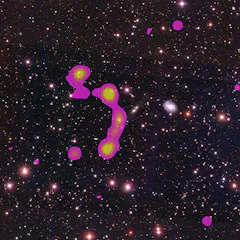
The find by citizen scientists of at least 40 galaxies in a cluster more than a billion light years away is the astronomical equivalent of finding a needle in a haystack.
Telescopes have come a long way since the days when they were all about lone astronomers watching the night sky through their upstairs windows. Today teams of astrophysicists build and use much more modern…