

Black mothers insist, with grit and love, on ensuring our children reach the futures they deserve.
Articles on Racism in schools
Displaying 1 - 20 of 28 articles
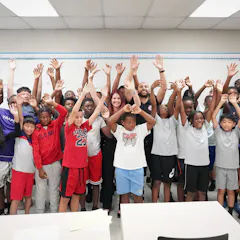
Research from a Toronto neighbourhood program yields insight into how to addresses schooling barriers, plus tips about how parents can support Black children during the summer break and when school starts again.
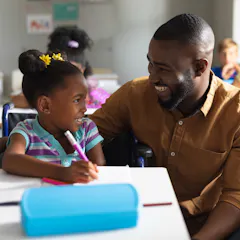
Schools can be ‘white spaces’ where ethnic minority staff are made to feel inferior.
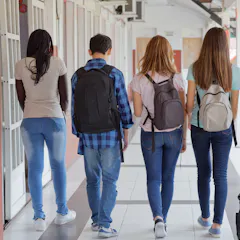
Punishing attendance problems fails to address the issues facing students, from family responsibilities to barriers related to racism or inadequate support for disabilities.

According to the Canadian Anti-Hate Network, far-right groups have been trying to stack school boards with candidates harbouring anti-equity ideologies.
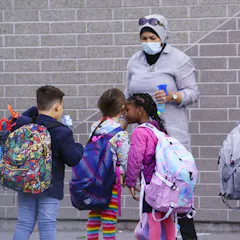
Even with ongoing unpredictability of the pandemic, there’s a role for principals as activist, socially just leaders in a post-pandemic world.

Ensuring that every Black youth sees Back teachers at school is one critical piece of addressing systemic racism in schools.
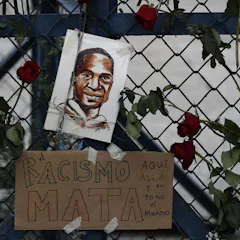
Nationalist myth has associated ‘true Mexicanness’ with being ‘meztizo’ — a racial and cultural mix of Indigenous and Spaniard, even while the state enacted policies to assimilate Indigenous Peoples.
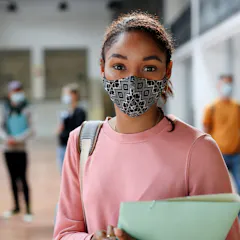
Accountability measures matter for addressing the urgent problem of anti-Black racism. A new Centre of Excellence for Black Student Achievement at the Toronto District School Board is taking action.

Traditional learning formats often fail marginalized students. We should be skeptical of a ‘one-size-fits-all’ or even ‘one-size-fits-most’ model.

The recent attack on a Black teenager in an Edmonton school demonstrates that much more needs to be done to address racism in public institutions.

When teachers use memories to examine how schools unequally affect children’s life choices and chances on the basis of social identity, they’re able to imagine more equitable education.

Although school boards have yet to find a systemic way to combat anti-Black racism, educators are in a unique position to correct these injustices.

An 1850 act permitted the creation of separate schools for Protestants, Catholics and for any five Black families. Some white people used the act to force Black students into separate institutions.

A study in one Alberta school board found racism contributes to poor attendance of on-reserve Indigenous students in public schools, despite educators not recognizing this as a barrier.

How anti-racism social movements and teaching disruptions due to COVID-19 can lead to more equitable and inclusive schooling.

Waterloo Region District School Board’s suspension of the Student Resource Officer program is one step toward ending racism in schools but much more still needs to be done.

Québec’s schools operate in a model of inter-culturalism, while schools across Canada are shaped by the vision of multiculturalism. Neither approach critically addresses racism.

Manitoba faces pressing facing demands for new ways of forming relationships with young people to counter hate.

For high school students, e-learning is best introduced in face-to-face classes where teachers can meet a greater range of learning needs – not as a completely online experience.
Top contributors
-

Researcher in Black education, policy, and community development, University of Toronto
-
Adjunct assistant professor, Werklund School of Education, University of Calgary
-
Associate professor, Graduate Program Director, School of Social Work, Toronto Metropolitan University
-
Associate Professor, Faculty of Education, Wilfrid Laurier University
-
Associate Professor, Department of Leadership, Higher & Adult Education, Ontario Institute, University of Toronto
-
Equity and Diversity Education Manager, Western Sydney University
-
PhD Candidate, Sociology, York University, Canada
-
Research Fellow, University of Technology Sydney
-
Professor of Teacher Education, University of Toronto
-
Professor, Jean Augustine Chair in Education, Community & Diaspora, York University, Canada
-
Professor - Autism and inclusive education, Queensland University of Technology
-
Adjunct Professor, Natural Resource Institute (NRI), University of Manitoba
-
Professor of Inclusive Education, L’Université d’Ottawa/University of Ottawa
-
Assistant Professor, Educational Policy and Equity, University of Toronto
-
Instructor in Educational Leadership, Western University