

By amending its Education Act to remove the language of ‘diversity’ and ‘belonging’ and restricting flags that can fly, Alberta is enacting a quiet curriculum of silence.
Articles on inclusive schools
Displaying all articles

Integrating autistic students fully and meaningfully in classrooms is important for their education, for broader classrooms as well as for families’ employment security and well-being.

An education scholar explains how some teachers and school counselors are quietly resisting what they see as political incursion into the classroom.

Students with disabilities should receive dignified educational and vocational preparation for work where they are paid for labour without prejudice.
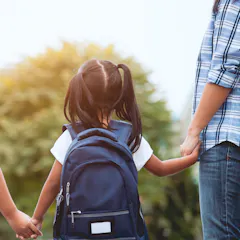
Both parents and school communities can play important roles helping autistic children to thrive.

Guided by policy, practice and relationships with students, families and communities, teachers are charged with helping all students thrive. To suggest otherwise is disturbing.

Research about how New Brunswick education has envisioned inclusion since the 1980s offers lessons in rethinking how to realize schools that celebrate all students’ strengths.
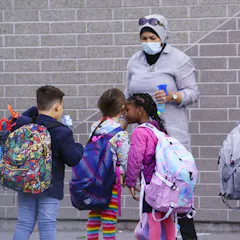
Even with ongoing unpredictability of the pandemic, there’s a role for principals as activist, socially just leaders in a post-pandemic world.
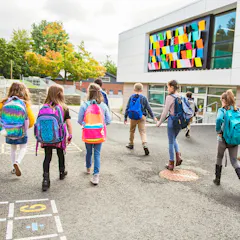
Those who oppose inclusive teaching content often claim to be representing parents’ views. The evidence from a large national survey of parents shows those claims are very wrong.

When teachers use memories to examine how schools unequally affect children’s life choices and chances on the basis of social identity, they’re able to imagine more equitable education.
How anti-racism social movements and teaching disruptions due to COVID-19 can lead to more equitable and inclusive schooling.
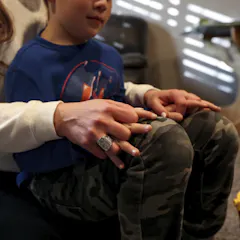
Connecting with school staff, community groups, family and friends may look different right now for families of children with disabilities, but some benefits remain.

For the sake of all employees, school communities and children, our school systems need to find a space in which LGBTQ+ educators might re-imagine their professional and political identities.
Top contributors
-

Associate professor, University of New Brunswick
-
Instructor in Educational Leadership, Western University
-
Assistant Professor, Faculty of Education, University of New Brunswick
-
Professor, Education, York University, Canada
-
Professor, Faculty of Education, Wilfrid Laurier University
-
Professor of Inclusive Education, L’Université d’Ottawa/University of Ottawa
-
Associate Professor, Curriculum and Teaching, Hunter College
-
Associate Professor in Adolescent Development, Behaviour and Wellbeing, Western Sydney University
-
Associate Professor, School of Education, Western Sydney University
-
Canada Research Chair, Neuroscience & Learning Disorders, Associate Professor, Western University
-
PhD Student, School and Applied Child Psychology, Western University
-
Sessional Lecturer, Faculty of Education, University of Manitoba
-
Assistant Professor, University of Wisconsin-Stout Polytechnic
-
Associate Professor of Kinesiology & Physical Education, Wilfrid Laurier University
-
Associate Professor of Health Studies, Research Associate, International Migration Research Centre, Wilfrid Laurier University