

A lack of regulation raises concern about educational quality as well as children’s safety.
Articles on Ontario education
Displaying 1 - 20 of 65 articles

Math achievement gaps begin in kindergarten and persist through Grade 9, highlighting the importance of investing in children’s early development.

Black mothers insist, with grit and love, on ensuring our children reach the futures they deserve.

We are trading one problem — not enough teachers — for another and much deeper problem: lesser qualified teachers.

A study connecting teachers from Chongqing, China and Ontario reveals strengths in Ontario mathematics education, and what could contribute to ongoing improvement.

Strengthening reading instruction is essential, but that doesn’t mean buying commercial programs is the answer — especially when deteriorating classroom conditions drive qualified teachers away.
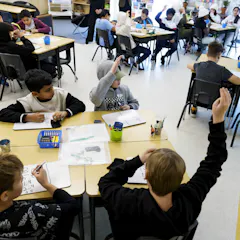
The bill is likely to create new challenges for public schools serving children and youth, as well as for university Faculties of Education aiming to prepare the next generations of teachers.
Systemic barriers, mental-health issues and insufficient school supports for students with disabilities are among the factors that affect absenteeism rates.

The new mandated learning expectations on Black Canadian history have materialized, but they fall short of expectations.
All students and families will be impacted by cuts and provincial reforms being imposed on Ontario schools, and those who are already disadvantaged will bear the brunt.

As U.S. president from 1981 to 1989, Ronald Reagan’s appetite to curb public spending grew, leading him to expand the role of loans and limit the availability of grants.

Craft practices are not supplemental to human survival: they enable it, and have always been at the centre of technological innovation.
A valuable resource for teacher candidates and current teachers about Fetal Alcohol Spectrum Disorder is the Canada FASD Research Network.

Educators in a research partnership have found that early math screening is a helpful teaching tool that helps educators target instruction to support children’s math learning.

Possible changes around university admissions and student fees catalyzed by Ontario’s Bill 33 will depend on how universities interpret the rules and whether they make equity a clear policy priority.

Ontario’s Bill 33 seems an attempt to centralize control of the education system while avoiding real issues like chronic underfunding and understaffed classrooms.

A look at the 1960s founding vision for Ontario’s college system should inspire calling on leaders to support a truly public system of higher education, accessible in all regions.

As universities retreat, platforms like YouTube have increasingly stepped in as a political educator.
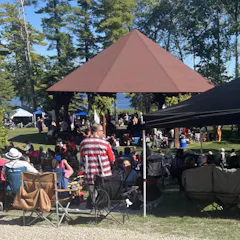
Archives are full of letters from Curve Lake dating back to the 19th century, demanding better pay for teachers, requesting Indigenous teachers and even asking for their own school boards.

A brief look at the history of elected school boards in Canada shows how the powers and responsibilities of elected school board trustees have been eroded considerably.
Top contributors
-

Associate Professor, Faculty of Education, University of Windsor
-
Distinguished University Professor, Faculty of Education, cross-appointed to Medical Imaging, Schulich School of Medicine & Dentistry, Western University
-
PhD Candidate, Curriculum and Pedagogy, Ontario Institute for Studies in Education, University of Toronto
-
Assistant Professor of Educational Leadership, Policy and Program Evaluation, Faculty of Education, L’Université d’Ottawa/University of Ottawa
-
Associate Professor, Department of Leadership, Higher & Adult Education, Ontario Institute, University of Toronto
-
Distinguished Professor, Faculty of Education, Brock University
-
Professor, History of Education, Queen's University, Ontario
-
Assistant Professor, Faculty of Education, Brock University
-
Associate Professor, Faculty of Education, Wilfrid Laurier University
-
Professeur titulaire / Full professor, Département de didactique, Université du Québec à Montréal (UQAM)
-
PhD Student Investigating Child and Youth Mental Health, Brock University
-
Associate Professor, Faculty of Education, University of Windsor
-
Associate Professor, College of Arts, University of Guelph
-
Professor, Faculty of Education;, York University, Canada
-
Professor, Jean Augustine Chair in Education, Community & Diaspora, York University, Canada