

African wild dogs are adapting to rising temperatures using a cue that no longer accurately predicts the best conditions for reproduction.
Articles on Predators
Displaying 61 - 80 of 156 articles

Wildfires are remaking western US forests. Decisions about managing forests that have burned should factor in how fires change animal behavior and interactions between predators and prey.
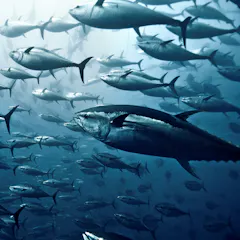
Just about every creature on Earth needs to grab some Zs from time to time. Imagine trying to doze while dodging great whites and killer whales.

Butterflies are important pollinators. To find out how predators affect butterfly populations and diversity, butterfly decoys were used.
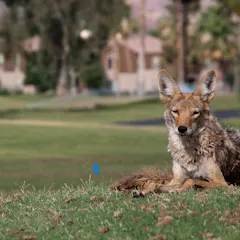
Urban coyotes prey on rodents and spread plant seeds. It’s OK to observe them from a distance, but then you should chase them off.
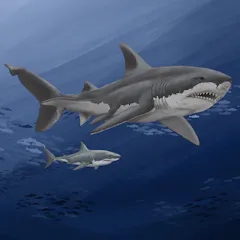
Megalodon, the world’s largest known shark species, swam the oceans long before humans existed. Its teeth are all that’s left, and they tell a story of an apex predator that vanished.
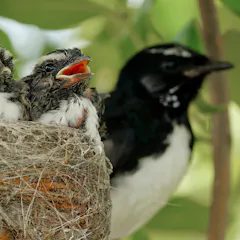
Somehow, female birds manage to hold their families together despite predators, harsh conditions and sometimes, a less-than-attentive partner.

Researchers have discovered that great white sharks are more social than previously thought. Using specialized tags, they tracked six sharks and found that some stay close to each other when hunting.
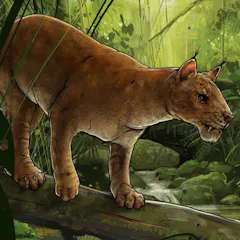
The first sabre-toothed cat-like predator was not much larger than a bobcat, but it had long teeth and a strong jaw to cut through thick skin.
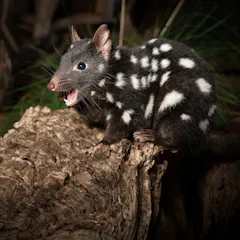
The 1878, the body of Sergeant Michael Kennedy lay in the bush in Victoria’s Wombat Ranges. He’d been shot by the notorious Ned Kelly gang – but the bush would add its own gruesome ending.
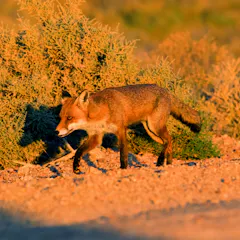
In some regions, foxes kill at least 1,000 animals per square kilometre every year.
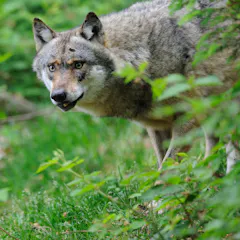
Wolves killing livestock are seizing an opportunity for a meal in a landscape with little natural prey.

Food-sharing by animals that hunt in groups is not well understood. A new study sheds light on African wild dogs.
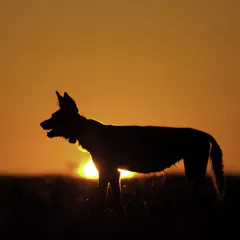
African wild dogs are used to evading hyenas and lions. Genetic research suggests they are using the same strengths to get around human development as well.

The fossil of a gigantic ichthyosaur was recently discovered in the UK. It wasn’t the only creature lurking in the Jurassic oceans.
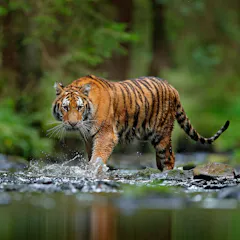
One in 200 jaguars are likely to be affected by dams, versus one in five tigers.
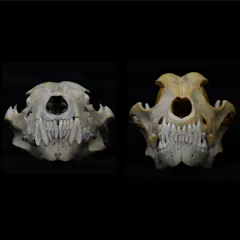
The researchers found tooth shape varied, depending on the types of food a carnivore regularly bites into – in much the same way we choose a kitchen knife depending on what we’re cutting up.
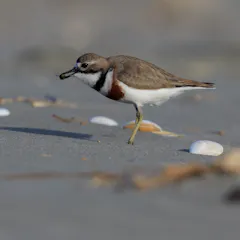
From the archive: using misinformation to fool predators into leaving bird nests alone. Listen to The Conversation Weekly podcast.
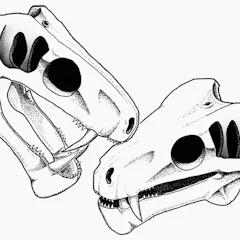
Finding a fossil tooth embedded in bone is always great news for palaeontologists, as it is the gateway to some otherwise out-of-reach understanding of the behaviour of extinct animals.
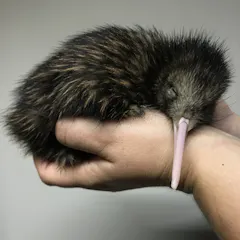
Kiwi are often moved between fragmented populations to limit inbreeding, but without sufficient genetic screening, this risks doing more harm than good.
Top contributors
-

Professor in Wildlife Ecology and Conservation, School of Life & Environmental Sciences, Deakin University
-
Honorary Research Fellow, University of Sydney
-
Associate Professor, Global Ecology, University of Sydney
-
Associate professor in Vertebrate Palaeontology, University of the Witwatersrand
-
Professor in Ecology, Charles Sturt University
-
Discovery Early Career Research Fellow, University of Sydney
-
Professor Emeritus in Terrestrial Ecology, University of Sydney
-
Professor, Murdoch University
-
Associate Professor of Behavioural Ecology, Curtin University
-
ARC Future Fellow, Queensland University of Technology
-
Research Fellow in Canid and Wildlife Genomics, UNSW
-
Professor, School of Biological Sciences, Monash University
-
Future Fellow in Ecology, Queensland University of Technology
-
Senior lecturer, UNSW
-
Senior Lecturer in Psychology, CQUniversity Australia