

By listening to a frog call, adult bats can tell which prey are palatable and which are poisonous. Young bats must acquire this ability over time.
Articles on Predators
Displaying 21 - 40 of 156 articles
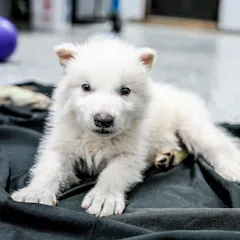
Claims of ‘bringing back’ any species take away focus from proven solutions that can actually fix the extinction crisis.

We don’t want to admit it, but our beloved pet dogs do a lot of environmental damage, from killing or terrifying wildlife to emissions from pet food.
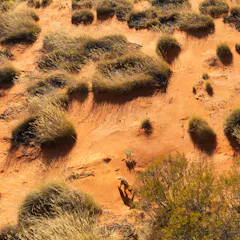
Feral cats, foxes and dingoes are routinely baited to protect wildlife and livestock. But does it matter what kind of bait is used? Do cats ignore it?
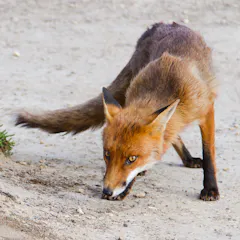
Even though 1080 is derived from native plants, not all of Australia’s native species are resistant to this lethal poison.

Interviews with dog walkers reveals fresh insights into why people choose to keep their dog on lead, or not. Changing that behaviour depends on meeting the needs of both pet owners and their dogs.

Sharks easily consumed large, spiky sea urchins – sometimes in just a few gulps. See it for yourself, in our new Footage from the Field Series.
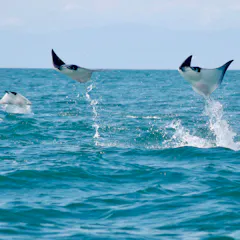
Breaching is one of the most spectacular behaviors among marine animals. A recent review shows that many shark and ray species breach, and identifies the most commonly hypothesized reasons.

Studying carnivore ‘kill rates’ – typically the number of prey killed over time – can help us better understand the role of apex predators in ecosystems across the globe.

Colorado has spectacular scenery, but it comes with wild animals, and they sometimes wander into town. A ballot measure that would ban hunting wild cats is the latest test of public views on hunting.
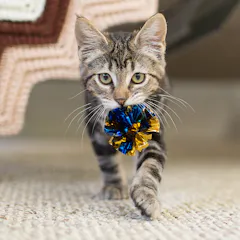
About 80% of dogs and 40% of cats will fetch, a new study finds. Domesticating turned these carnivores’ hunting methods into a game.

Whether they’re going to cook a fish, have it mounted or just take a photo and then release it, anglers want more than a severed head. But with shark numbers rebounding, they’ve got competition.
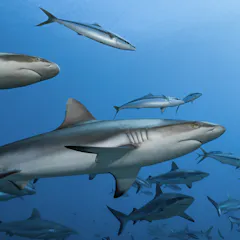
A broad review of shark research shows that sharks play critical roles in keeping ocean ecosystems such as coral reefs and seagrass beds healthy.

New research on cuckoos suggests the battle between exploiters and victims may be a key reason for life’s enormous diversity.
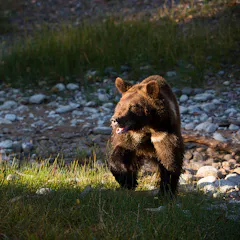
Whether people are hunters can have a big effect.

Not much is known about the predator fly Laphria saffrana. New research identified how they count the wingbeats of their favored prey, letting it slip out of focus before adjusting their heads.

We analysed photos of predators and prey from 3,667 camera traps in southwest Victoria. We found feral cats were more abundant and behaved differently in areas where foxes were baited.
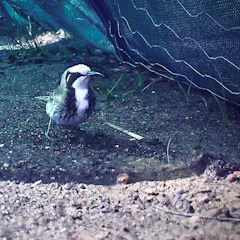
We need every tool at our disposal to stop feral cats and foxes from decimating Australia’s incredible wildlife after fires. Artificial refuges show promise.

The welfare of wild animals is severely compromised to sustain grouse shooting in Scotland.

Understanding how animals think, learn and interact with one another can inform the science of ecology, as predator and prey shape their world.
Top contributors
-

Professor in Wildlife Ecology and Conservation, School of Life & Environmental Sciences, Deakin University
-
Honorary Research Fellow, University of Sydney
-
Associate Professor, Global Ecology, University of Sydney
-
Associate professor in Vertebrate Palaeontology, University of the Witwatersrand
-
Professor in Ecology, Charles Sturt University
-
Discovery Early Career Research Fellow, University of Sydney
-
Professor Emeritus in Terrestrial Ecology, University of Sydney
-
Professor, Murdoch University
-
Associate Professor of Behavioural Ecology, Curtin University
-
ARC Future Fellow, Queensland University of Technology
-
Research Fellow in Canid and Wildlife Genomics, UNSW
-
Professor, School of Biological Sciences, Monash University
-
Future Fellow in Ecology, Queensland University of Technology
-
Senior lecturer, UNSW
-
Senior Lecturer in Psychology, CQUniversity Australia