
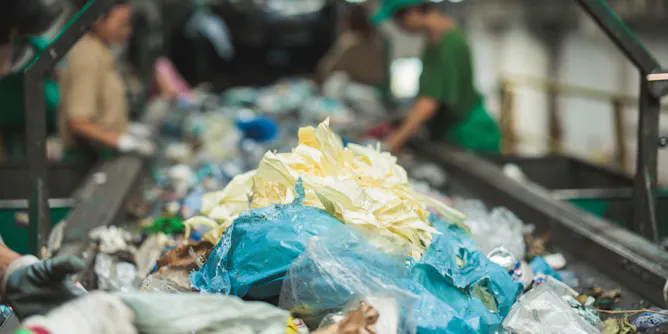
United Nations efforts to advance a global treaty on plastic pollution echo past multilateral agreements that tackled ozone layer depletion and acid rain.
Articles on Plastic pollution
Displaying 81 - 100 of 205 articles
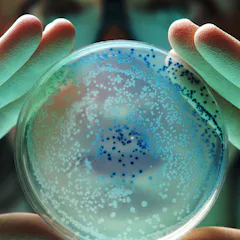
Bacterial DNA extracted from soil includes many genes whose function remains unknown. The novel enzymes these genes code for could be useful in efforts to clean up persistent pollutants.
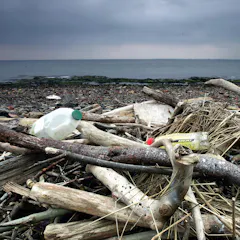
Stringent measures are needed to prevent plastic pollution. But concerns about carbon leaching from plastic waste would be better aimed at emissions from producing more plastic in the first place.

Halloween is a sustainability nightmare – but it doesn’t have to be.
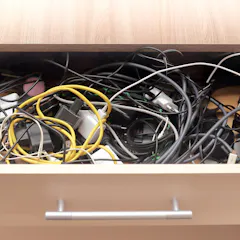
Electronic waste is one of the fastest growing waste streams in the world – there are things you can do to minimise your role in it.

Since the 1950s, billions of tons of plastic have been produced and much of it ends up in the environment – even at the bottom of lakes in Finland.
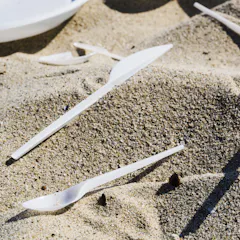
The new ban will raise awareness about the plastic crisis. But failing to provide viable alternatives may simply displace the problem, instead of addressing it
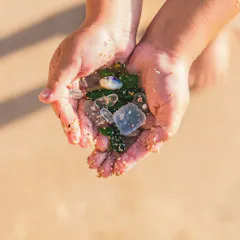
Sea glass, while an eye-catching treasure and a multimillion-dollar industry, exists because of decades of improper waste management.
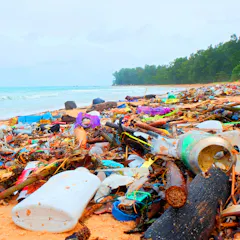
Volunteers have been collecting and sorting washed-up rubbish on the beach for years. Thanks to their efforts, we have data on whether container deposit schemes help the issue.
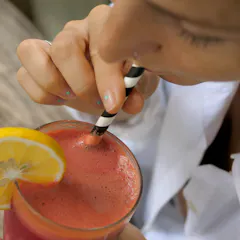
Paper and bamboo straws contain ‘forever chemicals’ – maybe threatening the health of people and wildlife.
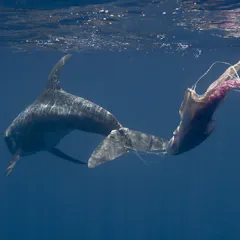
New research shows that relatively large microplastic particles can make their way into the body tissues of marine mammals.
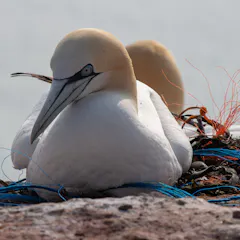
It appears to be widespread among all sorts of different birds.

Some of the world’s most threatened birds are exposed to plastic pollution – even far out to sea.
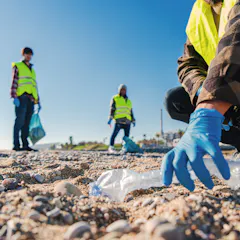
A legal researcher studied court cases in 30 countries to see what works.
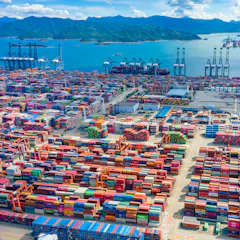
Four graphs that show us how humanity’s impact on the planet is growing.

Marine governance in New Zealand is fragmented, with several agencies operating under various statutes. But a more collaborative, ecosystem-based approach to better protect the ocean is emerging.
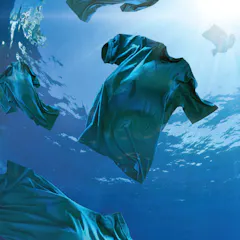
Polylactic acid – a popular bioplastic – does not readily break down when released into the ocean, and could disrupt marine ecosystems
Inflating your cars’ tyres properly isn’t just good for your bank account - it can minimise your environmental footprint too.
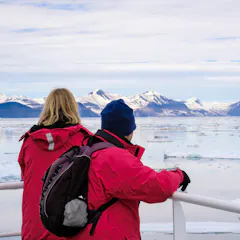
Arctic sea ice algae contaminated with microplastics have serious consequences for ecosystems and the climate.
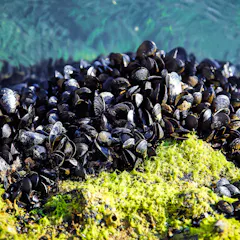
A study shows that exposure to polyester microfibres inhibits growth in mussels.
Top contributors
-

Professor of Ocean Policy and Economy, University of Portsmouth
-
Assistant Professor of Ecology and Evolutionary Biology, University of Toronto
-
Director - Global Plastics Policy Centre, University of Portsmouth
-
Senior Principal Research Scientist, Environment, CSIRO
-
Lecturer in Resource Efficiency Systems, School of Civil Engineering, University of Leeds; Imperial College London
-
Associate Professor in Arts and Sustainability, University of Portsmouth
-
Professor, School for Resource and Environmental Studies, Dalhousie University
-
Associate professor, University of Portsmouth
-
Research Chair, Indigenous Approaches to Environmental Management, Keele University
-
Banting Postdoctoral Fellow, Ocean Sciences, Memorial University of Newfoundland
-
Research Associate, Department of Civil and Environmental Engineering, Imperial College London
-
Postdoctoral research fellow, University of the Ryukyus, Okinawa Japan, Madonna University, Nigeria
-
Professor of Geography and Environmental Science, Memorial University of Newfoundland
-
Professor of Sustainable Development, Keele University
-
Professor of Law and Associate Dean for International Affairs, Wake Forest University