
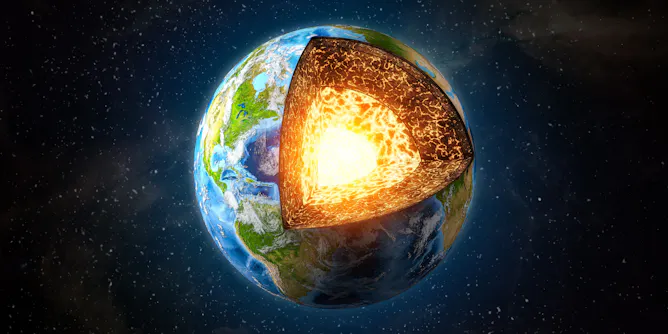
The Earth’s core may be much younger than previously thought.
Articles on Physics
Displaying 121 - 140 of 592 articles
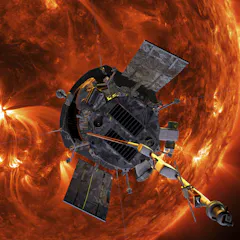
For years, researchers have wondered what energy source allows the solar wind − a projection of charged particles from the Sun − to rush by at hundreds of miles a second.

The latest results from the LZ dark matter experiment have drawn a blank – but the elusive particles are running out of places to hide.
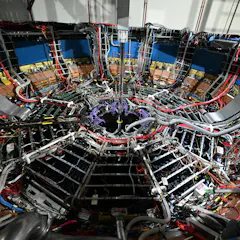
Measurements of 16 ‘antihyperhydrogen’ nuclei may help resolve mysteries of the universe’s exotic matter.
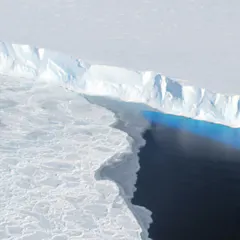
Antarctica’s riskiest glacier is a disaster in slow motion, a polar scientist writes. But in a rare bit of good news, the worst-case scenario may be off the table.
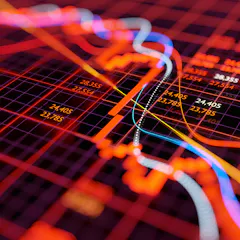
New research predicts when noisy systems are approaching precarious “critical points” – and finds that some parts of the brain prefer to work at the edge of instability

A term emerged in the 1980s for a spinal cord injury caused by breaking called ‘break-dancing neck.’
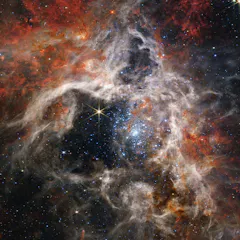
Research casts doubt on theories predicting that light black holes formed immediately after the Big Bang.
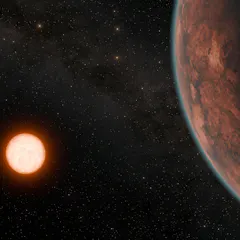
The groundbreaking discovery of a temperate Earth-size planet just 40 light-years away may hold the key to understanding stellar habitability.
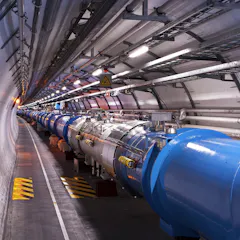
The LHC is back in business for the year, but getting it ready to collect data isn’t always a straightforward process. You can’t just unplug it and plug it in again.
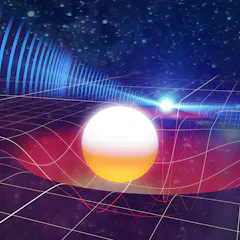
Neutron stars contain some of the universe’s most exotic states of matter – but there’s no easy way to peek inside.

Making physics more engaging means meeting students where they are, highlighting the ways in which it plays a role in their communities.
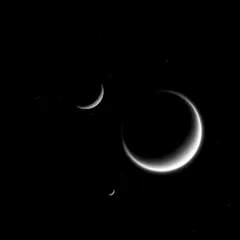
It’s not a competition, but if it were, Saturn would be winning.

Olympic breakdancers spin on their heads and backs, then freeze in funky poses. How? It’s all about physics.
In trying to solve the ultimate problem, we may have inadvertently created a monster.
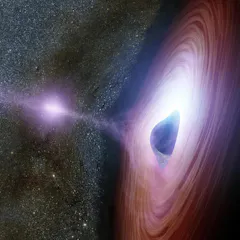
Studying theoretical, fast-spinning black holes is helping physicists understand more about the elusive black holes out in the universe.
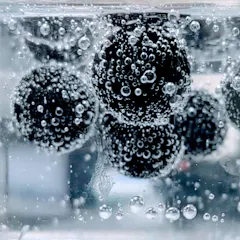
Want to bring extra life to a glass of champagne or soda water? Physicists will tell you to drop in a small object, such as a berry or raisin.
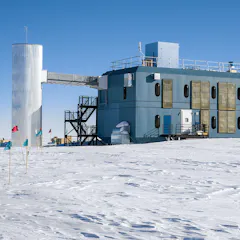
Tau neutrinos are notoriously difficult to spot in detectors like IceCube. But researchers have managed to isolate 7 candidates.
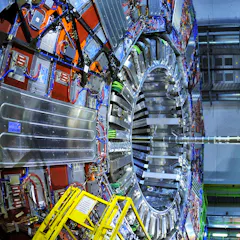
The US, Europe and China are all planning particle colliders that would study the Higgs boson.

Maritime folklore is awash with tall tales of monstrous waves. A new study gets closer to understanding where they come from and how to predict them.
Top contributors
-

Professor, Philosophy of Science, The University of Melbourne
-
Professor of Nuclear Physics, Michigan State University
-
University Distinguished Professor of Astronomy, University of Arizona
-
Professor of Engineering Practice, Purdue University
-
Post Doctoral Research Associate, Centre for the Subatomic Structure of Matter, Adelaide University
-
Physicien, Professeur des Universités, Université Paris-Saclay
-
Professor of Astrophysics, University of Sydney
-
Emeritus Professor, ARC Centre of Excellence for Gravitational Wave Discovery, OzGrav, The University of Western Australia
-
Principal Lecturer of Physics and Astronomy, Clemson University
-
Professor of Physics, Penn State
-
Lecturer, The University of Queensland
-
Senior Lecturer in Physics, University of New England
-
Professor, University of Sydney
-
Professor of Mechanical and Aerospace Engineering, North Carolina State University
-
Professor of Physics and Astronomy, Rochester Institute of Technology