

It’s extremely difficult to see how forces in a pile of sand are distributed between individual grains – a new experimental approach fixes that.
Articles on Physics
Displaying 81 - 100 of 592 articles

The proposed Future Circular Collider could answer questions about the nature of the universe – and have practical benefits along the way.
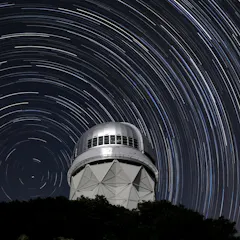
Scientists have conflicting theories on why the universe is expanding at an accelerating rate. New measurements from a massive collaboration complicate these ideas.

Two studies show major progress in the field of photonic microchips.

Physics and poetry both distil complexity into clarity. Learn how poetic structure can shape and express scientific ideas.

A project to map galaxies across the universe may have spied cracks in the foundation of our understanding of the cosmos.

It’s a first-world problem, but it sure is annoying.

By combining ultrasound with a concept called nonlinear acoustics, you can create sound that stays silent until it reaches a specific location.

Spinning maple seeds can shed raindrops in the blink of an eye to regain their helicopter-like flight.
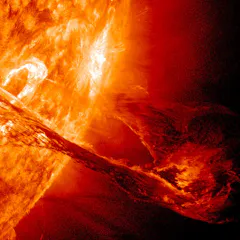
While geomagnetic storms can lead to gorgeous aurora displays, they can also damage satellites and GPS.

Crystals are supposed to be hard and brittle. But when we make them bendy, they help reveal the secrets of how elastic materials work.

A new “topological” approach to quantum computing may address longstanding challenges with the technology.

Scientists thought there was no way to verify the ‘quantumness’ of the enigmatic ‘spin’ just by watching it rotate – until now.

Humans evolved late in Earth history. While this timing inspired the conclusion that humanlike life is a cosmic improbability, a new study pushes back.

In the search for elusive particles called neutrinos, researchers are stringing thousands of detectors in the depths of the Mediterranean.

You would have to flip 75 heads in a row on a fair coin to have the same probability of a single neutrino interacting with a particle of matter.

Weather and climate models are both governed by the same physical processes. But that’s where most of the similarities end.
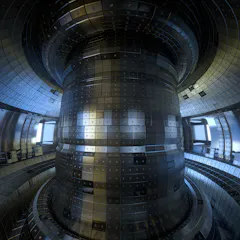
The technology could help produce more resistant materials and allow scientists more control over fusion reactions.

It’s been a bit troublesome to understand the physics behind what’s going on with Inkathazo.

The answer has to do with molecules.
Top contributors
-

Professor, Philosophy of Science, The University of Melbourne
-
Professor of Nuclear Physics, Michigan State University
-
University Distinguished Professor of Astronomy, University of Arizona
-
Professor of Engineering Practice, Purdue University
-
Post Doctoral Research Associate, Centre for the Subatomic Structure of Matter, Adelaide University
-
Physicien, Professeur des Universités, Université Paris-Saclay
-
Professor of Astrophysics, University of Sydney
-
Emeritus Professor, ARC Centre of Excellence for Gravitational Wave Discovery, OzGrav, The University of Western Australia
-
Principal Lecturer of Physics and Astronomy, Clemson University
-
Professor of Physics, Penn State
-
Lecturer, The University of Queensland
-
Senior Lecturer in Physics, University of New England
-
Professor, University of Sydney
-
Professor of Mechanical and Aerospace Engineering, North Carolina State University
-
Professor of Physics and Astronomy, Rochester Institute of Technology