
A 100-year-old equation helps scientists build solar cells, develop biofuels and even study quantum computers.
Articles on Quantum mechanics
Displaying 1 - 20 of 131 articles
Particles’ properties at the quantum level could one day enable faster computing and better cybersecurity.
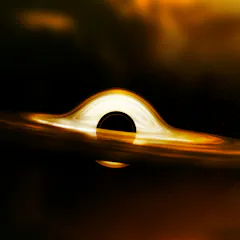
For the first time, scientists have gained information from the very surface of a newborn black hole.
A light particle can appear to leave a cloud of atoms before it enters – a new experiment, asking the atoms, confirms the light spends ‘negative time’ with them.

While direct evidence of multiple universes is hard to come by, indirect evidence raises intriguing possibilities.
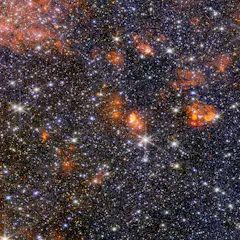
The universe appears to expand in a way that is consistent with string theory.

2025’s Nobel Prize in Physics is a tribute to the scientists who first discovered quantum behaviors in a macroscopic electrical circuit.

Science fiction sometimes uses quantum concepts to make the impossible seem plausible. But real-world developments will likely have profound societal implications.
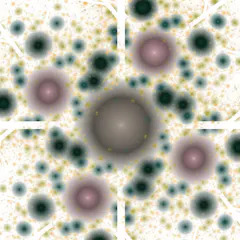
Physicists have found a way to redistribute uncertainty in quantum measurements, paving the way for ultra-sensitive atom-scale sensors.
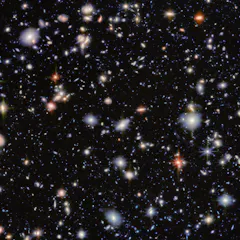
The true “informational age” of the cosmos may be 62 billion years, not just the 13.8 billion years of our current expansion.

19th-century Irish physicist William Rowan Hamilton’s pioneering work contained hints of the enigmatic wave–particle duality that governs the universe.
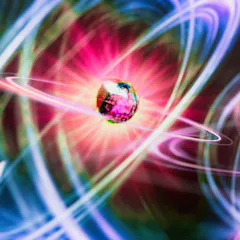
A ‘quantum telephone’ connecting atomic nuclei could make practical quantum computers easier to build and use.
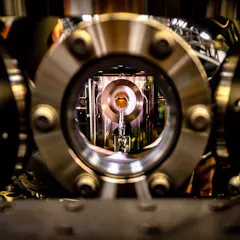
Quantum computers are getting closer and closer to being useful in the real world.

Scientists on the African continent have made notable contributions to photonics research.

Scientists thought there was no way to verify the ‘quantumness’ of the enigmatic ‘spin’ just by watching it rotate – until now.

Quantum computing expert Daniel Lidar explains what problems scientists are still trying to overcome to make quantum computing useful.

Attosecond science allows the extremely fast movements of electron particles to be observed. This emerging field brings both opportunity and controversy.
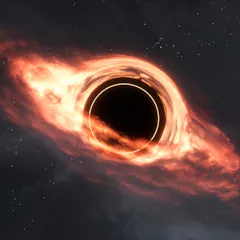
At a singularity, the laws of physics as we know them suffer a complete breakdown. So such objects really shouldn’t exist.

A century ago, physicists laid the foundations of quantum mechanics. One of them, Louis de Broglie, disavowed a famous theory. Why?

AI often has trouble interpreting optical illusions. A new kind of neural network starts to bridge the gap
Top contributors
-

Director, Centre for Quantum Dynamics, Griffith University
-
Professor, Quantum Nanosystems, UNSW
-
Podcast host, The Conversation
-
Lecturer, The University of Queensland
-
Emeritus Professor, ARC Centre of Excellence for Gravitational Wave Discovery, OzGrav, The University of Western Australia
-
Lecturer, Newcastle University
-
Professor of Physics and Director of the Lancaster Quantum Technology Centre, Lancaster University
-
Professor, Philosophy of Science, The University of Melbourne
-
A/Prof, UTS Chancellor's Postdoctoral Research and ARC DECRA Fellow, University of Technology Sydney
-
Associate Professor, Griffith University
-
Post Doctoral Research Associate, Centre for the Subatomic Structure of Matter, Adelaide University
-
Professor in Physics, Griffith University
-
Associate Professor of Quantum Optics & Quantum Physics, University of Rochester
-
Professor of Physics, Heriot-Watt University
-
Honorary senior lecturer, Australian National University
