

The physics underlying the effect of topspin and backspin are best explained by what’s known as the ‘Magnus effect’.
Articles on Physics
Displaying 101 - 120 of 592 articles

Attosecond science allows the extremely fast movements of electron particles to be observed. This emerging field brings both opportunity and controversy.
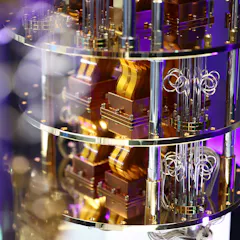
Quantum computers can explore every possible solution to a problem at the same time.

Women in these fields are almost at parity with men at the most selective schools, but the gender gap doubled at many of the least selective universities.

Strap into your sleigh for some Christmas physics fun with Rudolph the ‘redshifted’ reindeer.
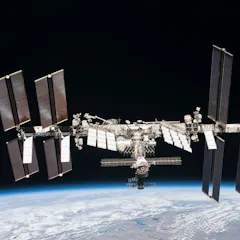
The International Space Station is an engineering feat that has led to countless scientific discoveries. Like the thousands of satellites in orbit, it manages to stay up in the atmosphere.
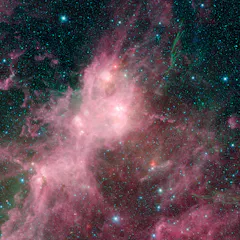
The universe is constantly expanding, but how do scientists think about what it’s expanding into?

Another day, another zap. Understanding the physics of static electricity can help you not get static shocks quite so often.
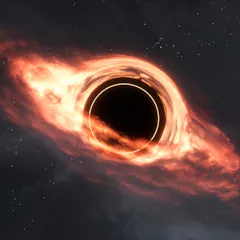
At a singularity, the laws of physics as we know them suffer a complete breakdown. So such objects really shouldn’t exist.

A century ago, physicists laid the foundations of quantum mechanics. One of them, Louis de Broglie, disavowed a famous theory. Why?
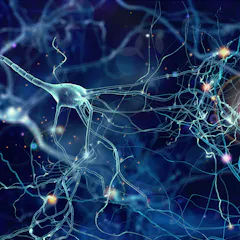
Are neurons star players, or do they prioritise teamwork? A new study has uncovered an answer for this long-standing debate about the brain.

You have certainly experienced this situation before. Let’s approach the problem from a physics perspective and try to calculate the amount of water that will fall on you based on your speed.

Fusion reactors get hot − scientists need materials that can take the heat without deforming and deteriorating.
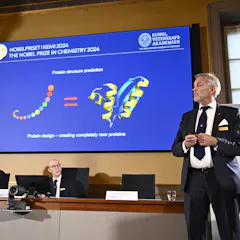
AI will feature in future Nobel prizes as scientists exploit the power of this technology for research.
Two researchers whose work has led to the AI revolution won the 2024 Nobel Prize in physics. A materials physicist explains statistical mechanics, the physics field behind their discoveries.
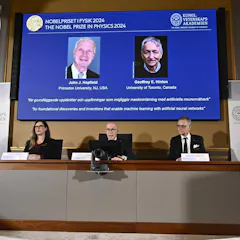
John Hopfield and Geoffrey Hinton, the 2024 Physics Nobel laureates, developed computer systems that can memorise and learn from patterns in data.
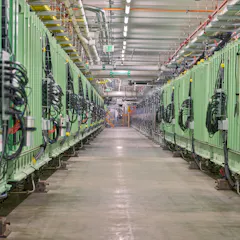
All the oxygen in your body is thanks to magic numbers of protons and neutrons in the nucleus.

Only 5 women have ever won a Nobel Prize in physics. The field as a whole has issues with gender diversity, but as a woman physicist explains, success is possible for women in the field.
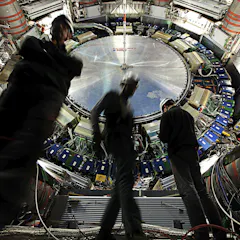
The ATLAS experiment has found quantum entanglement in yet another system: quarks at high energies.

Plants don’t just grow straight up. They can move in loopy and zigzagging ways to get more sunshine. And studying these movements goes all the way back to Darwin in the 19th century.
Top contributors
-

Professor, Philosophy of Science, The University of Melbourne
-
Professor of Nuclear Physics, Michigan State University
-
University Distinguished Professor of Astronomy, University of Arizona
-
Professor of Engineering Practice, Purdue University
-
Post Doctoral Research Associate, Centre for the Subatomic Structure of Matter, Adelaide University
-
Physicien, Professeur des Universités, Université Paris-Saclay
-
Professor of Astrophysics, University of Sydney
-
Emeritus Professor, ARC Centre of Excellence for Gravitational Wave Discovery, OzGrav, The University of Western Australia
-
Principal Lecturer of Physics and Astronomy, Clemson University
-
Professor of Physics, Penn State
-
Lecturer, The University of Queensland
-
Senior Lecturer in Physics, University of New England
-
Professor, University of Sydney
-
Professor of Mechanical and Aerospace Engineering, North Carolina State University
-
Professor of Physics and Astronomy, Rochester Institute of Technology