
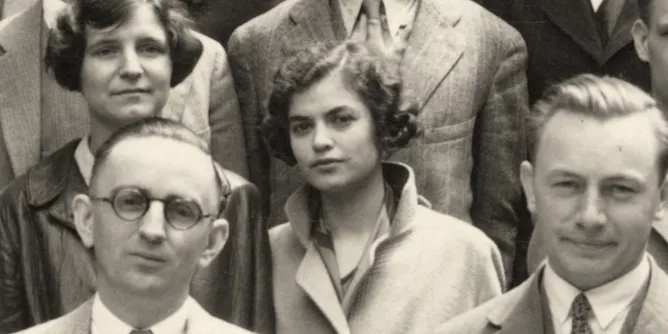
In the 1930s, this quantum mechanical pioneer faced obstacles that still confront women in physics today.
Articles on Physics
Displaying 41 - 60 of 592 articles
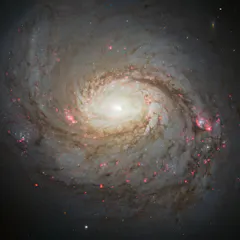
Normal matter – which makes up everything we see and touch – isn’t the only type of matter present in the universe.

Predictive maintenance has massive potential for keeping machines running smoothly.
How can time feel so obvious, so woven into the fabric of our experience and yet, for thousands of years, remain the bane of every thinker who has tried to explain it?
Is time real, or an illusion? The best answer may be neither: Both physics and philosophy suggest that time is a projection of the mind onto a timeless reality.

Moving tiny particles through materials quickly can improve the efficiency of a variety of technologies.
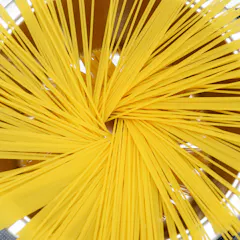
Seven grams of salt per litre is optimal, according to physics.

3D woven baskets are geometrically sophisticated, with some incredible properties that engineers can use to design materials and technology.

Super short X-ray pulses help scientists study materials at the atomic level. Researchers found that certain lasing effects can make these pulses even shorter.

2025’s Nobel Prize in Physics is a tribute to the scientists who first discovered quantum behaviors in a macroscopic electrical circuit.
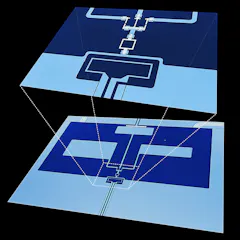
The discovery that superconducting circuits can behave like quantum particles was a revolutionary development in the field of quantum technologies.
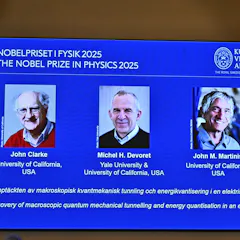
The quantum tunnelling effect is where a particle can pass through a barrier and appear on the other side.
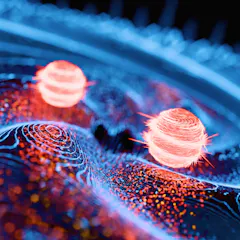
Virtual particles may not be real, but they help physicists track how forces move, and allow for incredibly precise measurements in particle physics.
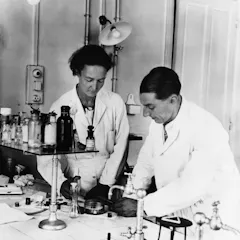
Marie Curie’s daughter Irene continued her family’s Nobel legacy by discovering artificial radioactivity.
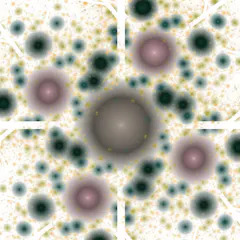
Physicists have found a way to redistribute uncertainty in quantum measurements, paving the way for ultra-sensitive atom-scale sensors.
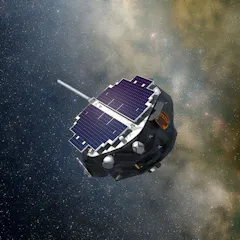
Studying the Sun helps researchers understand how space weather can affect technology back on Earth.
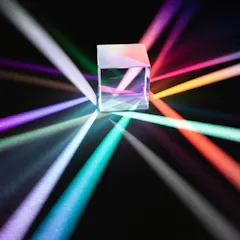
19th-century Irish physicist William Rowan Hamilton’s pioneering work contained hints of the enigmatic wave–particle duality that governs the universe.
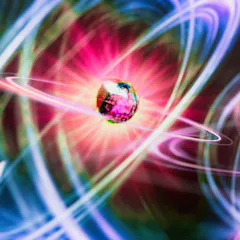
A ‘quantum telephone’ connecting atomic nuclei could make practical quantum computers easier to build and use.
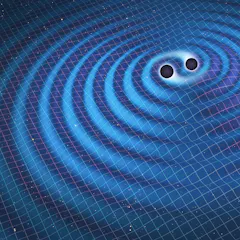
A decade after the first discovery, scientists have used these waves to find a unique merger, a massive binary system and a crystal-clear gravitational wave signal.
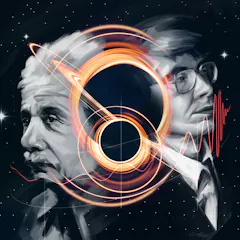
First, gravitational waves proved Einstein correct. Now, they’ve confirmed Stephen Hawking was right about black holes.
Top contributors
-

Professor, Philosophy of Science, The University of Melbourne
-
Professor of Nuclear Physics, Michigan State University
-
University Distinguished Professor of Astronomy, University of Arizona
-
Professor of Engineering Practice, Purdue University
-
Post Doctoral Research Associate, Centre for the Subatomic Structure of Matter, Adelaide University
-
Physicien, Professeur des Universités, Université Paris-Saclay
-
Professor of Astrophysics, University of Sydney
-
Emeritus Professor, ARC Centre of Excellence for Gravitational Wave Discovery, OzGrav, The University of Western Australia
-
Principal Lecturer of Physics and Astronomy, Clemson University
-
Professor of Physics, Penn State
-
Lecturer, The University of Queensland
-
Senior Lecturer in Physics, University of New England
-
Professor, University of Sydney
-
Professor of Mechanical and Aerospace Engineering, North Carolina State University
-
Professor of Physics and Astronomy, Rochester Institute of Technology