

The science that wins the Nobel Prize in Physics each year can be hard to get your head around – but it often has real everyday implications.
Articles on Physics
Displaying 181 - 200 of 592 articles

It seems there isn’t a sci-fi part if the universe in which everything is made of antimatter.

An aerospace engineer explains why it’s so hard to tell just how fast an airplane is really moving.

In an engineering course at UC Davis, students learn all the nuances that go into brewing ‘a truly excellent cup of coffee.’
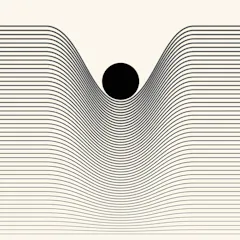
Einstein’s theory of general relativity suggests that our universe originated in a Big Bang. But black holes, and their gravitational forces, challenge the limits of Einstein’s work.

A former physics teacher says America could lose its technological edge if it doesn’t do a better job of teaching quantum information science – starting in high school.

A potential new supermaterial isn’t so super after all, but the dream of a room-temperature superconductor is still very much alive.
Graphic novels pair text and images to explain complex topics – from thermodynamics to abstract math – without alienating STEM-averse students.
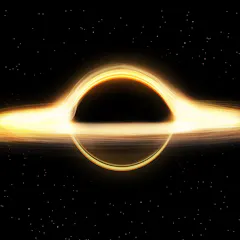
Black holes are known for pulling in all kinds of stuff – including light. Here’s how that actually works.
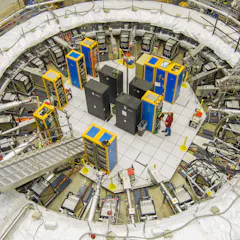
New measurement of wobbling muons back up previous findings – potentially challenging the Standard Model of Particle Physics.
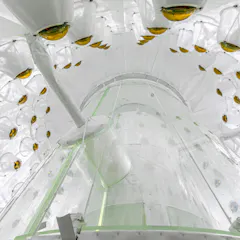
To detect dark matter, you need to build an ultra-sensitive detector and put it somewhere ultra-quiet. For one physics collaboration, that place is almost a mile under Lead, S.D.
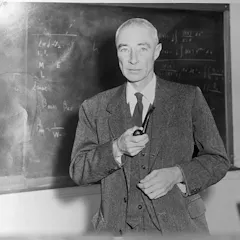
Complex as they are, Oppenheimer’s life and views of the bomb are far easier to wrestle with than the reality of nuclear power itself.

Room-temperature superconductors could transform technology – but the latest, much-hyped claims should be approached with caution.
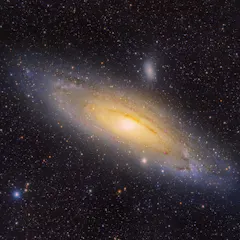
The way particles interacted while the universe was forming seconds after the Big Bang could explain why the universe exists the way it does – a physicist explains matter-antimatter asymmetry.

Spying was a concern from the dawn of the nuclear age, but charges that J. Robert Oppenheimer, who led the development of the first nuclear weapons, was a Soviet spy have been proved wrong.

This physical effect does explain how some massive natural phenomena like hurricanes behave. But on the scale of water in your sink – not so much.
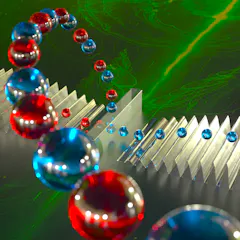
Scientists show they can create quantum superpositions of sound particles, pointing to the potential for mechanical quantum computers.
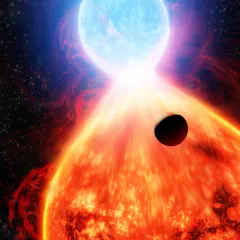
The planet Halla looks like it should have been devoured by its host star, a red giant called Baekdu – but a secret in the star’s past may hold the answer to the planet’s present.

You can squash small bugs by stepping on them, but can you crush even tinier microorganisms like viruses and bacteria? It turns out that you’d need to apply a lot of pressure.
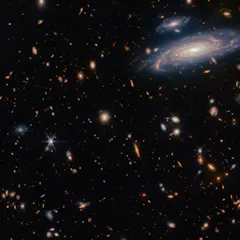
The darkness of the night sky seems so obvious as to need no explanation – yet it has intrigued and baffled scientists for centuries.
Top contributors
-

Professor, Philosophy of Science, The University of Melbourne
-
Professor of Nuclear Physics, Michigan State University
-
University Distinguished Professor of Astronomy, University of Arizona
-
Professor of Engineering Practice, Purdue University
-
Post Doctoral Research Associate, Centre for the Subatomic Structure of Matter, Adelaide University
-
Physicien, Professeur des Universités, Université Paris-Saclay
-
Professor of Astrophysics, University of Sydney
-
Emeritus Professor, ARC Centre of Excellence for Gravitational Wave Discovery, OzGrav, The University of Western Australia
-
Principal Lecturer of Physics and Astronomy, Clemson University
-
Professor of Physics, Penn State
-
Lecturer, The University of Queensland
-
Senior Lecturer in Physics, University of New England
-
Professor, University of Sydney
-
Professor of Mechanical and Aerospace Engineering, North Carolina State University
-
Professor of Physics and Astronomy, Rochester Institute of Technology