
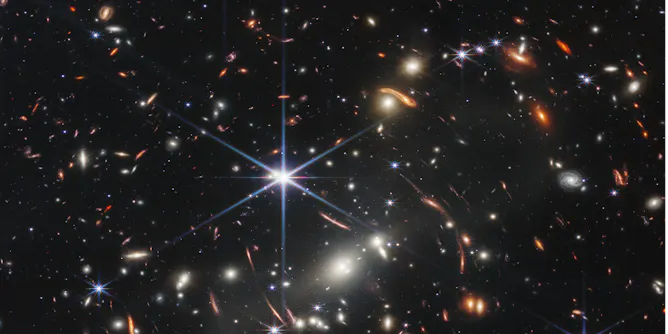
Sound needs matter to propagate, so the vast vacuum of space is not just empty − it’s silent.
Articles on Physics
Displaying 161 - 180 of 592 articles
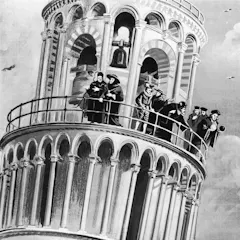
A centuries-old experiment shows the differences between classical and modern physics. Physicists use thought experiments like this to think about how objects move both on Earth and in the stars.
If we lived in a cosmic area with below average density, it would explain recent contradictory measurements of the universe’s expansion.
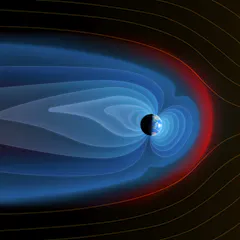
Ever seen the northern lights? You have a magnetic layer in Earth’s atmosphere to thank for those beautiful displays. But the magnetosphere does a lot more than create auroras.
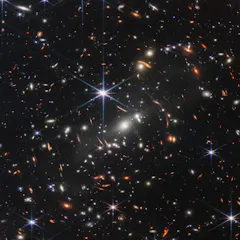
The universe is expanding faster than physicists would expect. To figure out what processes underlie this fast expansion rate, some researchers are first trying to rule out what processes can’t.
Scientists are trying to figure out if time travel is even theoretically possible. If it is, it looks like it would take a whole lot more knowledge and resources than humans have now to do it.
‘Assembly theory’ aims to explain evolution without biology. Is it a dazzling breakthrough or an attempt to answer questions nobody asked?
Scientists have been searching Earth’s surface for superheavy elements too difficult to make in the lab, but now, many are looking to the skies instead.

Life seems to just mysteriously ‘emerge’ from non-living parts, such as elementary particles.
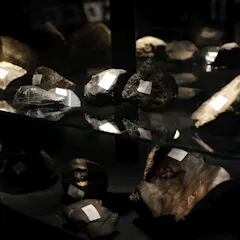
Some space rocks you can get for free – if you know how to identify them. Rarer materials cost more, and the asteroid sample NASA just brought back has a high price tag.
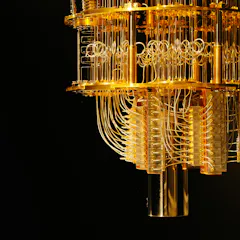
After decades of hype, quantum computers are on the verge of becoming useful. Here’s a refresher on why they’re such a big deal
Physicists uncovered a new experiment hidden in old data from the Large Hadron Collider. Using this innovative approach, the team has unlocked an entirely new way to study quantum physics.

Art and science combine in this engineering course to let students turn their brainwaves into creative works.
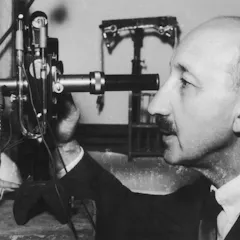
Some Nobel Prize-winning ideas originate in strange places, but still go on to revolutionize the scientific field. George de Hevesy’s research on radioactive tracers is one such example.
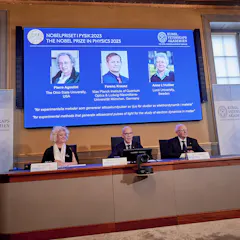
The discussions in the committee are always open, frank and sometimes emotional, but never hostile.
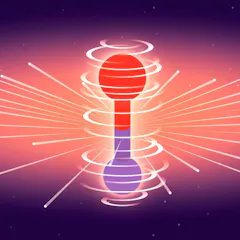
The 2023 Nobel Prize in physics recognized researchers studying electron movement in real time − this work could revolutionize electronics, laser imaging and more.

L'Huillier was busy teaching when she her Nobel prize was awarded.
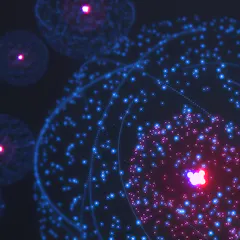
Three scientists won the 2023 Nobel Prize in physics for their work developing methods to shoot laser pulses that only last an attosecond, or a mind-bogglingly tiny fraction of a second.

The 2023 Nobel Prize in physics has been awarded “for experimental methods that generate attosecond pulses of light for the study of electron dynamics in matter”.
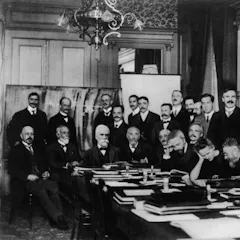
Superconductivity may sound like science fiction, but the first experiments to achieve it were conducted over a century ago. Heike Kamerlingh Onnes, credited with the discovery, won a Nobel Prize in 1913.
Top contributors
-

Professor, Philosophy of Science, The University of Melbourne
-
Professor of Nuclear Physics, Michigan State University
-
University Distinguished Professor of Astronomy, University of Arizona
-
Professor of Engineering Practice, Purdue University
-
Post Doctoral Research Associate, Centre for the Subatomic Structure of Matter, Adelaide University
-
Physicien, Professeur des Universités, Université Paris-Saclay
-
Professor of Astrophysics, University of Sydney
-
Emeritus Professor, ARC Centre of Excellence for Gravitational Wave Discovery, OzGrav, The University of Western Australia
-
Principal Lecturer of Physics and Astronomy, Clemson University
-
Professor of Physics, Penn State
-
Lecturer, The University of Queensland
-
Senior Lecturer in Physics, University of New England
-
Professor, University of Sydney
-
Professor of Mechanical and Aerospace Engineering, North Carolina State University
-
Professor of Physics and Astronomy, Rochester Institute of Technology