
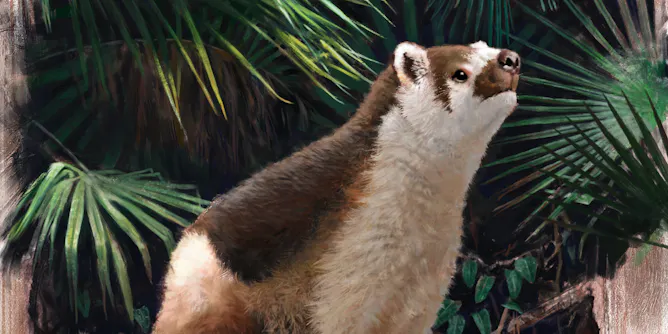
Palaeontologists studied Pantolambda fossils in forensic detail to learn about its lifestyle.
Articles on Palaeontology
Displaying 81 - 100 of 235 articles

Millions of years on. modern frogs and toads still haven’t learnt you can have too much of a good thing.
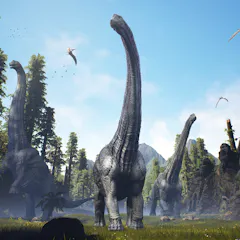
The largest animals to ever walk the earth, giant sauropods dominated world ecosystems for 100 million years. New research indicates soft ‘heel pads’ helped them reach their stature.
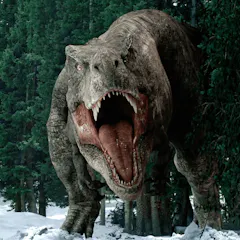
The biggest crime of the film was exaggerating the size of dinosaurs.

New research on the Crystal Palace dinosaurs is uncovering truths about these famous Victorian sculptures

The mysterious Denisovans left DNA traces in populations across Southeast Asia and Australasia, but until now no physical signs of their presence outside Eurasia had been found.
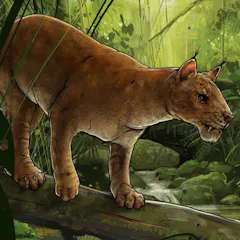
The first sabre-toothed cat-like predator was not much larger than a bobcat, but it had long teeth and a strong jaw to cut through thick skin.
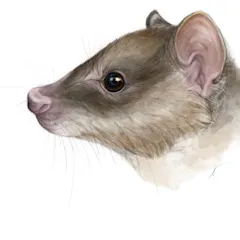
Two newly discovered species of quokka-sized kangaroos, which lived 18 million years ago in the Queensland rainforest, show evolution in the act of giving kangaroos a taste for leaves.
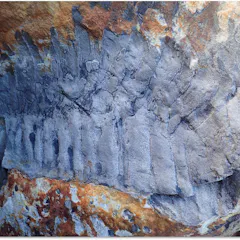
Why our chance discovery of an Arthropleura as long as an alligator, while on holiday on a beach in northern England, was such a landmark moment.

The fossil of a gigantic ichthyosaur was recently discovered in the UK. It wasn’t the only creature lurking in the Jurassic oceans.
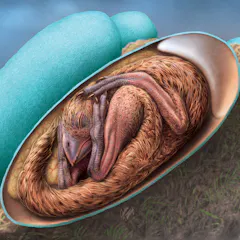
The little dinosaur is curled up inside its shell the same way birds do before hatching, shedding new light on the link between the behaviour of dinosaurs and modern birds.

A new study finds more than one early human species lived on the landscape in Northern Tanzania 3.66 million years ago. But there are reasons to be cautious about the findings.
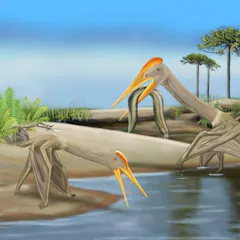
We examined pterosaur jaw fragments from the Moroccan desert to understand more about how these creatures evolved.
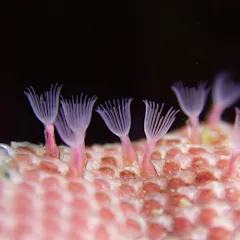
Most modern animals have their roots half a billion years ago in the Cambrian Explosion, but one group was curiously missing from the fossil record - until now.
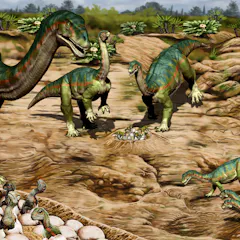
The complex social behaviour in early dinosaurs observed in a new study lines up with other fossil evidence that dinosaurs were more bird-like than crocodilian-like.

Archaehierax sylvestris, whose remains have been unearthed in the arid South Australian outback, was the apex predator in a lush prehistoric forest filled with marsupials and waterfowl.
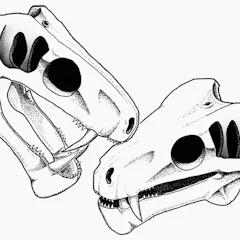
Finding a fossil tooth embedded in bone is always great news for palaeontologists, as it is the gateway to some otherwise out-of-reach understanding of the behaviour of extinct animals.
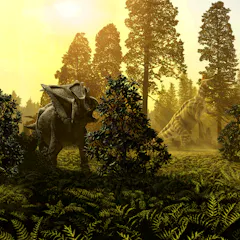
Today, Earth’s biodiversity is highest at the equator – but it hasn’t always been this way.

Our research has also uncovered major long-term changes in ancient animal populations at Denisova Cave, and has provided the first direct evidence of Homo sapiens having lived there.

A spectacular series of fossilised footprints from sauropod dinosaurs and other ancient animals opens a window onto life in northeast Australia 95 million years ago.
Top contributors
-

Professor of Vertebrate Palaeontology, University of Bristol
-
Associate professor in Vertebrate Palaeontology, University of the Witwatersrand
-
Senior Lecturer in Paleontology and Evolutionary Biology, Life Sciences at the University of Bath, University of Bath
-
Professor in Geochronology and Geochemistry, Southern Cross University
-
Technical Specialist in Earth Sciences, University of Bristol
-
Emeritus Strategic Professor in Palaeontology, Flinders University
-
Senior Research Scientist, South Australian Museum; Flinders University
-
Professor, School of Natural Sciences, Macquarie University
-
Professor, Palaeobiology, University College Cork
-
Chancellor's Fellow in Vertebrate Palaeontology, University of Edinburgh
-
Research Associate in the College of Science and Engineering, Flinders University
-
Research Associate, African Centre for Coastal Palaeoscience, Nelson Mandela University
-
Professor of Palaeobiology, University of Portsmouth
-
Lecturer in the School of Applied Sciences, Edinburgh Napier University
-
Associate Professor and Director, Flinders Microarchaeology Laboratory, Flinders University