
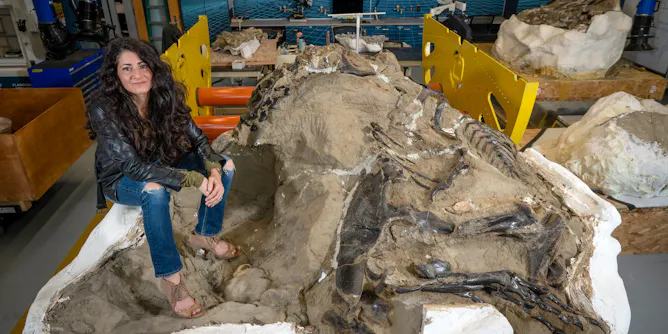
We’re in a golden era for dinosaur science.
Articles on Palaeontology
Displaying 21 - 40 of 235 articles

Long ago, people identified fossils in their environment and explained them within their own cultural framework. This was early citizen science.

These tracksites appear to contain the first recorded Pliocene vertebrate tracks described from southern Africa.
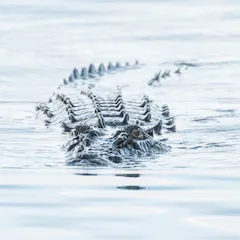
Ancient crocs didn’t just hunt in water – some may have dropped out of trees to catch their prey.
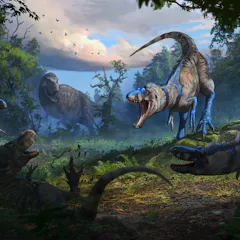
The fossil may help end a long-running debate in palaeontology.
Old fossils can reveal new secrets using modern technology.

Highly detailed fossils are typically found in shale or other fine-grained sedimentary rocks. These ones? They’re made of iron.

The first hyrax fossil tracks and traces ever to be discovered were identified on South Africa’s coast.

A 56 million-year-old fossil bone helps explain how this (mostly) flightless family of birds spread to so many different continents.
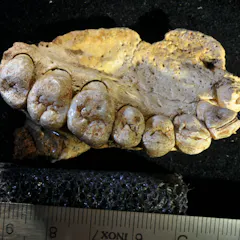
A common scanning method used to create ‘virtual copies’ of precious fossils could be erasing some of the crucial information held within.
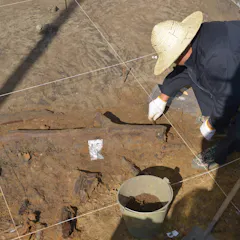
300,000-year-old wooden tools found in southwestern China reveal surprising sophistication from the ancestors of modern humans.
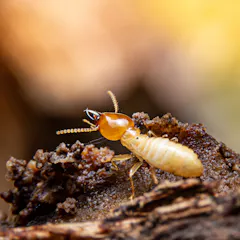
One fossilised log from southern Australia has spilled the dirt on termites’ very cold and very ancient past.

Dinosaur fossils aren’t just relics of the past – they’re guides to the future.
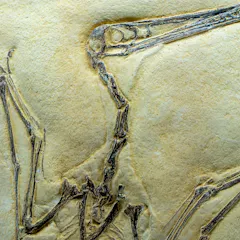
Looking back in time could inspire the aircraft innovations of the future.
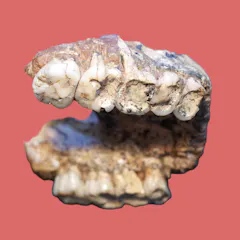
Curiously uniform dimples on the teeth of ancient hominins may give scientists a new way to trace their origins and relationships.
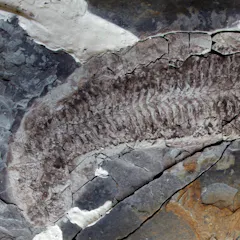
Just two specimens of Keurbos susanae, an unusually well preserved fossil arthropod, have been found.

Australia’s giant Protemnodon kangaroos didn’t die out everywhere at the same time. Instead, extinction proceeded one habitat at a time.
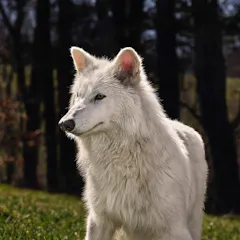
The animals are an imitation, but the technology used to create them could have wide-ranging applications.
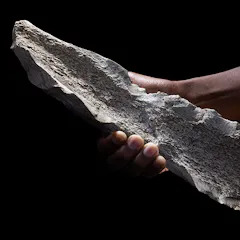
By 1.5 million years ago, Homo erectus was able to transfer tool-making skills from stone to bone.

Volcanic rocks might contain much more exciting fossils than previously believed.
Top contributors
-

Professor of Vertebrate Palaeontology, University of Bristol
-
Associate professor in Vertebrate Palaeontology, University of the Witwatersrand
-
Senior Lecturer in Paleontology and Evolutionary Biology, Life Sciences at the University of Bath, University of Bath
-
Professor in Geochronology and Geochemistry, Southern Cross University
-
Technical Specialist in Earth Sciences, University of Bristol
-
Emeritus Strategic Professor in Palaeontology, Flinders University
-
Senior Research Scientist, South Australian Museum; Flinders University
-
Professor, School of Natural Sciences, Macquarie University
-
Professor, Palaeobiology, University College Cork
-
Chancellor's Fellow in Vertebrate Palaeontology, University of Edinburgh
-
Research Associate in the College of Science and Engineering, Flinders University
-
Research Associate, African Centre for Coastal Palaeoscience, Nelson Mandela University
-
Professor of Palaeobiology, University of Portsmouth
-
Lecturer in the School of Applied Sciences, Edinburgh Napier University
-
Associate Professor and Director, Flinders Microarchaeology Laboratory, Flinders University