
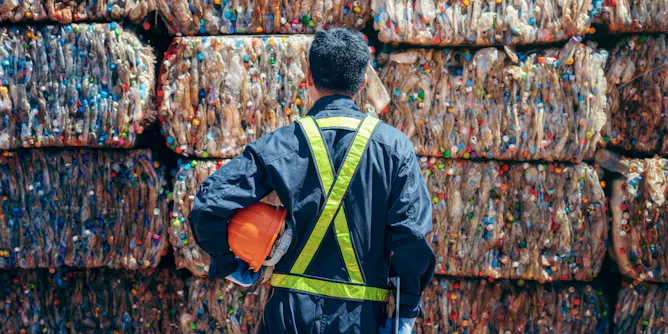
As a sustainability researcher, I know how quickly we could make big changes to reduce plastic pollution. Here’s what we – both individually and globally – should be doing more of, and what to avoid.
Articles on Microplastics
Displaying 81 - 100 of 174 articles
Polylactic acid – a popular bioplastic – does not readily break down when released into the ocean, and could disrupt marine ecosystems
Inflating your cars’ tyres properly isn’t just good for your bank account - it can minimise your environmental footprint too.
How to be more a more eco-friendly parent – it’s not as simple as ditching disposable nappies.
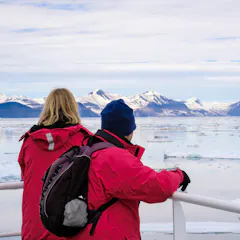
Arctic sea ice algae contaminated with microplastics have serious consequences for ecosystems and the climate.
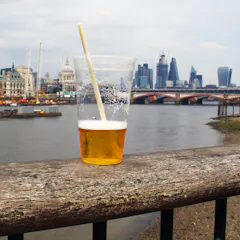
Researchers took samples of the River Thames for two years to track levels of microplastics.

It’s estimated that 1.63 million tons of material will be produced in 2023 for wet wipes.
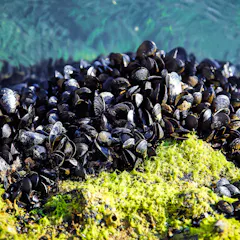
A study shows that exposure to polyester microfibres inhibits growth in mussels.
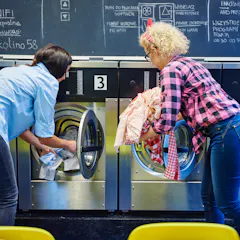
By washing our clothes, we release microfibres into the environment which are then ingested by marine animals.
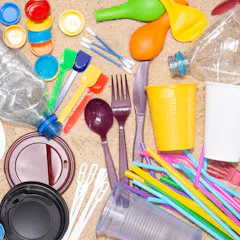
Alternative food containers, such as those made of bioplastics, are being promoted as a way to reduce our exposure to plastic in food. But there is still a lack of knowledge around their impacts.

With concern mounting over microplastics and the search for sustainable options, the woollen swimsuits of the past could be the swimwear of the future.
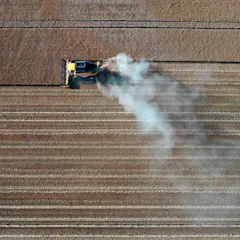
Synthetic fertiliser prices have shot up amid the war in Ukraine. Could organic fertilisers provide a worthy alternative?
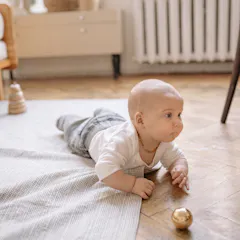
It’s impossible to escape exposure to microplastics and a new study confirms they’re in household dust around the world. But the health risks appear surprisingly low, and vacuuming makes a difference.
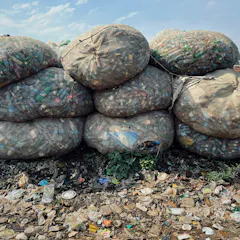
It’s important to look at the whole value chain in the plastics economy, starting with design of products that can be reused and recycled.
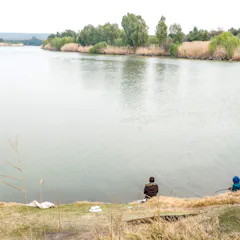
The Vaal River, which serves more than 11 million people, is considerably polluted with microplastics.
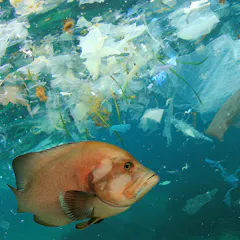
We need to advance our understanding of the effects of microplastics on aquatic ecosystems, especially on small animals at the base of food webs that might be ingesting more of these particles.
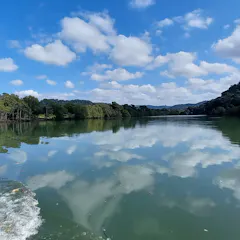
Estuaries shelter and offer respite to countless species of birds, fish and mammals.
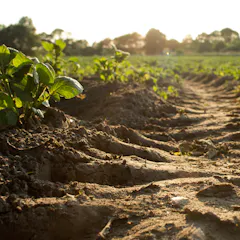
Up to 42,000 tonnes a year of microplastics are removed from sewage, spread on fields as fertiliser and eventually wash back into watercourses.

Normally land-bound pathogens that cause deadly diseases for both humans and animals can cling to microplastics and end up in your seafood.
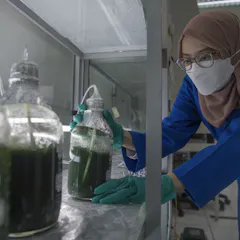
Microalgae can take control, gather, and stick to microplastics on their surface, regardless of their size.
Top contributors
-

Lecturer in Ornithology, Charles Sturt University
-
Assistant Professor of Ecology and Evolutionary Biology, University of Toronto
-
Professor of Animal Development, Leiden University
-
Postdoctoral Researcher at Leiden University, Associate Scientist II at Stowers Institute, Developmental Biology, Molecular Biology and Nanotoxicology, Leiden University
-
Research Chair, Indigenous Approaches to Environmental Management, Keele University
-
Professor of Law and Associate Dean for International Affairs, Wake Forest University
-
Professor in Forensic and Environmental Science, University of Staffordshire
-
Associate Professor in Environmental Sciences, University of Southampton
-
Research Director, Australian Microplastic Assessment Project (AUSMAP); Honorary Senior Research Fellow, School of Natural Sciences, Macquarie University
-
Professor of Sustainable Development, Keele University
-
Associate professor, University of Portsmouth
-
Honorary Professor, School of Natural Sciences, Macquarie University
-
Associate Professor of Lake and Freshwater Science, University of Waikato
-
Senior Marine Ecosystem Services Researcher, Plymouth Marine Laboratory
-
Academic Casual, School of Natural Sciences, Macquarie University