
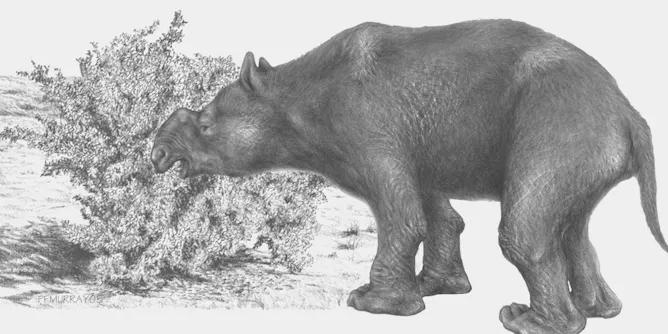
What killed off Australia’s giant wombats and other megafauna? New dating once again points the finger at human hunters, rather than abrupt changes to the climate.
Articles on Megafauna
Displaying 61 - 78 of 78 articles
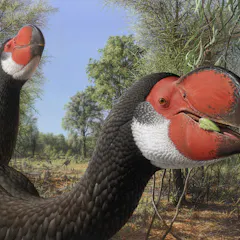
Our entire knowledge of one of Australia’s extinct ancient giant birds is flawed because experts have been looking at remnants of the wrong egg the whole time.
Every state and territory in Australia should have one: a fossil emblem. Not only can they be good for tourism but they can also help teach people about the ancient history of the regions.
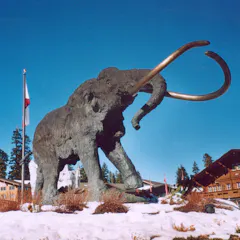
New research challenges previously held views that the Ice Age, giant biblical floods or hunting by humans were the key drivers behind the disappearance of megafauna.
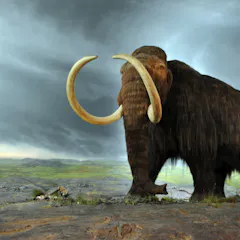
Animals that couldn’t adapt to rapid warming quickly succumbed.
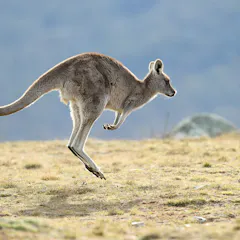
Extinct giant kangaroos may have been built more for walking, rather than hopping like today’s kangaroos, especially when moving slowly. These sthenurine kangaroos existed until around 30,000 years ago…
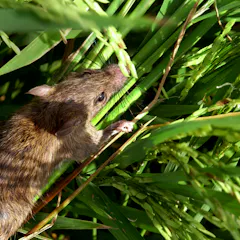
Declining numbers of zebra, antelope and other big grazers cause rodent populations to rapidly increase, a new study has shown. Published in the Proceedings of the National Academy of Sciences, Hillary…
A decade-long research project has revealed the diets of extinct Antarctic megafauna – as well as uncovering potential reasons…
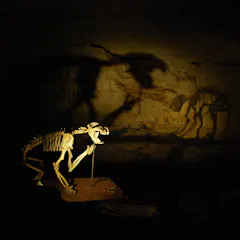
Australia was once home to gigantic reptiles, birds and marsupials, but sadly they’re no longer with us. What happened to them has been a source of ongoing debate, whether it was human hunting, climate…
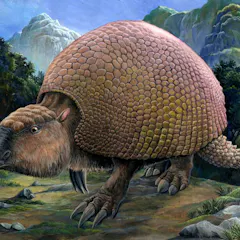
If Earth were like a human body, large animals might be its arteries, moving nutrients from where they’re abundant to where they’re needed. Currently the planet has large regions where life is limited…
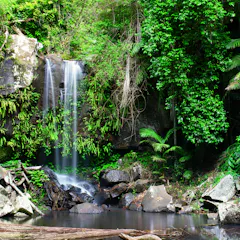
The fossilised teeth of kangaroos and other extinct marsupials reveal southeastern Queensland three million years ago was a mosaic of tropical forests, wetlands and grasslands, and much less arid than…
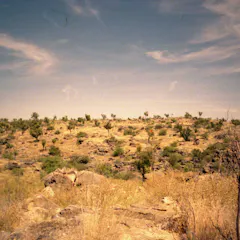
Australia is famous for its natural beauty: the Great Barrier Reef, Uluru, Kakadu, the Kimberley. But what about the places almost no one goes? We asked ecologists, biologists and wildlife researchers…
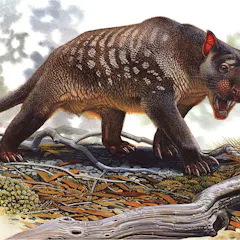
Throughout the Ice Age that characterised our planet for much of the last two million years or so mainland Australia, Tasmania and New Guinea formed a single landmass — Sahul. It was a strange and often…

In Australia today, the biggest tree-dwelling mammals are our iconic and much loved koala and the enigmatic Bennett’s tree-kangaroo. The largest males of both species weigh a mere 14 kg. But a study of…
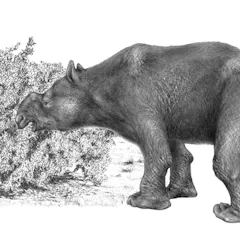
What is the oldest debate in Australian science? Probably, the argument over what caused extinction of our Pleistocene megafauna – the diprotodons, giant kangaroos, marsupial tapirs, über-echidnas and…
The extinction of Australia’s ancient megafauna, caused by human hunters, changed the landscape of Australia as we know it…
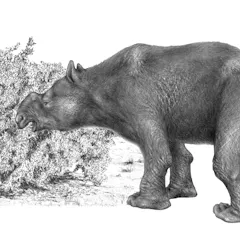
The first Australians hunted giant kangaroos, rhinoceros-sized marsupials, huge goannas and other megafauna to extinction shortly after arriving in the country more than 40,000 years ago, new research…
A complex relationship between climate change and human activities is behind the extinction of megafauna during the last…
Top contributors
-

Associate Professor in Vertebrate Palaeontology, Flinders University
-
Professor, Palaeontology, Griffith University
-
Professor of Wildlife Conservation, University of Tasmania
-
Lecturer in Palaeontology, The University of Queensland
-
Postdoctoral Research Fellow at Flinders University Palaeontology Laboratory, Flinders University
-
Distinguished Professor, Charles Sturt University
-
Associate Professor in Earth Sciences, University of Adelaide, University of Wollongong
-
Professor, Flinders University
-
Professor, Earth and Sustainability Science Research Centre, UNSW
-
Matthew Flinders Professor of Global Ecology and Node Leader in the ARC Centre of Excellence for Indigenous and Environmental Histories and Futures, Flinders University
-
Distinguished Professor, School of Culture, History & Language, Australian National University
-
Researcher, Flinders University
-
Pro Vice-Chancellor of Research, University of Technology Sydney
-
Senior Lecturer in Ecology and Biogeography, Node & Stream Leader for ARC Centre of Excellence for Indigenous and Environmental Histories and Futures, University of Technology Sydney; Australian Museum
-
Senior Lecturer, School of Biological Sciences, Adelaide University