
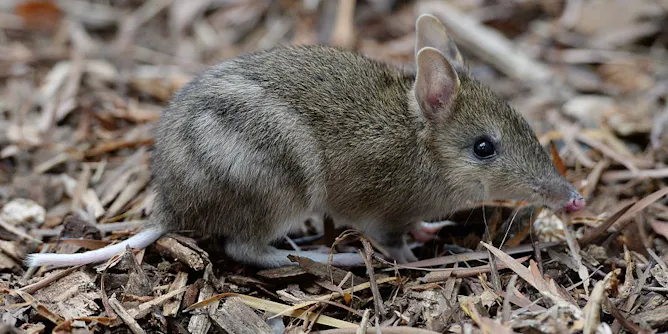
Humans have had a complex relationship with this marsupial, known for its pointy snout, thin tail and large hind feet.
Articles on Marsupials
Displaying 1 - 20 of 87 articles

A new study has found that Tasmanian tigers had an adaptation found in no living carnivorous mammal.
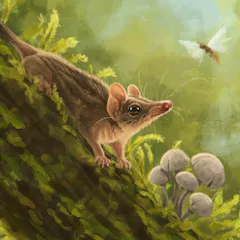
A handful of tiny fossil jaws fill a missing chapter in the evolutionary history of Australia’s most successful marsupial predators.
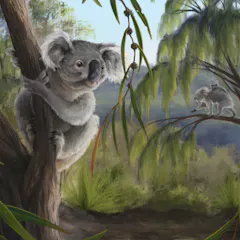
An extinct koala species has been discovered in Western Australia. Climate change 28,000 years ago erased its habitat.
All species alive today, from chimpanzees to bacteria, are cousins that each have equally long lineages, rather than ancestors or descendants of one another.

Today, rock wallabies rarely stray far from the safety of their rocky shelters. But the fossil record tells a very different story.
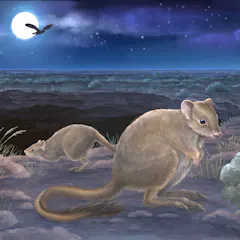
A case of mistaken identity has hampered efforts to save the woylie, one of Australia’s most endangered marsupials.
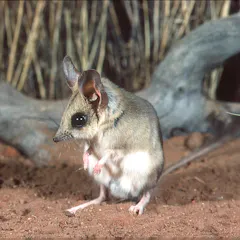
Scientists have discovered that the kultarr – one of Australia’s most elusive marsupials – is actually three different species.

Musky rat-kangaroos look a bit like a potoroo – but they have a unique trait not shared with any other roos.
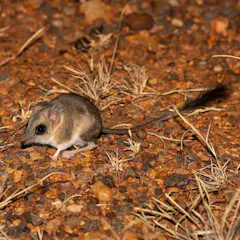
Kultarrs might look cute. But these carnivorous marsupials are fierce and feisty predators.
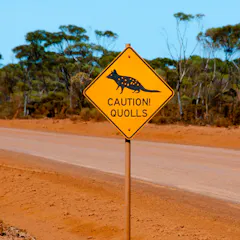
Second generation rat poisons are so potent that they’re banned for home use in Europe and North America. But here, you can pick them up at Bunnings or Coles.
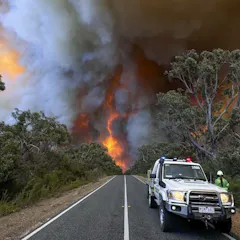
Much of the Grampians National Park (Gariwerd) has already burned this summer – and the fire is not out yet. What does this mean for the animals that live there?
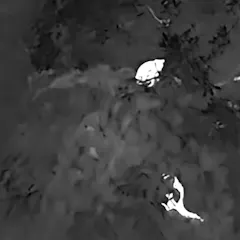
Thermal drones are helping researchers find Bennett’s tree kangaroos in the rainforest canopy, revealing new insights to guide conservation efforts.
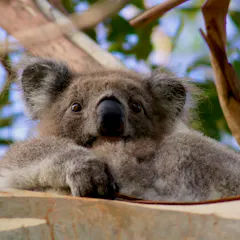
Everyone thought koalas were solitary creatures. But a new paper reveals there is more to the social lives of koalas than previously thought.
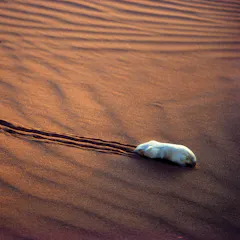
Scientists have traced the evolutionary heritage of marsupial moles and explained how they evolved unique adaptations that help them survive beneath the sand.
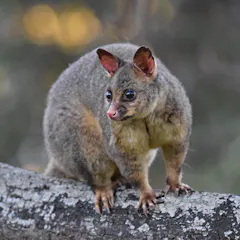
In Australia, people tend to think carnivores lead the clean-up crew after an animal dies. But brushtail possums – thought to be plant-eaters – also eat carcasses.
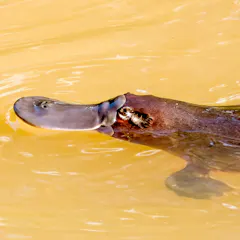
Females have twice as many copies of some genes as males do – and exactly how different species manage this imbalance has puzzled scientists for decades.
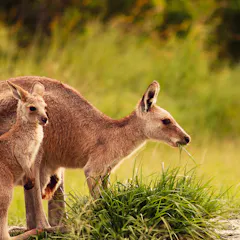
Yearly growth lines and a conveyor belt of molars show how marsupial teeth carry a surprising amount of information.
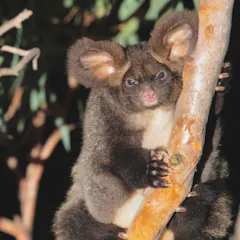
Australia has already lost so many wonderful mammal species. Do we want the southern greater glider to suffer the same fate?
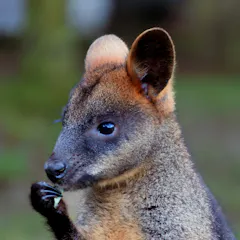
Each year, hungry plant-eating animals do billions of dollars of damage to valuable plants. We need prevention methods that don’t involve killing them.
Top contributors
-

Curator of Mammals, Western Australian Museum; Curtin University
-
Associate Professor in Biology, Zoology and Animal Science, Western Sydney University
-
Associate Professor in Anatomy, Murdoch University
-
Distinguished Professor of Ecology, Fenner School of Environment and Society, Australian National University
-
Associate Professor, Animal Anatomy and Physiology, Charles Sturt University
-
Associate Professor in Ecology and Environmental Science, Queensland University of Technology
-
Honorary Research Associate in BioSciences, The University of Melbourne
-
Professor, School of Biological Sciences, Monash University
-
Professor, Flinders University
-
Lecturer in Palaeontology, Flinders University
-
Lecturer in Palaeontology, The University of Queensland
-
Professor, Evolution and Ecology Research Centre, UNSW
-
Professor of Biogeochemistry, University of Wollongong
-
Lecturer in Biology, University of Salford
-
Principal Research Fellow Applied Palaeontology & Palaeotourism, CQUniversity Australia