
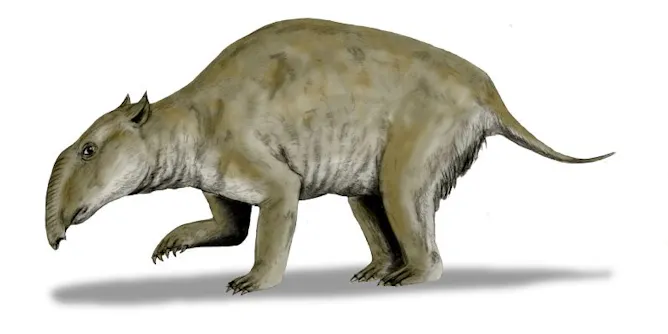
It is plausible to suppose that human memories of long-extinct creatures today underpin many stories we have generally regarded as fiction.
Articles on Megafauna
Displaying 41 - 60 of 78 articles
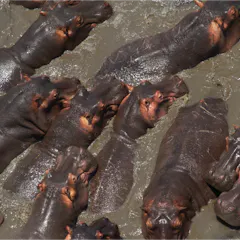
Long-standing assumption that humans killed large mammals 4.5m years ago has been debunked by researchers – but some experts still think humans played a part in the demise of biodiversity
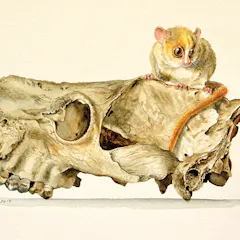
A series of new studies sheds light on the population crash and extinction of the giant birds, lemurs and more that roamed the island until around A.D. 700-1000.
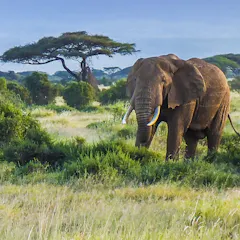
Amid a growing human population, African elephants are confined to an increasingly managed existence. Do we want more for one of the world’s most loved species?
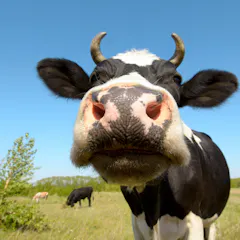
An internet-breaking 6'4" steer isn’t the only animal to reach gigantic proportions.
The 19th-century British anatomist Richard Owen downplayed the role of colonial contributors and largely ignored the importance of Aboriginal testimony and knowledge in describing the marsupial lion.
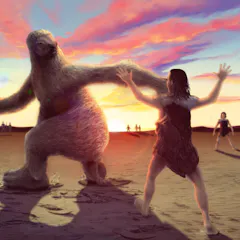
How we discovered ancient footprints of early human hunters and their megafauna prey.
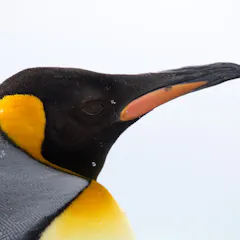
Scientists in New Zealand have discovered an extinct penguin known as Kumimanu biceae that was 1.77m tall.
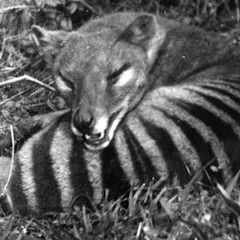
The new Tasmanian tiger genome reveals some fascinating facts about this extinct marsupial, including why they were so similar to dogs, and how they were growing more vulnerable to genetic disease.

‘Marsupial lions’ aren’t really lions - but they did have teeth that formed a pair of secateur-like blades. The newly found species lived in forests of Queensland around 20 million years ago.
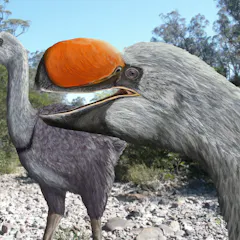
Australia was once home to giant fightless birds - much bigger than today’s emus and cassawories. But where did they come from, and where did they go?
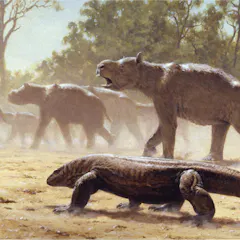
Studies of the fossil teeth of the three-tonne Diprotodon have revealed the now-extinct beast was Australia’s only known seasonally migrating marsupial.
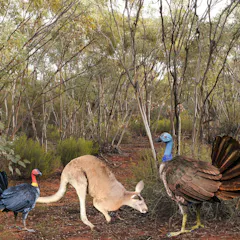
Large birds once lived across Australia, only to become extinct around the time that giant marsupials and other megafauna died out during the Pleistocene “ice ages”.

Layers and layers of sand and sediment collected in Naracoorte Caves create windows into what Australia was like in our recent past.
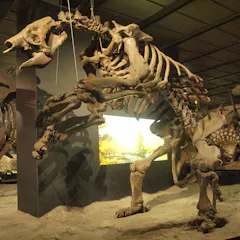
A burst of wet weather could have helped to kill off mammoths and other large herbivores, by transforming much of the world’s grasslands into bogs and forests and depriving megafauna of food.

The extinction of the giant reptiles, marsupials and birds that once called Australia home has been the subject of much debate, including the role early Australians may have had on their fate.
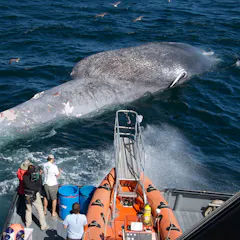
Ships in Australian waters are getting bigger and more numerous all the time. We need a plan to help them avoid crashing into whales and other large sea creatures.
The jury is in and the debate is over: Earth’s sixth great extinction has arrived.

DNA analysis suggests that a newly discovered species of bison roamed Europe some 17,000 years ago - as prehistoric cave artists were trying to tell us all along.
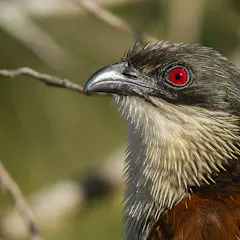
The Nullarbor is an arid, treeless expanse today. But several hundred thousand years ago it was home to a menagerie of species, including two newly discovered giant cuckoo-like birds.
Top contributors
-

Associate Professor in Vertebrate Palaeontology, Flinders University
-
Professor, Palaeontology, Griffith University
-
Professor of Wildlife Conservation, University of Tasmania
-
Lecturer in Palaeontology, The University of Queensland
-
Postdoctoral Research Fellow at Flinders University Palaeontology Laboratory, Flinders University
-
Distinguished Professor, Charles Sturt University
-
Associate Professor in Earth Sciences, University of Adelaide, University of Wollongong
-
Professor, Flinders University
-
Professor, Earth and Sustainability Science Research Centre, UNSW
-
Matthew Flinders Professor of Global Ecology and Node Leader in the ARC Centre of Excellence for Indigenous and Environmental Histories and Futures, Flinders University
-
Distinguished Professor, School of Culture, History & Language, Australian National University
-
Researcher, Flinders University
-
Pro Vice-Chancellor of Research, University of Technology Sydney
-
Senior Lecturer in Ecology and Biogeography, Node & Stream Leader for ARC Centre of Excellence for Indigenous and Environmental Histories and Futures, University of Technology Sydney; Australian Museum
-
Senior Lecturer, School of Biological Sciences, Adelaide University