
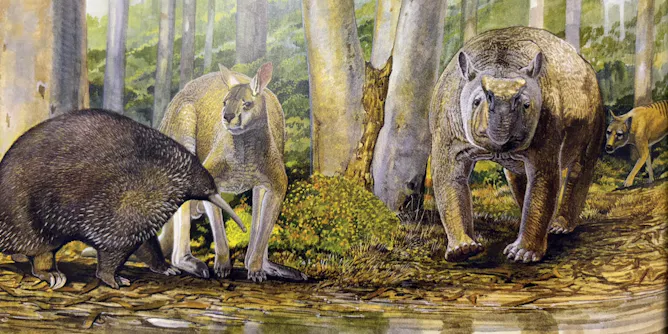
Australia doesn’t have any ‘kill sites’. In fact, there’s no hard evidence people hunted the megafauna.
Articles on Australian megafauna
Displaying all articles

Australia’s giant Protemnodon kangaroos didn’t die out everywhere at the same time. Instead, extinction proceeded one habitat at a time.
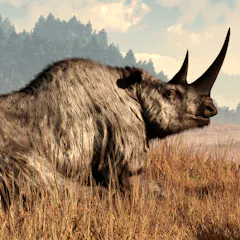
Many huge animals went extinct surprisingly recently. When they died, their ecological role was lost with them.

A recent find of an ancient giant bird’s skull has revealed much about its life among the vanished lakes and wetlands of inland South Australia.
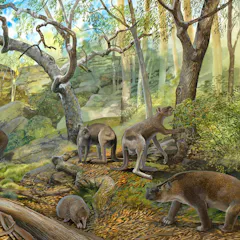
Some extinct kangaroos may barely have hopped at all.

New fossils reveal Australia was once home to a much greater diversity of huge eagles and vultures, which died off alongside ‘giant wombats’ and ‘marsupial lions’.
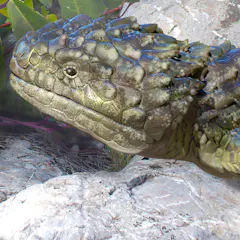
Researchers have found an armoured fossil skink 1,000 times heavier than the ones in your garden. Its closest living relative is the shingleback lizard.
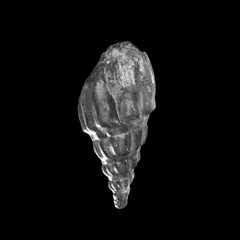
Digital scanning offers a new window on Australia’s unique fossil history, from early multicellular lifeforms to gigantic ‘marsupial lions’.

Having special foot adaptations helped these sizeable animals wander long distances, which meant a better chance to find plentiful food and water.
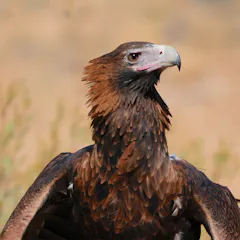
At twice the size of a wedge-tailed eagle, the newly discovered Dynatoaetus gaffae would have competed with thylacines and Tasmanian devils for prey.

A puzzle over the identity of an extinct bird that laid eggs across Australia has been solved.

80,000 years ago, Australia’s landscape was dominated by much larger versions of today’s marsupials – including enigmatic and enormous wombats.
Top contributors
-

Senior Research Scientist, South Australian Museum; Flinders University
-
Associate Professor in Vertebrate Palaeontology, Flinders University
-
Lecturer in Palaeontology, Flinders University
-
PhD Candidate, College of Science and Engineering, Flinders University
-
Professor, Palaeontology, Griffith University
-
Adjunct Associate Lecturer in Palaeontology, Flinders University
-
Lecturer in Biology, University of Salford
-
Casual academic, Flinders University
-
Professor, Flinders University
-
Postdoctoral Research Fellow at Flinders University Palaeontology Laboratory, Flinders University
-
Adjunct Senior Researcher at Griffith University and La Trobe University, and Ramón y Cajal (Senior) Research Fellow, Centro Nacional de Investigación sobre la Evolución Humana (CENIEH)
-
Project Coordinator (Biodiversity), Western Australian Museum
-
Professor of Palaeoproteomics, University of Cambridge
-
Professor of Zoology and Joint Head of Department of Biology, University of Oxford
-
Principal Research Fellow Applied Palaeontology & Palaeotourism, CQUniversity Australia