

Despite their name, Tasmanian devils could be found across mainland Australia thousands of years ago.
Articles on Ice Age
Displaying 1 - 20 of 100 articles

Mountains of ice far away in the northern hemisphere surely couldn’t change rainfall in Australia – or could they?
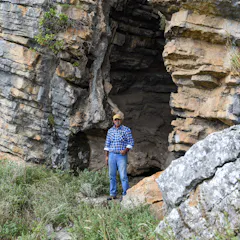
A new study shows the cave was only used for very special purposes.

Survival depends on information and social networks.

A new study shows the woolly rhino was not the inbred, genetically doomed species scientists had thought.
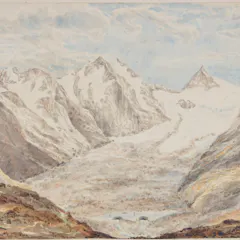
In the 19th century, scientists could see landscape signs suggesting glaciers were larger in the past, but they settled on tectonic uplift as an explanation.
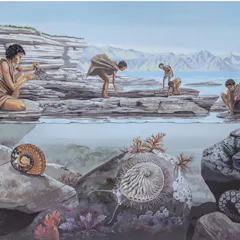
A coastal migration up and out of Africa was more likely to succeed than an overland journey.

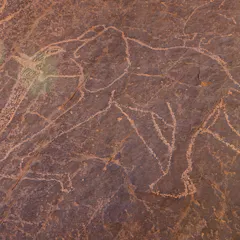
The large, naturalistic engravings are a striking symbol for survival in the desert.

More than 6,000 bone fragments were found and dated, giving a rare ecological snapshot of the last ice age.

Stone tools from different sites suggest people long ago were connected over a huge region and shared ideas.

New research indicates Dargan Shelter was occupied as early as the last Ice Age and repeatedly visited during this cold period.
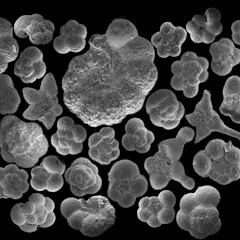
Foraminifera have lived almost everywhere in the ocean for millions of years. Their fossilised remains hold a record of Earth’s past.

When landscapes change, exotic species take advantage of new habitats. Such a pulse of colonisation coincided with the Ice Age some 2.6 million years ago.
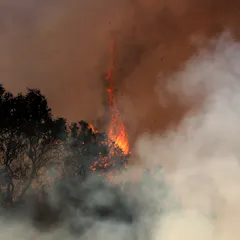
Paleoecologist Emily Lindsey on the wildfires that led to mass extinction during California’s Ice Age. Listen to The Conversation Weekly.

Humans have become a geologic force by cooking the planet – using fire on a scale that is altering land, water, air and ecosystems.
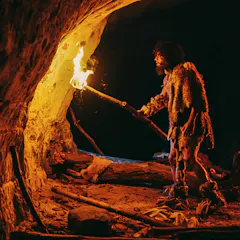
Most animals retreated to small, warmer enclaves. But some, like humans, seemed to have stayed where they were.

Our discovery of a tundra ecosystem, frozen under the center of Greenland’s ice sheet, holds a warning about the threat that climate change poses for the future.
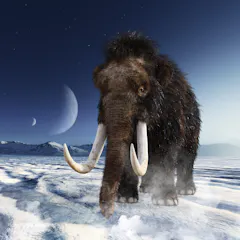
Scientists have long wondered if the wooly mammoth went extinct due to high levels of inbreeding.

Despite cold temperatures, water was relatively abundant in much of the southern hemisphere during ice ages.
The Sahara Desert is green and vegetated every 21,000 years. A climate model shows why.
Top contributors
-

Professor of Environmental and Geographical Sciences, Bournemouth University; University of Reading
-
Associate Professor in Ancient DNA, University of Otago
-
Professor of Archaeology, Griffith University
-
Associate Professor in Hominin Palaeoecology, Bournemouth University
-
Professor of Natural Resources and Environmental Science, University of Vermont
-
Associate Curator, La Brea Tar Pits; Adjunct Faculty, Institute of the Environment and Sustainability, University of California, Los Angeles
-
Professor, University of Tasmania
-
Adjunct Professor in Climate Science, University of Tasmania
-
Adjunct professor, UNSW
-
Postdoctoral Fellow, Department of Zoology, University of Otago
-
Professor of Geography, School of Law and Society, University of the Sunshine Coast
-
Research Centre of Archeometry, Badan Riset dan Inovasi Nasional (BRIN)
-
Professor of Palaeobiology, University of Leicester
-
Professor of Glaciology and Earth Observation, University of Bristol
-
Professor, Climate, Oceans, and Paleo-Environments, Simon Fraser University