
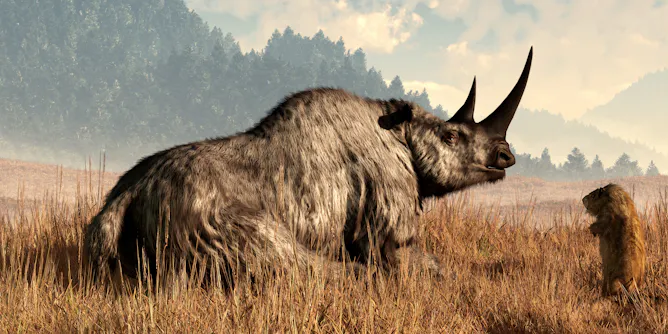
Many huge animals went extinct surprisingly recently. When they died, their ecological role was lost with them.
Articles on Megafaunal extinction
Displaying 1 - 20 of 34 articles
Paleoecologist Emily Lindsey on the wildfires that led to mass extinction during California’s Ice Age. Listen to The Conversation Weekly.

A recent find of an ancient giant bird’s skull has revealed much about its life among the vanished lakes and wetlands of inland South Australia.

New fossils reveal Australia was once home to a much greater diversity of huge eagles and vultures, which died off alongside ‘giant wombats’ and ‘marsupial lions’.
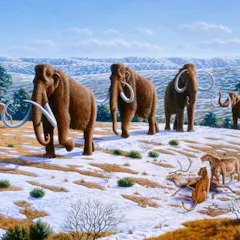
A forensic technique more often used at modern crime scenes identified blood residue from large extinct animals on spearpoints and stone tools used by people who lived in the Carolinas millennia ago.
At twice the size of a wedge-tailed eagle, the newly discovered Dynatoaetus gaffae would have competed with thylacines and Tasmanian devils for prey.

A puzzle over the identity of an extinct bird that laid eggs across Australia has been solved.
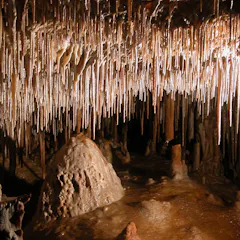
The findings will help us better understand how biodiversity responds to a changing climate over time.
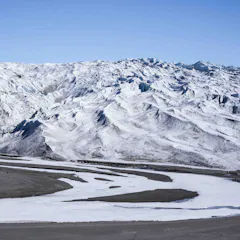
The Earth has had at least five major ice ages, and humans showed up in time for the most recent one. In fact, we’re still in it.
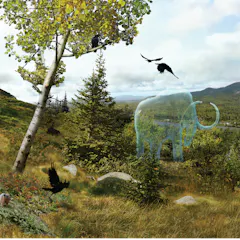
Permafrost in the Yukon is a treasure trove of ancient environmental DNA, but climate change threatens these rich historical archives.

Our research shows dire wolves lived in the tropics not the Arctic, and were not especially close relatives of the grey wolf.
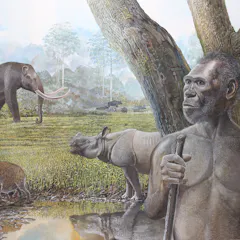
Several theories have suggested either humans, climate change or both drove megafauna extinctions in Southeast Asia. Our newest work suggests otherwise.
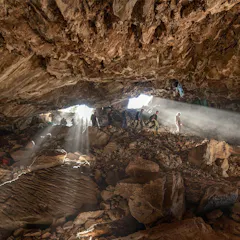
Stone tools found in a cave in Mexico have archaeologists rewriting the human history of the Americas.
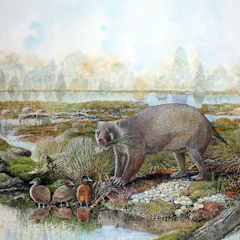
The extinct Mukupirna - which translates to ‘big bones’ - is estimated to have been more than four times larger than any living wombat.
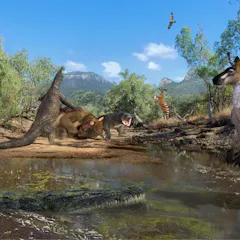
These megafauna were the largest land animals to live in Australia since the time of the dinosaurs.
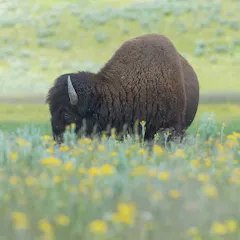
The historical record is full of surprises – and it could encourage conservationists to think more creatively.
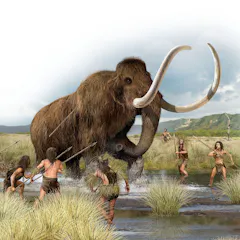
Overhunting of megafauna such as mammoths may have force us to take up farming, ultimately leading to modern society
A drying climate and the arrival of people together finished off Australia’s megafauna.
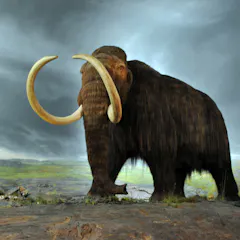
After the woolly mammoth and other megafauna became extinct, surviving animals mingled less. This has big implications for modern conservation.
Long-standing assumption that humans killed large mammals 4.5m years ago has been debunked by researchers – but some experts still think humans played a part in the demise of biodiversity
Top contributors
-

Associate Professor in Vertebrate Palaeontology, Flinders University
-
Pro Vice-Chancellor of Research, University of Technology Sydney
-
Adjunct Associate Lecturer in Palaeontology, Flinders University
-
Senior Lecturer in Ecology and Biogeography, Node & Stream Leader for ARC Centre of Excellence for Indigenous and Environmental Histories and Futures, University of Technology Sydney; Australian Museum
-
Lecturer in Palaeontology, The University of Queensland
-
Matthew Flinders Professor of Global Ecology and Node Leader in the ARC Centre of Excellence for Indigenous and Environmental Histories and Futures, Flinders University
-
Distinguished Professor, Charles Sturt University
-
Professor of Wildlife Conservation, University of Tasmania
-
Senior Research Scientist, South Australian Museum; Flinders University
-
Professor, Palaeontology, Griffith University
-
PhD candidate, Adelaide University
-
Lecturer in Ecosystem Ecology, University of Oxford
-
Professor of Water Science, Griffith University
-
Professor, University of Alaska Fairbanks
-
Professor of Archaeology and Biological Anthropology, School of Social Science, The University of Queensland