

The Epidemic Intelligence Service has been a crucial tool in fighting diseases at home and abroad. Its impact would be impossible to replace.
Articles on Malaria
Displaying 21 - 40 of 290 articles

Chimpanzees bear genetic adaptations that help them thrive in their different forest and savannah habitats. Some of the adaptations may protect against malaria.
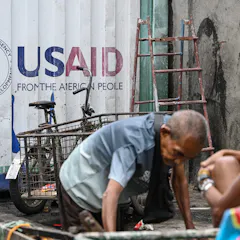
USAID has a decades-long history of fighting smallpox, polio, malaria, tuberculosis and HIV.
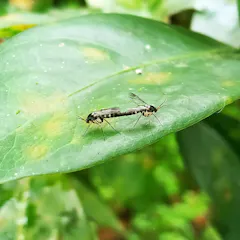
Mosquitoes cause around a million deaths per year. So, scientists are coming up with genetic engineering techniques that could lower their numbers.

People of African descent often have non-communicable and infectious diseases at the same time. Research needs to be done into integrated treatment.
The US withdrawal from the WHO will have a severe impact on HIV, polio and many other health programmes on the African continent.
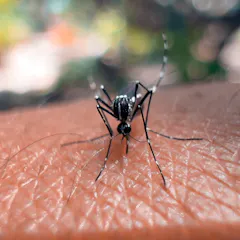
The most effective repellents for warding off mosquitoes this summer contain a substance known as DEET.
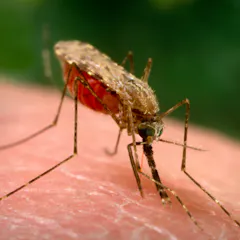
Mosquitoes are the world’s most dangerous animal. It’s important to know how to avoid malaria.
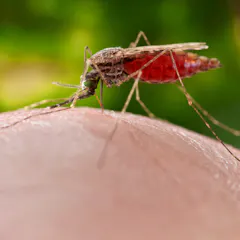
In a sense, a malaria-transmitting mosquito is a sick mosquito. This is where bacteria can help.
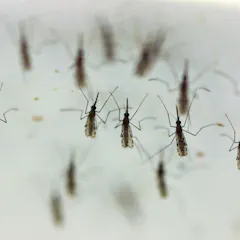
Mosquitoes can be genetically modified to help reduce the number of malaria-carrying mosquitoes, and therefore malaria transmission.

Mosquito populations can respond quickly to changing climate, which means the location of areas at risk of malaria might change.
Malaria has been around longer than humankind. The endgame for this deadly parasitic disease is in sight.
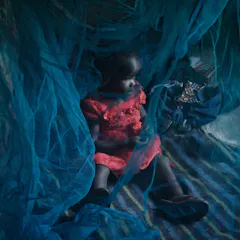
Forty million children are born in malaria areas across Africa each year. Two new vaccines are important weapons in the fight against the disease.

Two out of five cases of TB remain undiagnosed. A test using a skin patch could help change that.

Beyond the tombs and riches, life in ancient Egypt wasn’t so luxurious, after all.

Malaria in Africa accounts for 96% of deaths worldwide. Cape Verde became only the third country in Africa to be declared malaria free this year. This is how they did it.
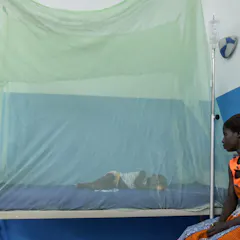
The past two years have seen groundbreaking advances in the fight against malaria with the development of two vaccines. But demand far exceeds supply, so rollouts need to be carefully managed.
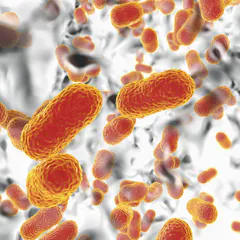
Antimicrobial resistance is an epidemic that kills close to 5 million people annually. The solutions are complex and must take into account the needs of the poor.
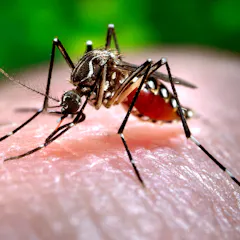
The Sahel region is grappling with an outbreak of the deadly mosquito-borne disease.
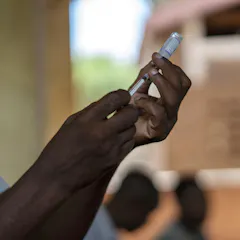
Currently we see more than 600,000 deaths from this mosquito-borne disease each year. This new vaccine – the second approved to treat malaria – could change things.
Top contributors
-

Principal Medical Scientist and Head of Laboratory for Antimalarial Resistance Monitoring and Malaria Operational Research, National Institute for Communicable Diseases
-
Medical scientist, National Institute for Communicable Diseases
-
Medical Entomologist at the School of Biological Sciences, University of Nairobi
-
UP ISMC: Project Manager and Coordinator, University of Pretoria
-
Director: UP Institute for Sustainable Malaria Control, University of Pretoria
-
Chief Research Officer, Kenya Medical Research Institute
-
Director of the Jenner Institute, University of Oxford
-
Director of Science, Ifakara Health Institute
-
Project Manager, Cambridge Africa, Anglia Ruskin University
-
Professor of Molecular Parasitology and Medicine, St George's, University of London
-
Clinical Associate Professor, School of Medical Science & Sydney Infectious Diseases Institute; Principal Hospital Scientist, University of Sydney
-
Board Certified Internal Medicine Physician and Public Health Scientist, MidMichigan Health, University of Michigan
-
Director and CEO, Burnet Institute
-
Co-Director, Institute of Infection, Chair, Immunology & Vaccinology, Imperial College London
-
Scientist, International Centre of Insect Physiology and Ecology