
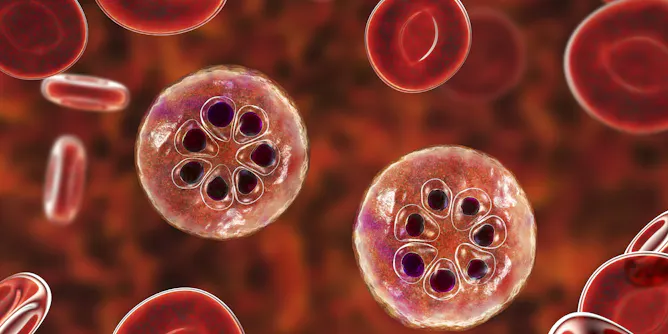
People have been trying to make malaria vaccines for over 100 years. With the help of the revolutionary new R21/Matrix vaccine the disease could be eradicated by 2040.
Articles on Malaria
Displaying 41 - 60 of 290 articles
In this episode of The Conversation Weekly, we hear from the scientists behind a new malaria vaccine developed by the University of Oxford.

Methods that don’t rely on insecticides are needed to bolster the fight against mosquito-borne diseases.
After recent cases in Florida and Texas, authorities are advising the public to drain standing water sources to keep mosquitoes from multiplying.
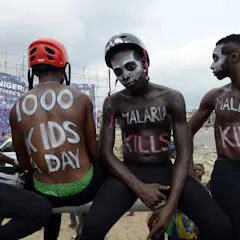
Nigeria must do more to reduce its high malaria burden.
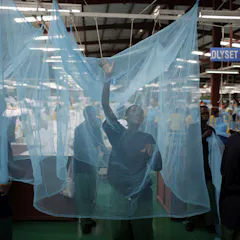
There have been disruptions. But national malaria control programmes have shown impressive resilience.

This whirlwind tour of social history describes how infectious diseases have shaped humanity at every stage. It suggests reducing inequality will give us our best chance of surviving future plagues.
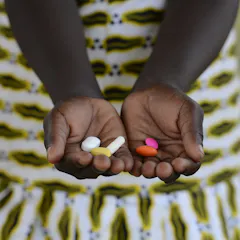
Being able to tell the difference between good quality medicines and fakes can be a matter of life and death.
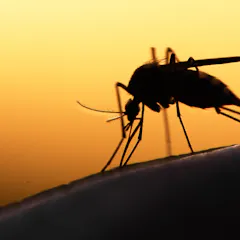
This mosquito spreads very fast to new areas and can adapt to various climatic conditions, unlike the non-invasive malaria vectors.

The motivations for Carter’s interest in Africa are deeply personal. His record should remind all democrats, including those in Africa, to hold leaders accountable to high ethical standards.
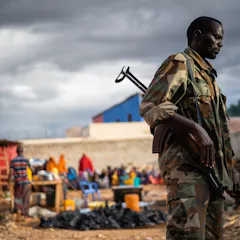
The negative effects of conflict on human capital – particularly nutrition, health and education – are larger than commonly thought.
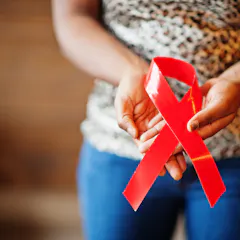
We need a combination of new approaches to reduce age disparate sex. And we need new technologies to protect young women.

Intensified efforts to obtain funding are urgently required to mitigate and reverse the negative impacts of the COVID-19 pandemic on TB.

Addressing the noncommunicable disease pandemic can also mitigate challenges facing people living with HIV and complement efforts against TB.
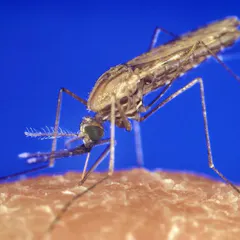
As the Earth warms up the malaria vector will develop faster, allowing them to breed faster, bite more frequently and expand into formerly unsuitable habitats.
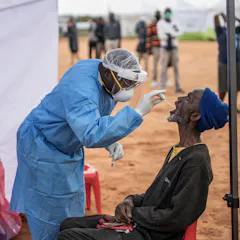
The human population has doubled in 48 years, and worsening climate change has left the world facing serious health risks, from infectious diseases to hunger and heat stress.
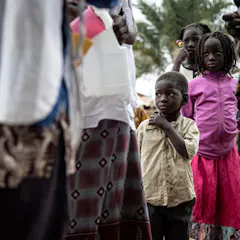
There are many reasons that malaria is so persistent in Africa. Four of them are poverty, human movement, resistance and climate change.

Marginalised or minority groups seem to suffer the most from heat-related deaths and disease.
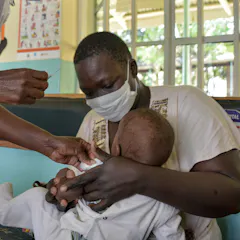
For a malaria vaccine to have an impact, health promotion is key. Awareness campaigns must address safety concerns and emphasise expected positive impacts.
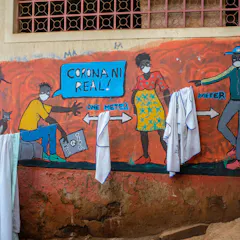
Outpatient visits, screening and diagnostic services, and child immunisation were particularly negatively affected.
Top contributors
-

Principal Medical Scientist and Head of Laboratory for Antimalarial Resistance Monitoring and Malaria Operational Research, National Institute for Communicable Diseases
-
Medical scientist, National Institute for Communicable Diseases
-
Medical Entomologist at the School of Biological Sciences, University of Nairobi
-
UP ISMC: Project Manager and Coordinator, University of Pretoria
-
Director: UP Institute for Sustainable Malaria Control, University of Pretoria
-
Chief Research Officer, Kenya Medical Research Institute
-
Director of the Jenner Institute, University of Oxford
-
Director of Science, Ifakara Health Institute
-
Project Manager, Cambridge Africa, Anglia Ruskin University
-
Professor of Molecular Parasitology and Medicine, St George's, University of London
-
Clinical Associate Professor, School of Medical Science & Sydney Infectious Diseases Institute; Principal Hospital Scientist, University of Sydney
-
Board Certified Internal Medicine Physician and Public Health Scientist, MidMichigan Health, University of Michigan
-
Director and CEO, Burnet Institute
-
Co-Director, Institute of Infection, Chair, Immunology & Vaccinology, Imperial College London
-
Scientist, International Centre of Insect Physiology and Ecology