
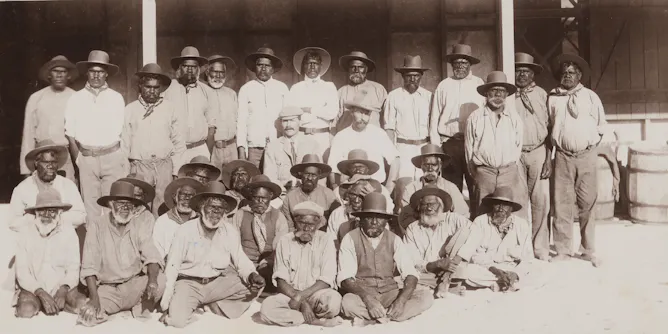
Aboriginal communities have a long history of fighting off disease outbreaks – and self-determination is vital to their success.
Articles on Indigenous health
Displaying 121 - 140 of 262 articles
Large households, poor health literacy, not enough soap and vaccines, scepticism of mainstream services. These are some of the reasons urban Aboriginal people face increased risks.

Despite chronic housing need and persistent health and infrastructural inequities, northern communities are turning to the land and each other to prevent the spread of COVID-19.

Reducing crowding and repairing social housing can decrease the risk of COVID-19 in remote Indigenous communities. It will bring other long-term benefits, too.
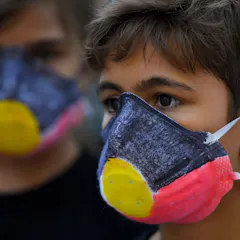
Indigenous people suffered greatly during the last global pandemic – the Spanish flu in 1918-19. They are vulnerable again because we still haven’t addressed inequalities in our public health system.
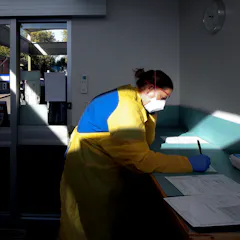
Aboriginal people are at greater risk of severe illness from COVID-19 than non-Aboriginal people. But plans to protect remote communities and keep the virus out are progressing too slowly.

Just one in four Indigenous women play sport or are physically active, with many citing racism, cost and gendered expectations as barriers.

A safe home, a working fridge and access to transport are all needed before western medicine has a chance of working in the long term. But a new way of providing care can help.
Antibiotic resistance is one of the greatest health challenges of the modern day. It’s especially prevalent, and must be acted on, in Australia’s remote Indigenous communities.

Many Indigenous people tell us they find hospitals stressful, uncomfortable and alienating. Here’s how good design can help.
Many Aboriginal survivors of sexual abuse find mainstream counselling inappropriate. But there is a way to help them heal that respects a collective culture, with strong community ties.

You might have heard of polycystic ovary syndrome, but what about polycystic kidney disease? This genetic disorder sees cysts growing in the kidneys.
Lung infections are the most common reason for Aboriginal children to be hospitalised. But many cases can be prevented by seeking treatment for wet coughs that last for four weeks or more.

A report on primary health care found New Zealand fails to deliver good outcomes for Māori because the state does not stand aside to allow Māori to take charge of their own affairs.
A culturally specific screening tool for depression has been successfully tested among Aboriginal and Torres Strait Islander Australians. This is why it’s so important we start rolling it out.

As the Aged Care Royal Commission shifts its focus to aged care for Indigenous Australians, access isn’t the only challenge. Often problems arise when services don’t accommodate their cultural needs.
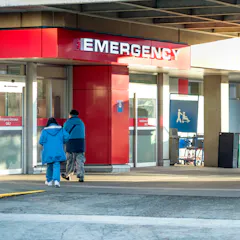
When care is equity-oriented, patients report fewer depression and trauma symptoms, less chronic pain and improved quality of life.
The experiences of Aboriginal and Torres Strait Islander Australians must be at the forefront of the Royal Commission into Violence, Abuse, Neglect and Exploitation of People with Disability.

The absence of Indigenous Australians in rehabilitation services has created the belief they don’t want therapy. The reality is they want services which better meet their cultural needs.
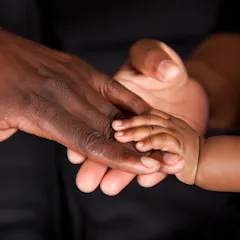
Aboriginal mothers in prison feel intergenerational trauma and the forced removal of their children are the most significant factors impacting their health and well-being.
Top contributors
-

Director of POCHE Centre for Indigenous Health, The University of Queensland
-
Team Lead, Healthy Skin and Acute Rheumatic Fever Prevention, The Kids Research Institute Australia
-
Purple House Medical Advisor. Honorary ANU., Australian National University
-
Associate Professor, Indigenous Studies, UNSW ; Macquarie University
-
ARC Research Fellow in Indigenous Health, Disability and Community Development, University of Sydney
-
Honorary Enterprise Professor, School of Population and Global Health, and Department of General Practice and Primary Care, The University of Melbourne
-
Professor, Public Health Policy, The University of Queensland
-
Scientia lecturer, UNSW
-
Associate Director of Research and Senior Fellow, Yardhura Walani, National Centre for Aboriginal and Torres Strait Islander Wellbeing Research, Australian National University
-
Senior Lecturer in Social Research and Policy, UNSW
-
Professor of Indigenous Health, Executive Director, Carumba Institute, Queensland University of Technology
-
Professor of Economics and Public Policy, ANU College of Arts and Social Sciences, Australian National University
-
Associate Professor in Public Health, The University of Queensland
-
Professor and Head Clinical Research Domain, Baker Heart and Diabetes Institute
-
Head of Diabetes Clinics, Baker Heart and Diabetes Institute