
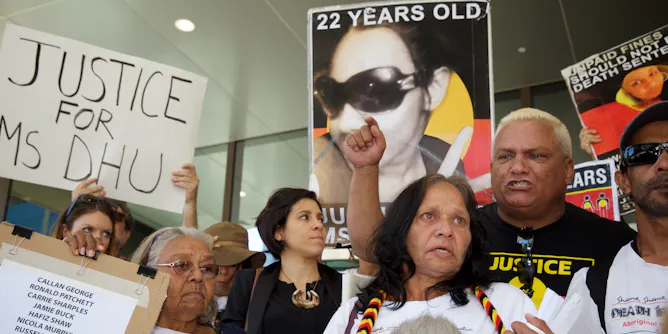
Ms Dhu’s is not the first report into mistreatment of an Aboriginal person in custody or a medical setting, nor is it likely to be the last.
Articles on Indigenous health
Displaying 181 - 200 of 262 articles
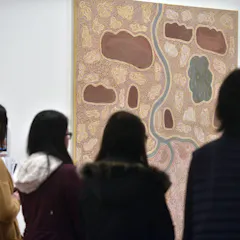
Can empathy be taught to students in the healthcare professions? A groundbreaking project is using visual art to ensure they pay attention to the whole person, not just the disease.

A collaboration of Australia’s leading scientists, clinicians and health organisations announce ten priority policy actions needed for Australia to reach its health targets by the year 2025.
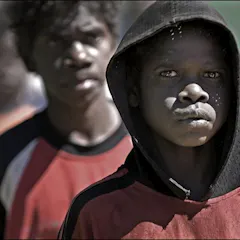
High Indigenous mortality rates mean Indigenous children may observe the death of relatives and experience grieving more often than the general population.
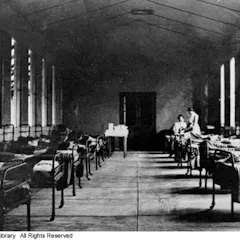
The lock hospitals inflicted incalculable traumas on Aboriginal people, wrenching them away from families and country.
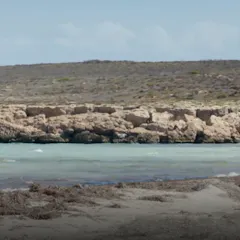
Hundreds of Aboriginal people were incarcerated on Dorre and Bernier islands for “venereal disease” between 1908 and 1919. The lock hospitals were penal rather than therapeutic institutions.
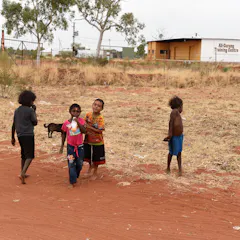
Nearly all Indigenous Australian children have some form of otitis media, a middle ear infection that often leads to hearing loss.
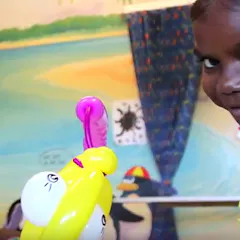
Rheumatic heart disease is responsible for the highest gap in life expectancy between Indigenous and non-Indigenous Australians; higher than diabetes or kidney failure.
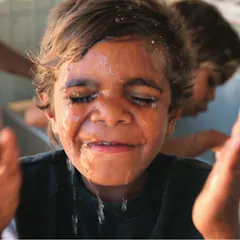
Trachoma easily spreads from one child to another through infected eye and nose secretions. A person may have up to 40 episodes of reinfection during childhood.

Chair of the Prime Minister’s Indigenous Advisory Council, Warren Mundine, told Q&A that $30 billion is spent every year on 500,000 Indigenous people in Australia. Is that right?

Around 2.3% of Aboriginal and Torres Strait Islander Australians 15 years and over report using speed or amphetamine in the past year. This is similar to the general population.
We are seeing increasing numbers of young, slim children with type 2 diabetes. This means obesity and lifestyle factors may not be the whole story behind the disease’s rising rates.

A history of displacement and disconnection is still reverberating for Australia’s Indigenous people – and tackling the fall out means looking at the whole picture.
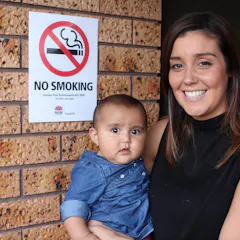
Almost half of pregnant Indigenous women smoke compared to one in eight in the non-Indigenous population. This means 7,000-9,000 Indigenous babies every year are exposed to smoking in the womb.
The NDIS provides an opportunity to address the shortfalls of the former institutionalised service system, some of which uniquely impact Indigenous Australians.
Around 20% of Aboriginal births in Western Australia between 1996 and 2012 weren’t registered, new research shows. This has many social and health ramifications for their future.

Where birthing on country is not offered, women leave their families weeks before birth. Or she can choose to give birth in her community without skilled birth attendants, which is risky.
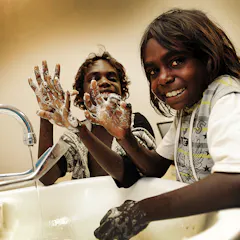
Indigenous people in Australia and New Zealand, despite the distance separating them and varying histories, have one disturbing issue in common: poor health.

Mainstream family violence services must also become culturally sensitive and responsive so they too can provide services to Indigenous community members.

After years of neglect and a notable absence in last week’s Closing the Gap report, nutrition is finally being recognised as integral to closing the gap on Indigenous disadvantage.
Top contributors
-

Director of POCHE Centre for Indigenous Health, The University of Queensland
-
Team Lead, Healthy Skin and Acute Rheumatic Fever Prevention, The Kids Research Institute Australia
-
Purple House Medical Advisor. Honorary ANU., Australian National University
-
Associate Professor, Indigenous Studies, UNSW ; Macquarie University
-
ARC Research Fellow in Indigenous Health, Disability and Community Development, University of Sydney
-
Honorary Enterprise Professor, School of Population and Global Health, and Department of General Practice and Primary Care, The University of Melbourne
-
Professor, Public Health Policy, The University of Queensland
-
Scientia lecturer, UNSW
-
Associate Director of Research and Senior Fellow, Yardhura Walani, National Centre for Aboriginal and Torres Strait Islander Wellbeing Research, Australian National University
-
Senior Lecturer in Social Research and Policy, UNSW
-
Professor of Indigenous Health, Executive Director, Carumba Institute, Queensland University of Technology
-
Professor of Economics and Public Policy, ANU College of Arts and Social Sciences, Australian National University
-
Associate Professor in Public Health, The University of Queensland
-
Professor and Head Clinical Research Domain, Baker Heart and Diabetes Institute
-
Head of Diabetes Clinics, Baker Heart and Diabetes Institute