
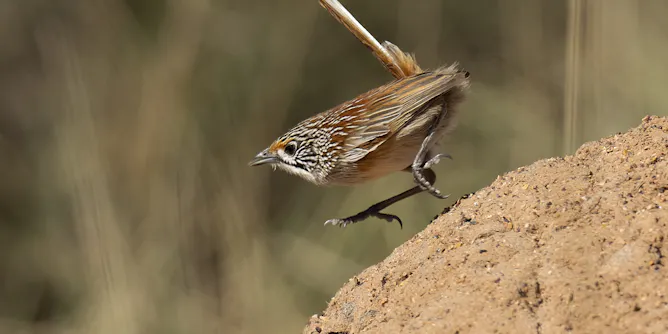
Our birds are tough. They went through some mean climatic conditions to make Australia home.
Articles on Ice Age
Displaying 21 - 40 of 100 articles
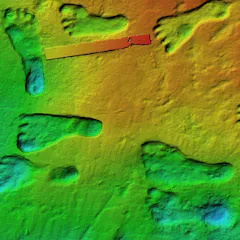
The early settlement of the Americas is hugely contested area of archaeology.
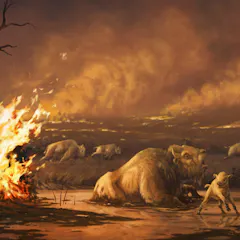
New findings from the La Brea Tar Pits in southern California suggest human-caused wildfires in the region, along with a warming climate, led to the loss of most of the area’s large mammals.
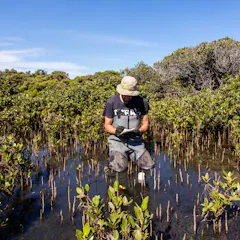
The last time methane in the air rose so fast, Greenland warmed by 10°C within decades.

Ancient stories of the sea and the sky date back to the end of the last ice age.

New research dating and reading the rocks of the Flinders Ranges in South Australia reveals a fascinating story about how complex life emerged on our planet.

Recent headlines around the supposed impending collapse of the Atlantic currents remind us of the importance of avoiding sensationalism in facing global warming.
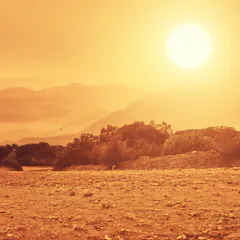
Long before thermometers, nature left its own temperature records. A climate scientist explains how ongoing global warming compares with ancient temperatures.
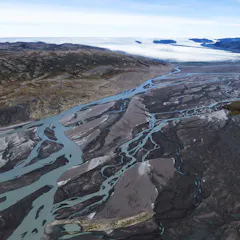
The soil was extracted during the Cold War from beneath one of the U.S military’s most unusual bases, then forgotten for decades.
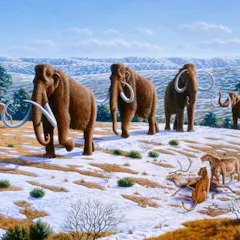
A forensic technique more often used at modern crime scenes identified blood residue from large extinct animals on spearpoints and stone tools used by people who lived in the Carolinas millennia ago.
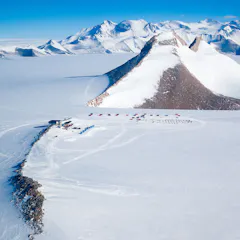
Unravelling the mystery of how life in Antarctica survived past ice ages involved sampling some of the oldest museum records. When combined with a dating database, a familiar story is revealed.
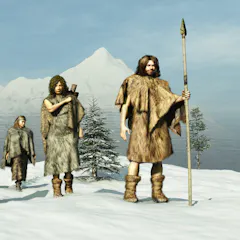
When, how, where and why did complex hierarchical societies evolve? Understanding how we got to this point in time may help us address global challenges, like climate change.
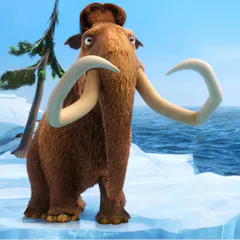
All the evidence points to one thing: humans and woolly mammoths certainly lived side by side. But did humans hunt mammoths too?
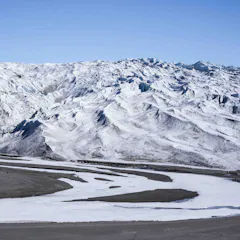
The Earth has had at least five major ice ages, and humans showed up in time for the most recent one. In fact, we’re still in it.
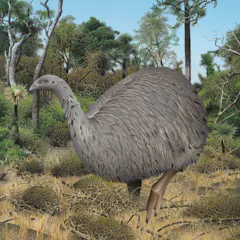
DNA from ancient eastern moa bones is unlocking the secrets of their survival during the last ice age, and providing lessons for today’s threatened species.
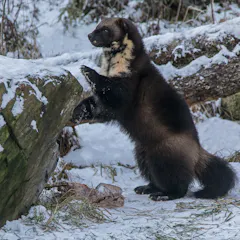
The key to protecting wolverines around the world is to reduce trapping, minimize predator control pressures, and to protect and connect large blocks of intact habitat they need to survive.

The Earth is a resilient planet, but people are altering it in ways that may take centuries to reverse.
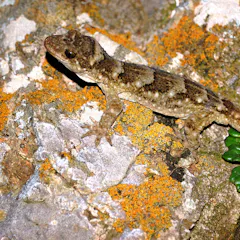
Biologists have used ancient DNA, preserved in fossil bones for millennia, to study the evolution of large species, but now they can employ it to study small animals like lizards and frogs.
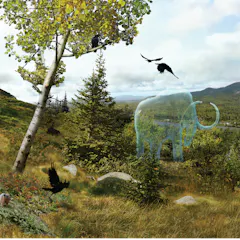
Permafrost in the Yukon is a treasure trove of ancient environmental DNA, but climate change threatens these rich historical archives.
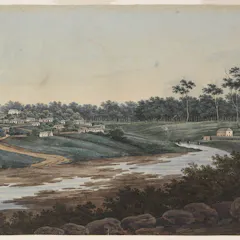
A review of studies of Parramatta demonstrates an extensive deep-time archive of Indigenous activity extending over 14,000 years.
Top contributors
-

Professor of Environmental and Geographical Sciences, Bournemouth University; University of Reading
-
Associate Professor in Ancient DNA, University of Otago
-
Professor of Archaeology, Griffith University
-
Associate Professor in Hominin Palaeoecology, Bournemouth University
-
Professor of Natural Resources and Environmental Science, University of Vermont
-
Associate Curator, La Brea Tar Pits; Adjunct Faculty, Institute of the Environment and Sustainability, University of California, Los Angeles
-
Professor, University of Tasmania
-
Adjunct Professor in Climate Science, University of Tasmania
-
Adjunct professor, UNSW
-
Postdoctoral Fellow, Department of Zoology, University of Otago
-
Professor of Geography, School of Law and Society, University of the Sunshine Coast
-
Research Centre of Archeometry, Badan Riset dan Inovasi Nasional (BRIN)
-
Professor of Palaeobiology, University of Leicester
-
Professor of Glaciology and Earth Observation, University of Bristol
-
Professor, Climate, Oceans, and Paleo-Environments, Simon Fraser University